 EN
EN  ES
ES  PT
PT  FR
FR  RU
RU  KO
KO RESOURCE CENTER > CASE STUDIES
Dual Rail Freight Lift for Japanese Electrical Equipment Plant
RELATED MEDIA
SHARE







POSTED: 21/7/2026
Overview
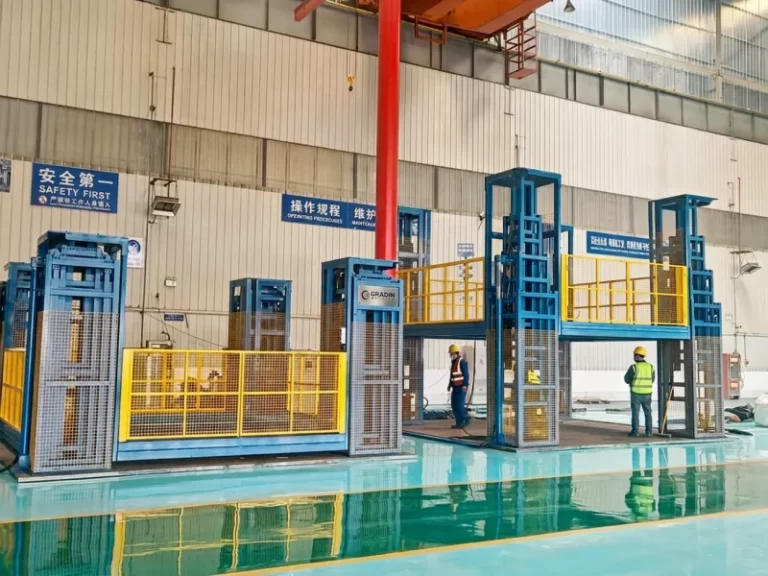
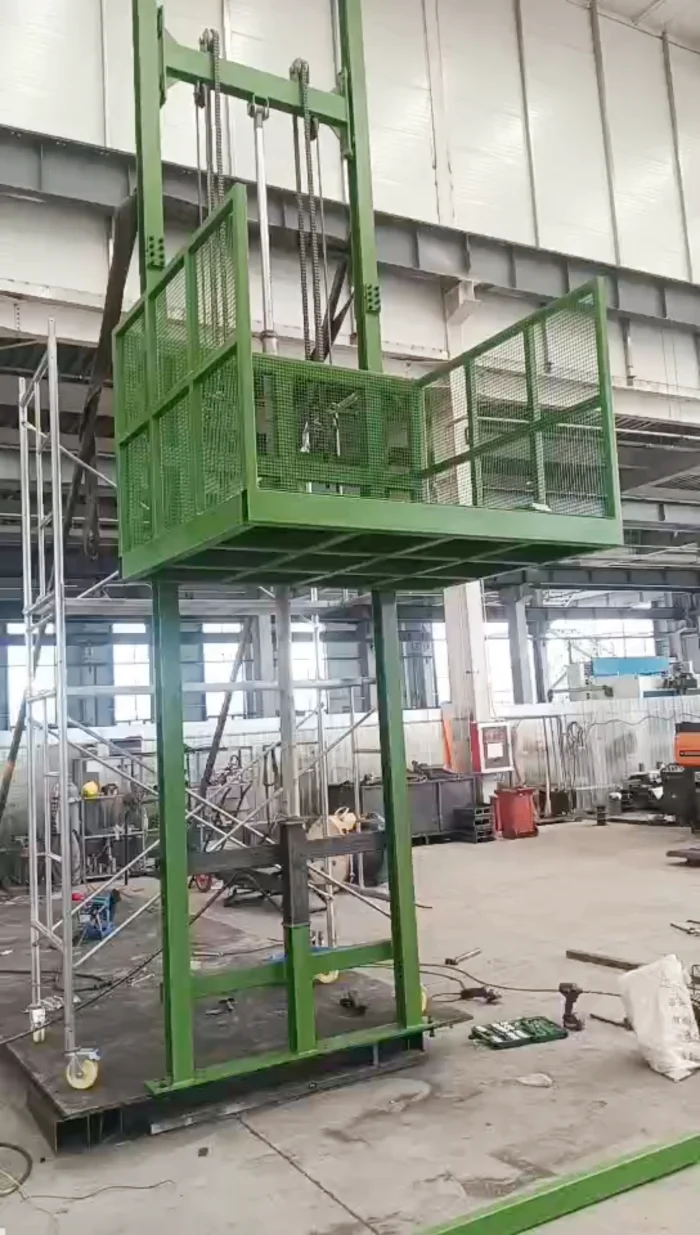
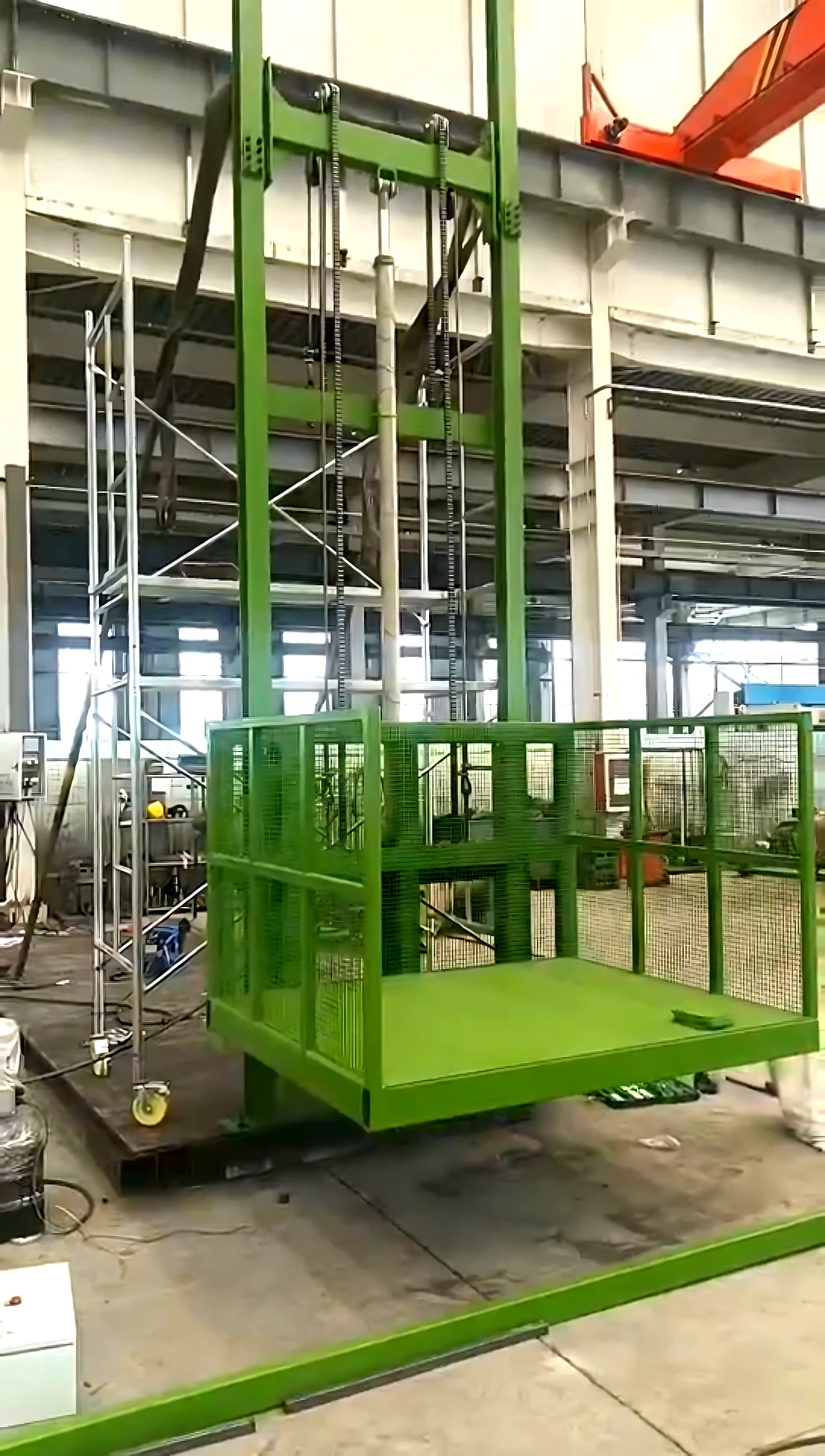
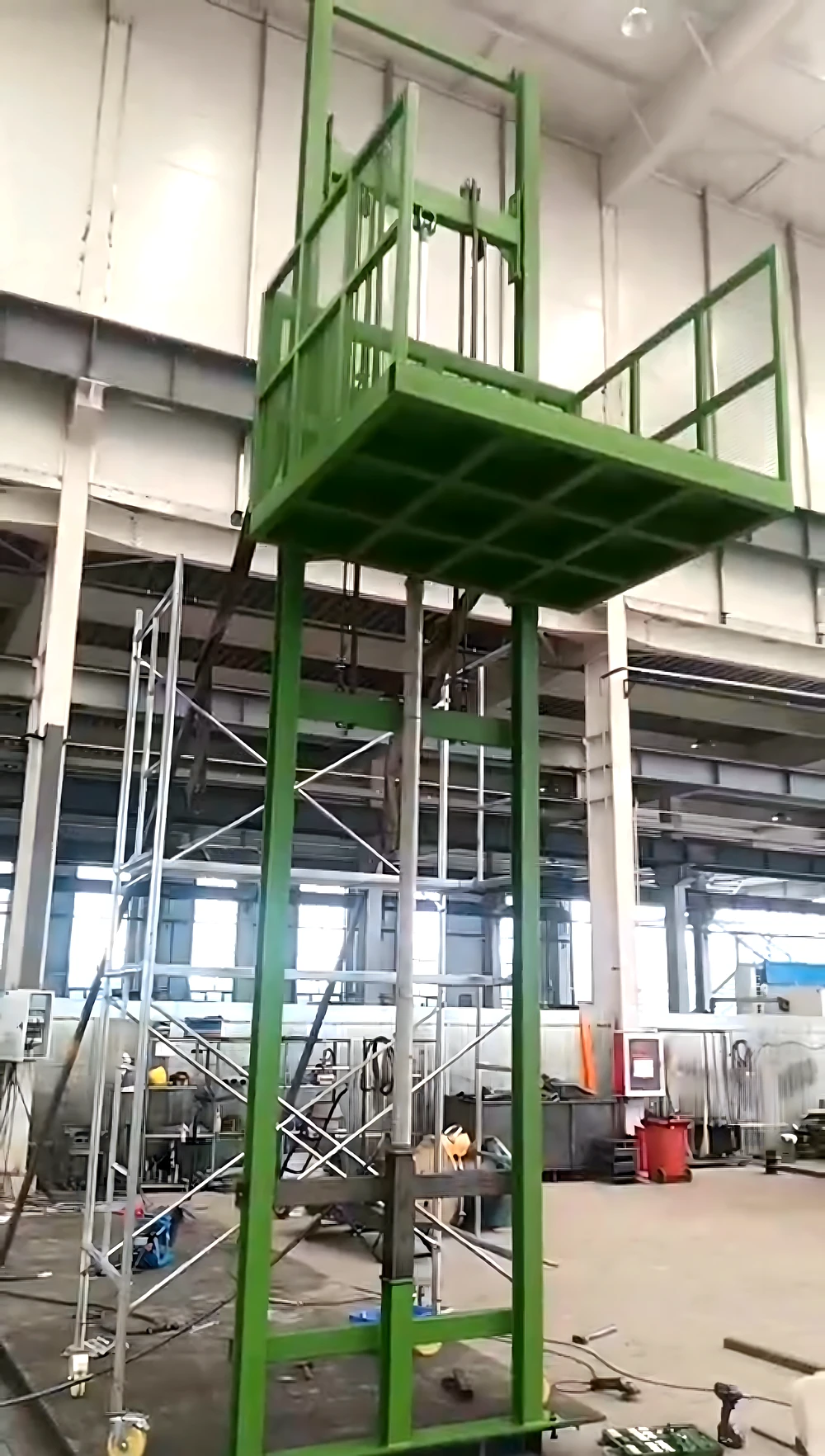
Project Type: Guide rail hydraulic lift (single-cylinder dual-rail)
Client: KOBAYASHI DENSO CO., LTD. (Japan)
Installation Location: Fukuyama City, Hiroshima Prefecture, Japan
Industry: Industrial manufacturing / warehousing logistics
Core Function: Vertical goods conveying inside a shaft (2 stops / 2 levels)
Industry Context
KOBAYASHI DENSO CO., LTD. is located in Fukuyama City, Hiroshima Prefecture, Japan. Japanese manufacturing is known for its lean, high-standard operations, with strict requirements for safety, reliability, and space utilisation in material handling equipment.
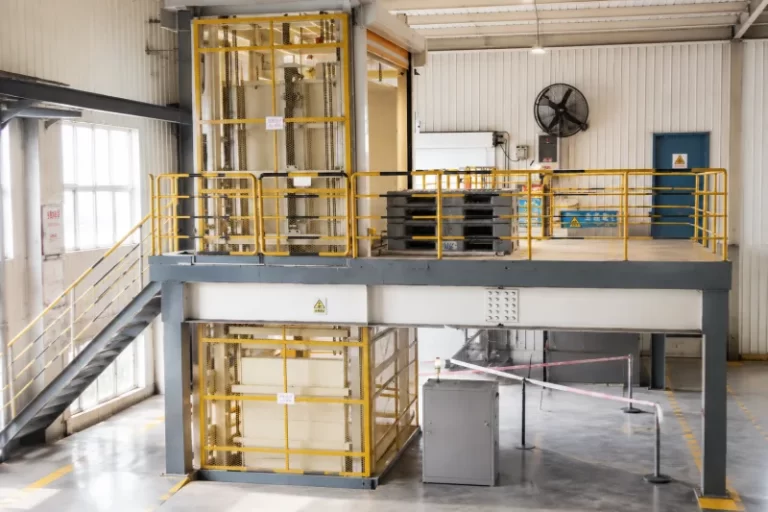
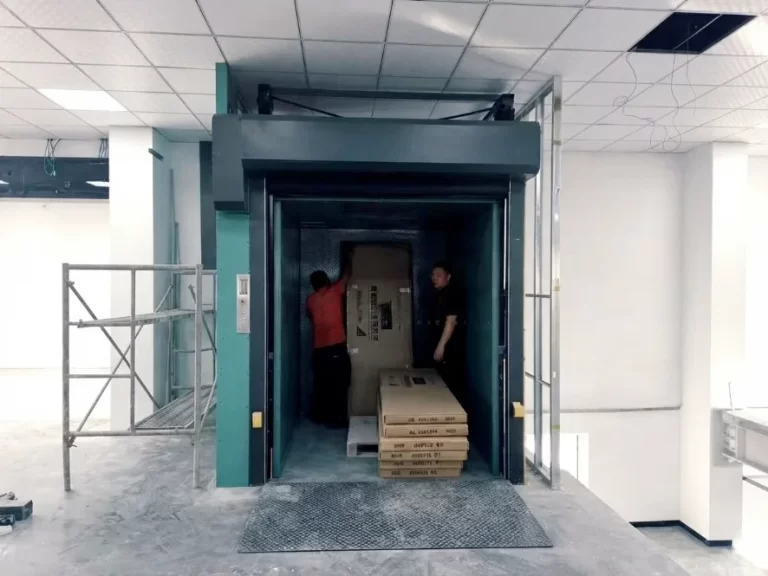
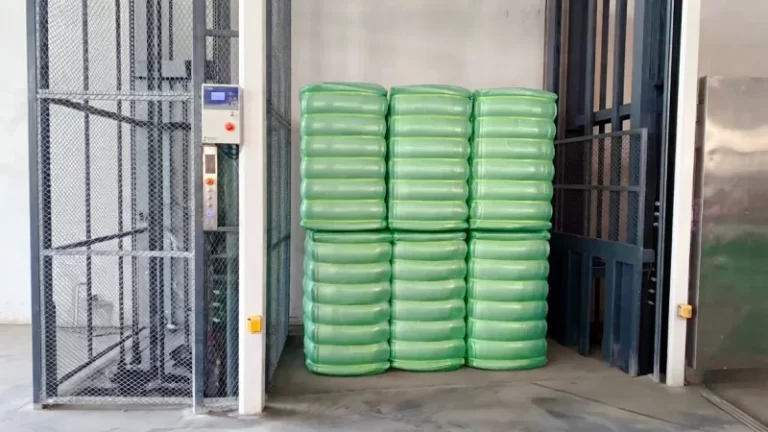
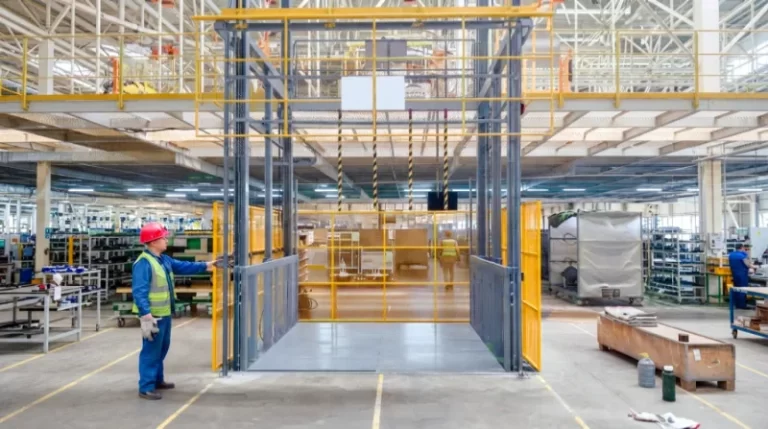
This lift is installed inside a shaft at the client‘s factory (shaft dimensions: 1940×1760×7800mm) for vertical goods conveying between two floors. Japanese factories typically face space constraints, placing high demands on the footprint and shaft adaptability of any installed equipment.
Core requirements:
- Install a 1-ton capacity freight lift within a limited shaft space
- 4.6m travel with 2 stops / 2 levels
- Equipment must adapt to Japanese power supply standards (3-phase 200V/60Hz)
- Compact packaging for shared 20GP container shipping

Basic Parameters
| Parameter | Value |
|---|---|
| Rated load | 1000 kg |
| Travel height | 4.6 m (2 stops / 2 levels) |
| Platform size (W×D) | 1800×1400 mm |
| Shaft size (W×D×H) | 1940×1760×7800 mm |
| Access direction | 1800mm side, single entry/exit |
| Structure | Single-cylinder dual-rail |
| Guide rails | 100H ×2 |
| Cylinder | Φ70-50 ×1 |
| Power unit | 4 kW |
| Voltage/Frequency | 3-phase 200V/60Hz (Japan standard) |
| Pit depth | 50 mm |
| Floor doors | Standard roller doors ×2 (1800×H2400mm) |
| Platform guardrails | 1100mm height (both sides + cylinder side) |
| Enclosure | 1st floor mesh enclosure, height 3700mm |
| Colour | Yellow-green RAL6018 |
| Packaging | Bare, shared 20GP container with another unit |

Solutions
Single-Cylinder Dual-Rail Structure – Simple & Efficient
Design approach: Single hydraulic cylinder drive + dual-rail guidance. The single cylinder simplifies the hydraulic system (no complex synchronisation required), while dual 100H rails ensure vertical stability during lifting.
- Cylinder: Φ70-50 ×1, positioned on one side of the platform
- Guide rails: 100H ×2, full-travel
- Platform frame: J120×60×3mm rectangular tube
- Platform deck: 4mm steel plate
Advantage: Simple structure, low failure rate, easy maintenance – ideal for long-term operation of overseas projects.
Ultra-Shallow Pit (50mm) – Adapting to Japanese Factory Conditions
Challenge: Japanese factories typically have concrete floors with limited excavation depth. The client required only 50mm pit depth.
Solution:
- Compact cylinder base design minimises pit depth requirements
- Optimised base structure allows cylinder and frame to fit within the shallow pit
- Equipment installed directly at floor opening – pit only accommodates cylinder base connections
Advantage: Avoids deep excavation, significantly reduces civil work cost and installation time – adapts to Japanese factory retrofit conditions.
Japan-Standard Power Supply – 200V/60Hz
Challenge: Japan‘s industrial power standard is 3-phase 200V/60Hz – different from China‘s 380V/50Hz.
Solution:
- Power unit motor customised for 3-phase 200V/60Hz
- All electrical components (PLC, contactors, relays, etc.) adapted to Japan voltage/frequency
- Complete electrical drawings and Japanese/English technical documentation provided
Advantage: Equipment can be connected directly to factory power on arrival – no transformer or frequency converter needed.
Compact Packaging & Sea Freight
Challenge: The equipment must share a 20GP container with another unit – packaging footprint must be minimised.
Solution:
- Guide rails: 3.8m sections, shipped in two pieces, framed for protection
- Lifting frame welded to the platform – minimises loose parts
- No wooden crates – bare packaging with rust protection and secure lashing
- Optimised packaging footprint for shared container loading
Advantage: Reduces sea freight costs and simplifies customs clearance.
Overseas Remote Approval Process
Challenge: Shaft dimensions measured by the client overseas – risk of measurement errors.
Solution:
- Client provided shaft diagrams and site photos
- Production drawings completed based on client data
- Drawings sent to client for approval before manufacturing
- Key dimensions (shaft 1940×1760mm, door 1800×H2400mm, pit 50mm) verified
Advantage: Prevents costly on-site rework due to dimension mismatches – ensures successful installation upon arrival in Japan.
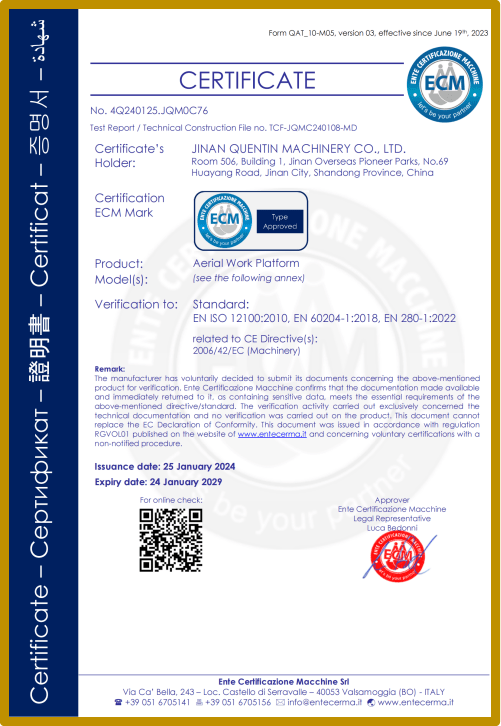
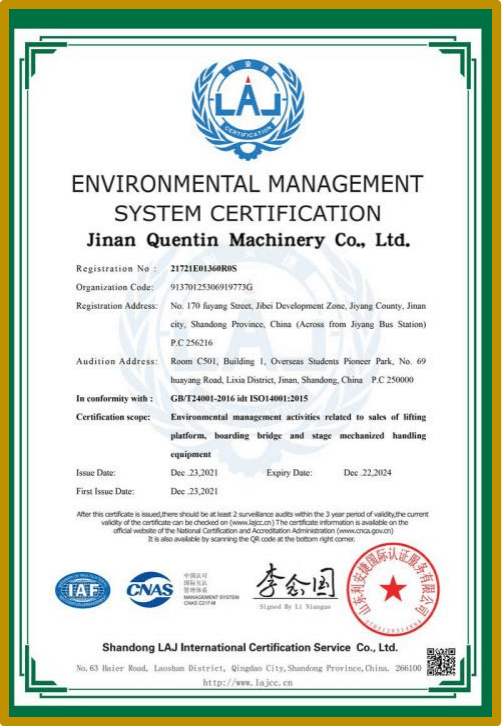
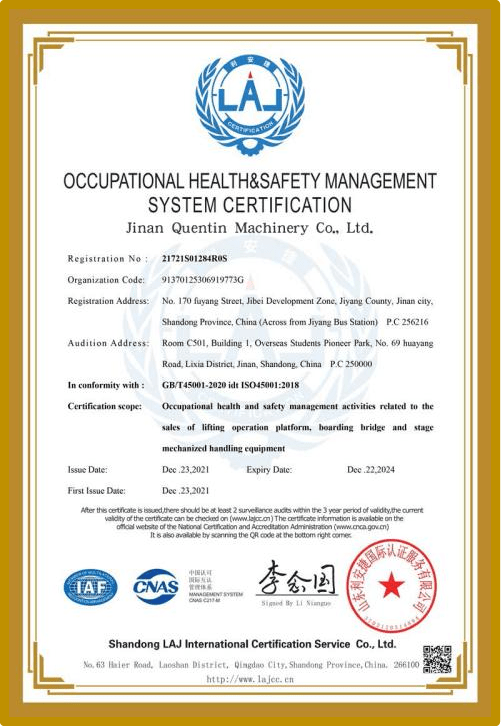
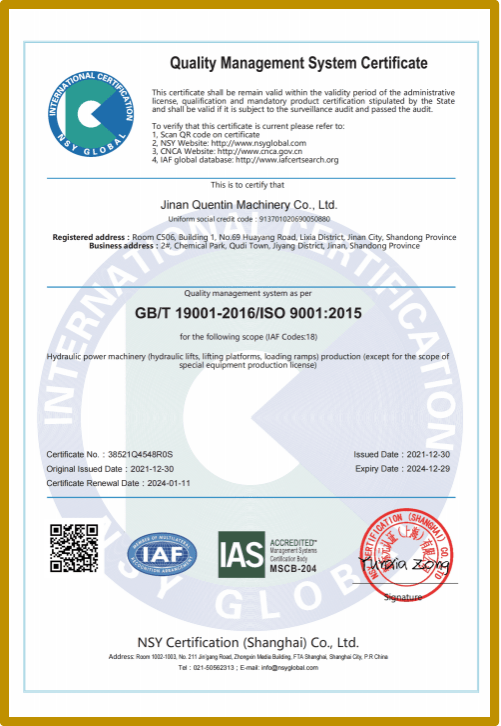
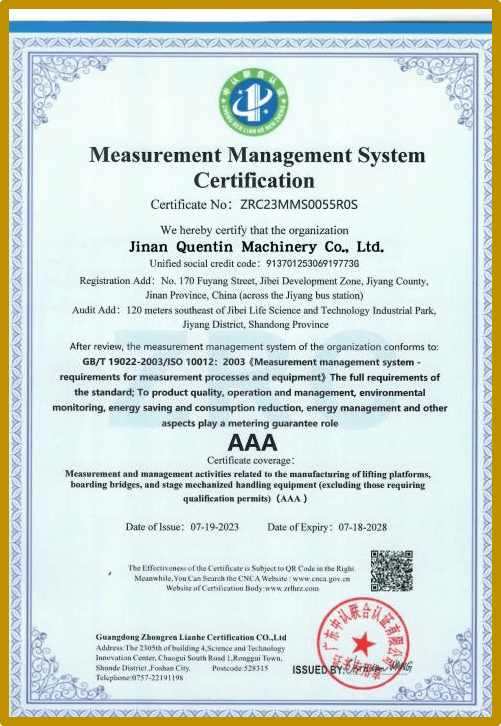
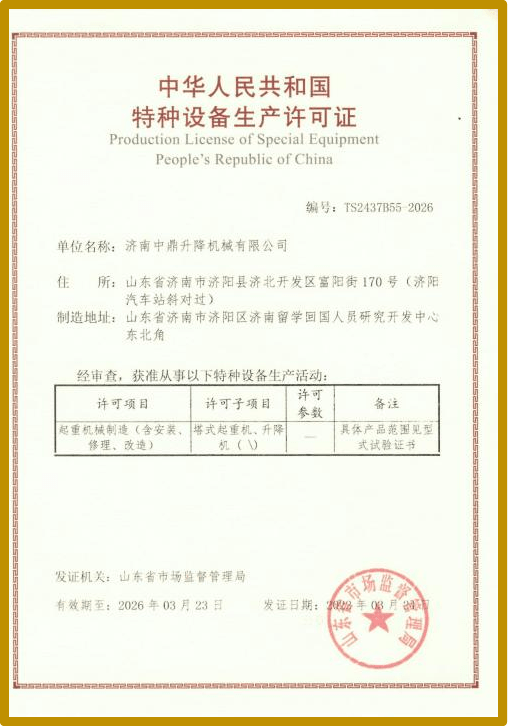
Product Certificates
FAQ
If you want to customize your material handling equipment, please contact us →.