 EN
EN  ES
ES  PT
PT  FR
FR  RU
RU  KO
KO RESOURCE CENTER > CASE STUDIES
Lithium‑Dedicated 5‑Stop Reciprocating Lift|16m, 5 Levels|304 Stainless + Full Powder | AGV‑Ready
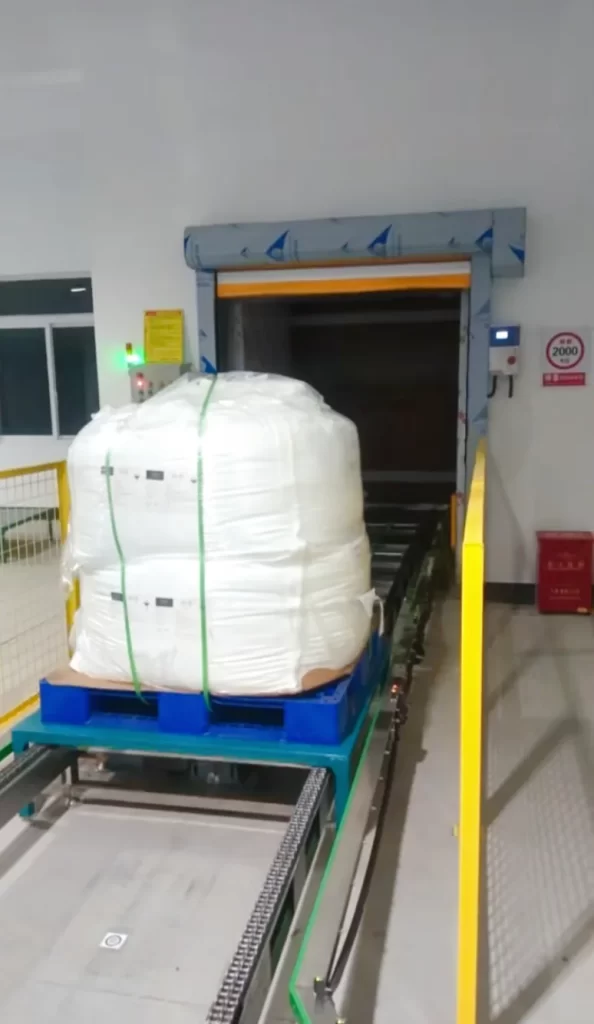
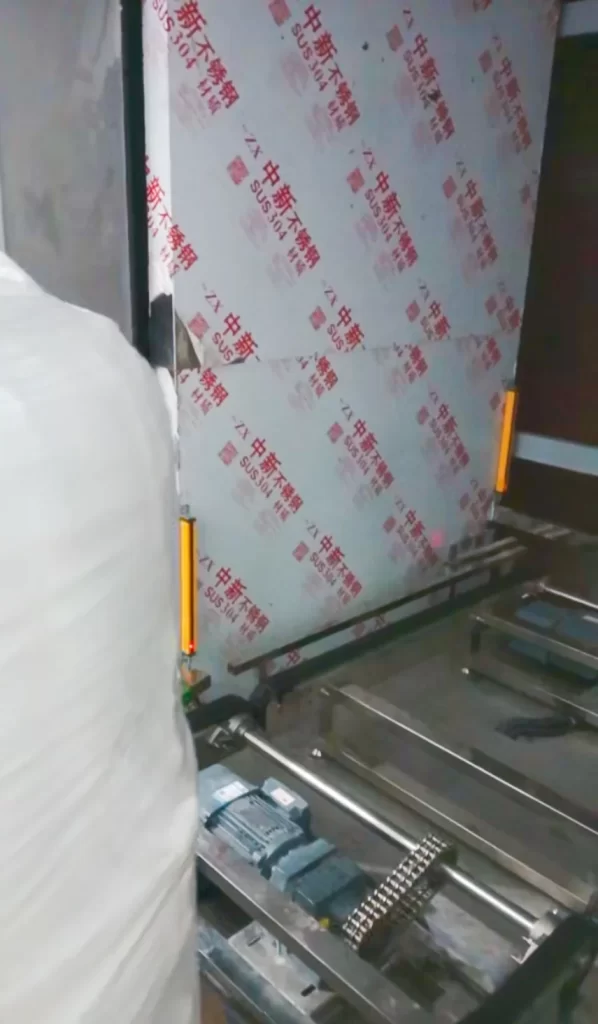
RELATED MEDIA
SHARE







POSTED: 7/8/2026
Overview
Project Type: Chain reciprocating lift (lithium‑dedicated)
End User: Zhejiang Yongzheng Lithium (Quzhou)
Industry: Lithium battery cathode material manufacturing
Core Function: 16m ultra‑high travel, 5 stops / 5 levels, C‑shaped access, fully automatic AGV integration
Key Parameters: 1250kg capacity, 16,000mm travel, 60m/min speed, SEW drive + Siemens PLC, full 304 stainless steel + full powder coating – copper‑free & zinc‑free
Industry Context
Zhejiang Yongzheng Lithium, located in Quzhou, is a company specialising in the R&D and production of lithium battery cathode materials. The production of cathode materials involves multiple processes, and control of metallic contamination is one of the core indicators of production line quality. In lithium‑ion battery manufacturing, if metal particles become mixed into the battery, they can cause fire hazards. Metallic contaminants (copper, zinc, iron, etc.) can form dendrites during the battery formation process, piercing the separator and causing internal short circuits – in severe cases, leading to battery fires or even explosions. Among these, copper and zinc are non‑magnetic metals, making them completely ineffective against electromagnetic separation equipment.
Therefore, there is an iron rule in lithium cathode material production workshops – copper‑free & zinc‑free. All equipment surfaces that come into contact with materials must be powder‑coated or made of stainless steel; exposed copper or zinc components are strictly prohibited.
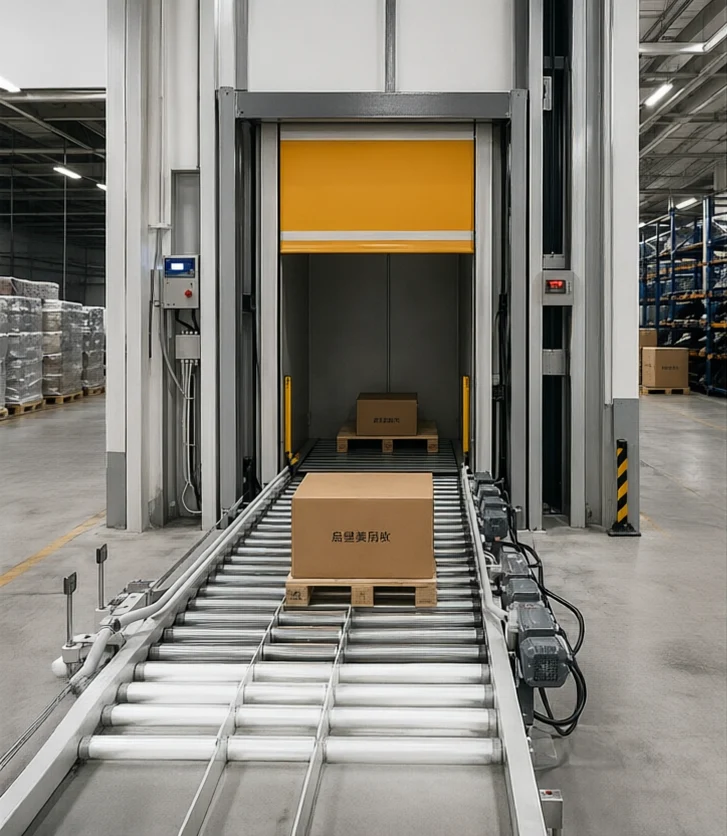
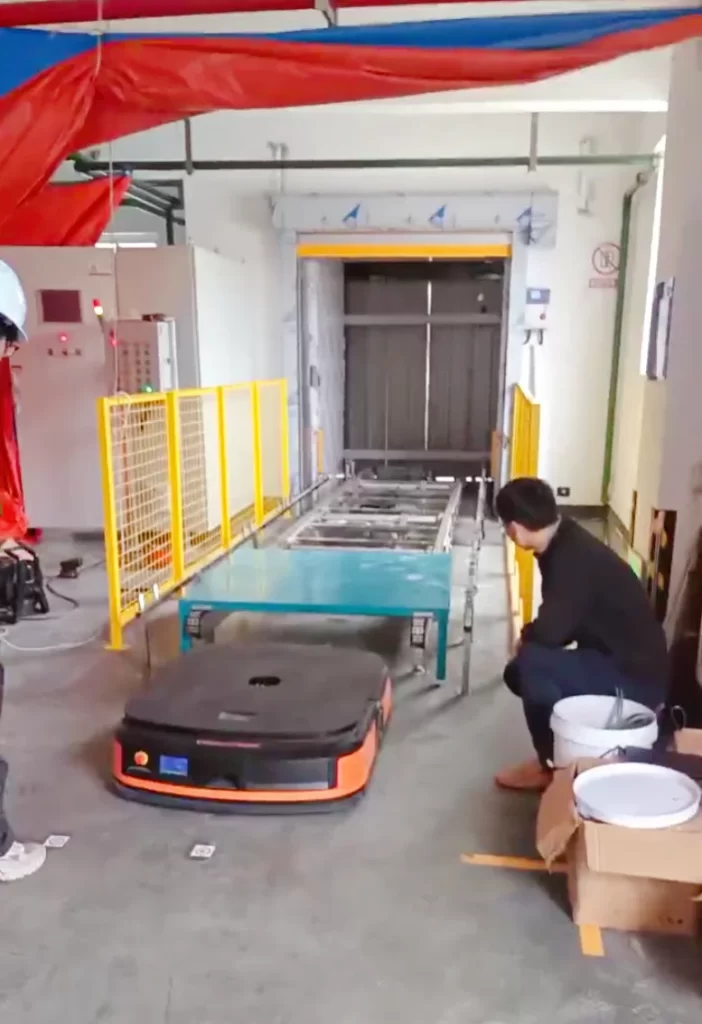
This equipment is used for vertical material transport across 5 floors in the cathode material workshop (raw material receiving, work‑in‑process transfer, finished goods dispatch), and must interface automatically with on‑site AGVs (Automated Guided Vehicles) for unmanned plant‑wide logistics.
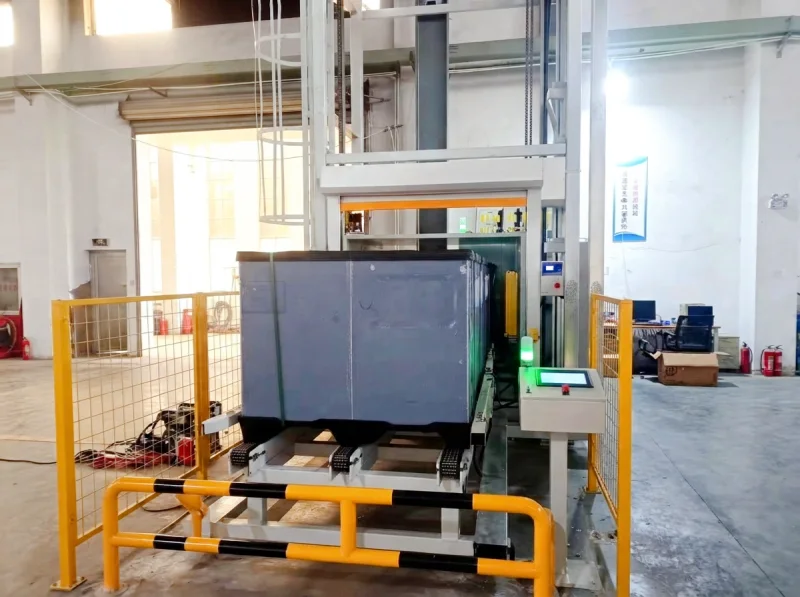
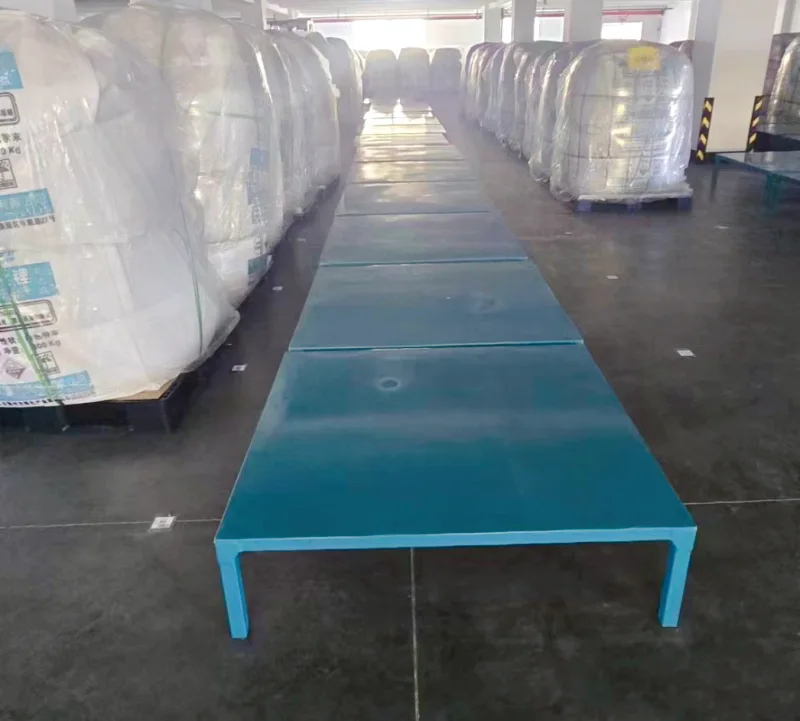 steel pallets for AGV lifting
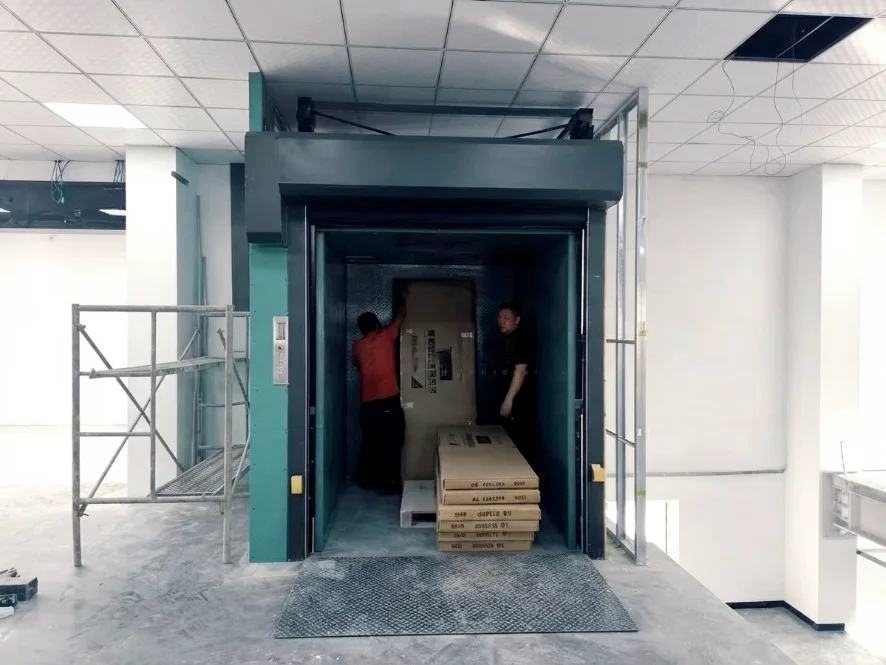
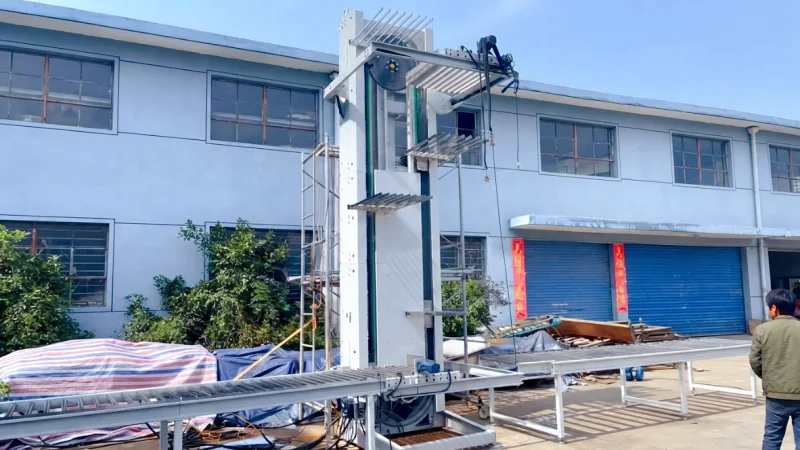
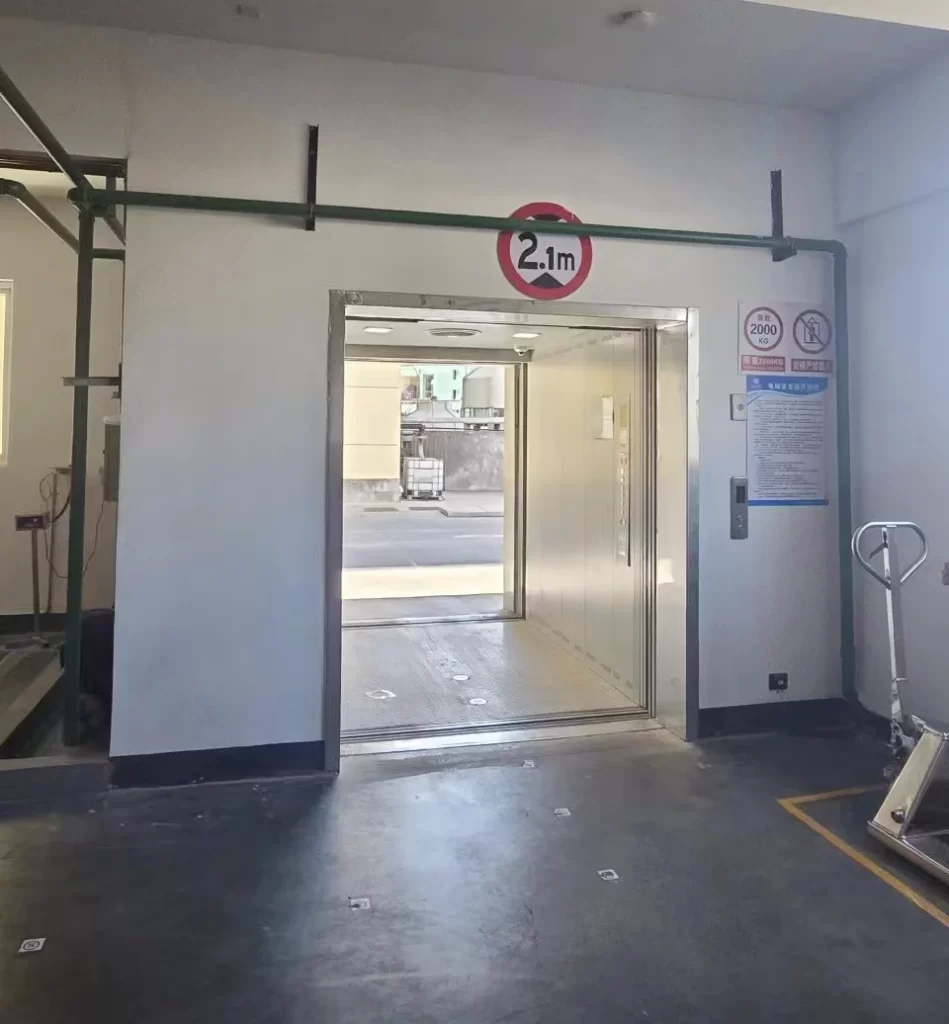 Installation: existing elevator removed one week before shipment.
Basic Parameters
| Parameter | Specification |
|---|---|
| Model | SJW1.0‑16.0 |
| Rated load | 1250 kg |
| Travel height | 16,000 mm (5 stops / 5 levels) |
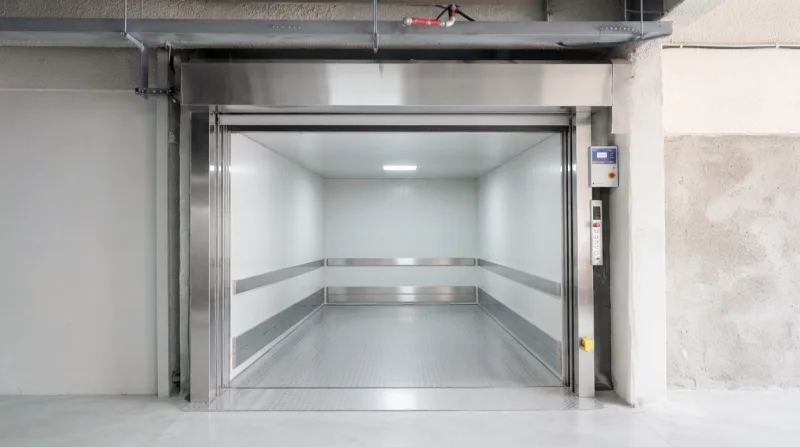
| Car size (L×W×H) | 1600×1650×2300 mm |
| Access direction | C‑shaped along W1650mm side |
| Shaft space | 2600×3460 mm |
| Lifting speed | 60 m/min (adjustable) |
| Conveyor speed | 20 m/min (adjustable) |
| Drive motor | 15kW SEW geared motor |
| Car material | 1.2mm 304 stainless steel (4 sides + roof) / 4mm 304 chequer plate (floor) |
| Conveyor chain | 304 stainless steel double‑strand |
| Surface treatment | Full powder coating on all carbon steel parts |
| Guide rails | T90 elevator‑grade |
| Levelling sensors | Schmersal (Germany) |
| Control system | Siemens PLC + Siemens/ABB/Mitsubishi VFD |
| Electrical components | Schneider |
| Photoelectric sensors | Omron/SICK |
| Safety devices | Safety gear, buffer, limit switches, overload/overspeed protection |
| Control modes | Manual/Auto switch, AGV interface reserved |
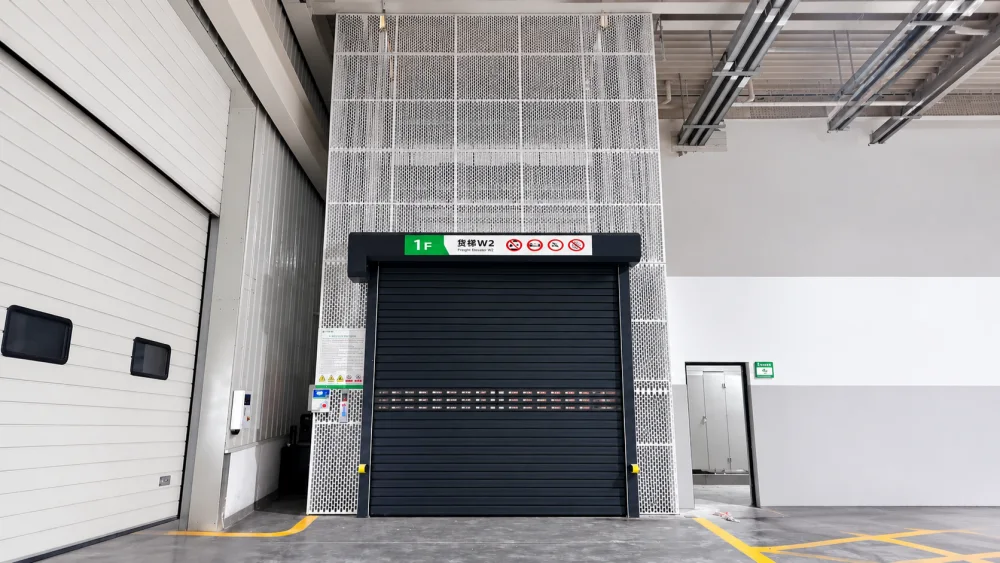
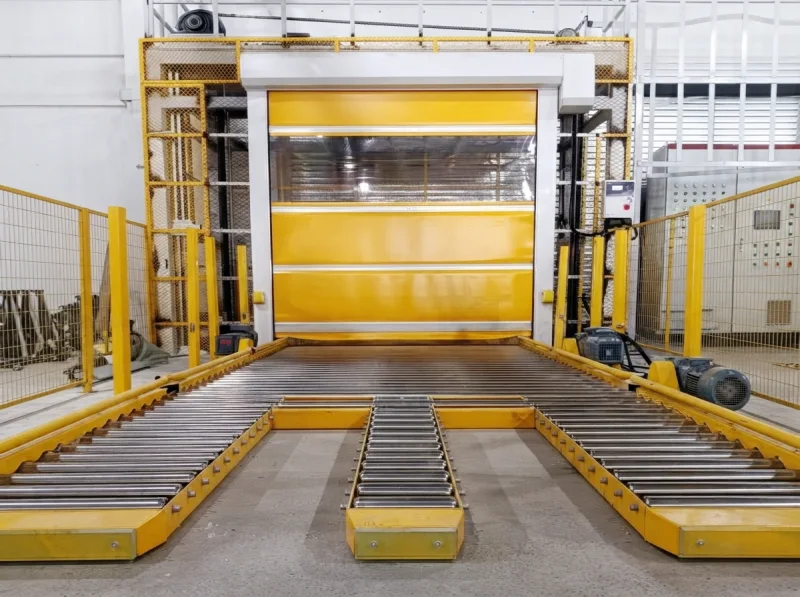
| Floor doors | PVC high‑speed doors ×5 (W1800×H2200mm), stainless steel covers |
| External guardrails | 1.8m high, powder‑coated |
Solutions
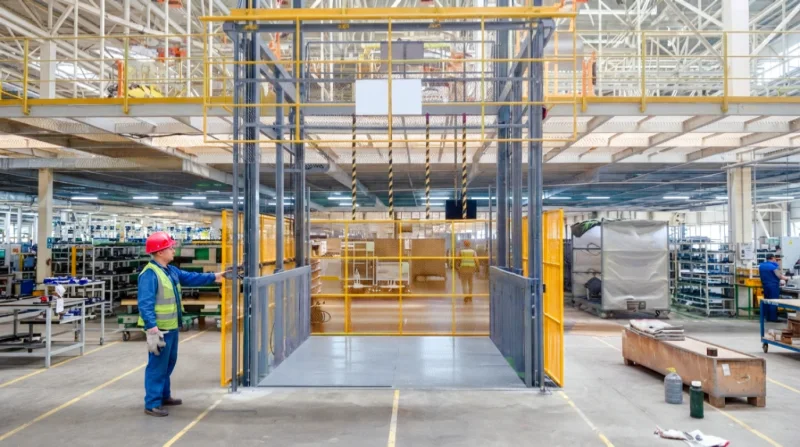
Ultra‑High Travel with 5‑Stop Positioning – Elevator‑Grade Rails + Precision Levelling
- T90 elevator‑grade guide rails ensure verticality across the full 16m travel
- Schmersal precision levelling sensors at each stop – positioning accuracy ≤±3mm
- Limit switches + buffers at top and bottom – anti‑over‑travel and fall protection
- Safety gear linkage mechanism – automatic braking in case of overspeed or suspension failure
C‑Shaped Access in a Confined Shaft – Customised Layout
- C‑shaped access along the W1650mm side – adapts to the limited shaft space (2600×3460mm)
- Car net size L1600×W1650×H2300mm – balances load size and shaft constraints
- 1.8m wide doorway – equipment delivered in sections and assembled on‑site
Comprehensive “Copper‑Free & Zinc‑Free” Protection
- Car: 1.2mm 304 stainless steel on four sides and roof; 4mm 304 stainless steel chequer plate floor
- Conveyors: Double‑strand chains in 304 stainless steel (single‑side width ≤42mm)
- Surface treatment: All carbon steel components (frame, columns, guardrails) fully powder‑coated – no exposed metal
- Fastening: Bolted connections preferred – minimal welding to avoid contamination from spatter
Fully Automatic Conveyor Integration + AGV Interface
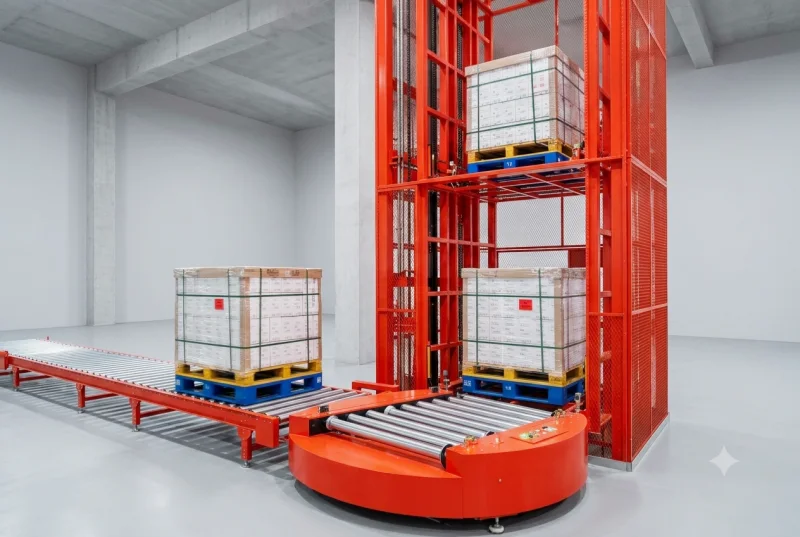
- In‑car conveyor: L1560×W1010×H315mm, 304 stainless steel double‑strand chain
- External conveyors: L4310×W1010×H315mm (3 sections, 3 independent motors) – 3 units
- Conveyor speed 20m/min adjustable – fully interlocked with lift motion
- AGV interface reserved in control system – integrates with on‑site AGV system for unmanned automatic loading/unloading
- Control system: Siemens PLC + VFD (Siemens/ABB/Mitsubishi), Schneider electrical components, Omron/SICK photoelectric sensors
Safety & Operation Functions
- Overload protection, overspeed protection, terminal over‑travel protection, safety gear protection, buffer protection, safety circuit protection, phase‑loss and phase‑sequence protection
- Manual/auto mode switch – each floor has operation buttons for dispatching
- Emergency stop buttons on each level – tri‑colour signal lights for load status indication
Urgent Delivery
- Full design‑to‑shipment cycle in 45 days
- Key components (SEW motors, Siemens PLC, Schmersal sensors) pre‑stocked
Workflow
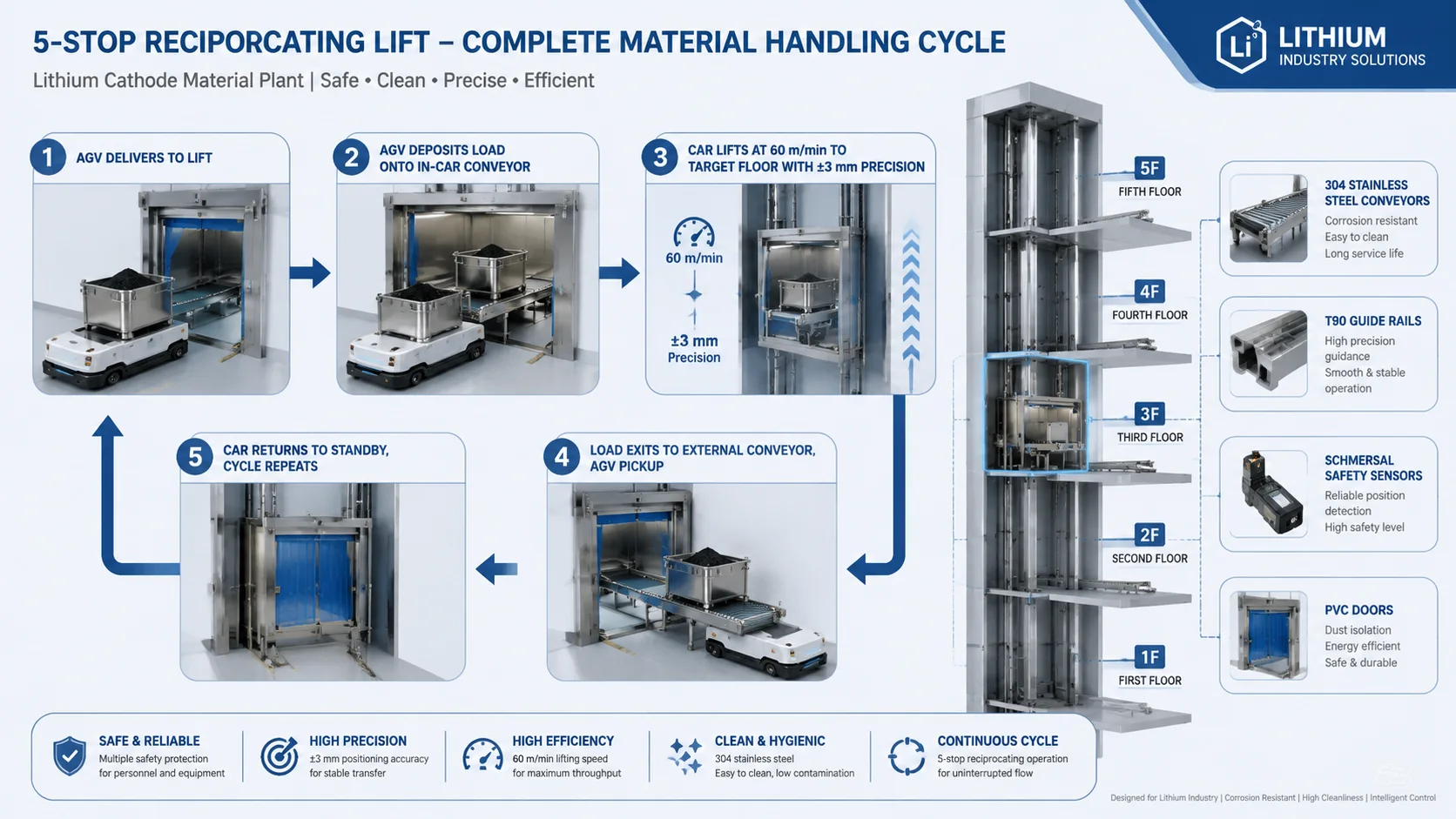
Step 1: AGV calls the lift
An AGV arrives at the ground floor loading area with a load and sends a call request via the reserved communication interface. The system checks the current car position and status.
Step 2: Load enters the car
The high‑speed door on the corresponding floor opens, and the AGV places the palletised load onto the in‑car conveyor. The AGV withdraws, and the conveyor moves the load to the designated position inside the car.
Step 3: Vertical transport
The car lifts at 60 m/min to the target floor. Elevator‑grade guide rails + Schmersal levelling sensors ensure positioning accuracy ≤±3mm.
Step 4: Load exits the car
The high‑speed door on the target floor opens, and the in‑car conveyor starts, transferring the load to the external floor conveyor for AGV or manual pickup.
Step 5: Cycle repeats
The car returns to standby or accepts the next task – seamless multi‑floor material flow across all 5 levels.
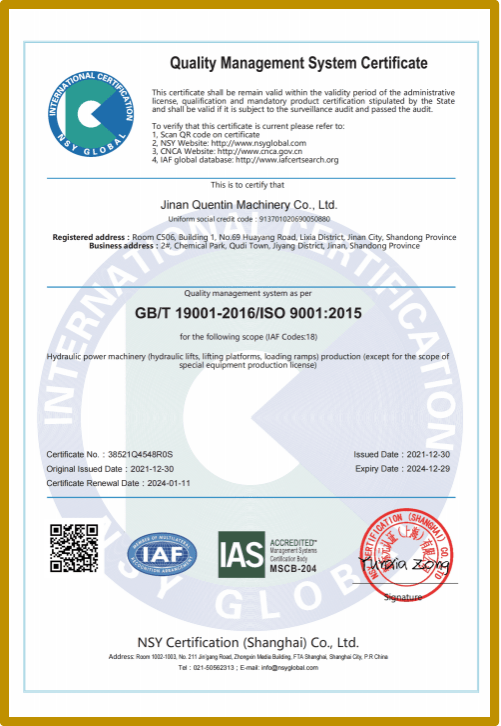
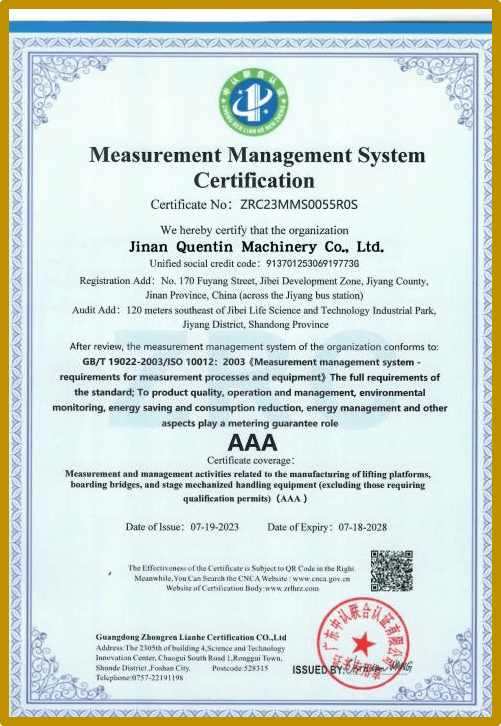
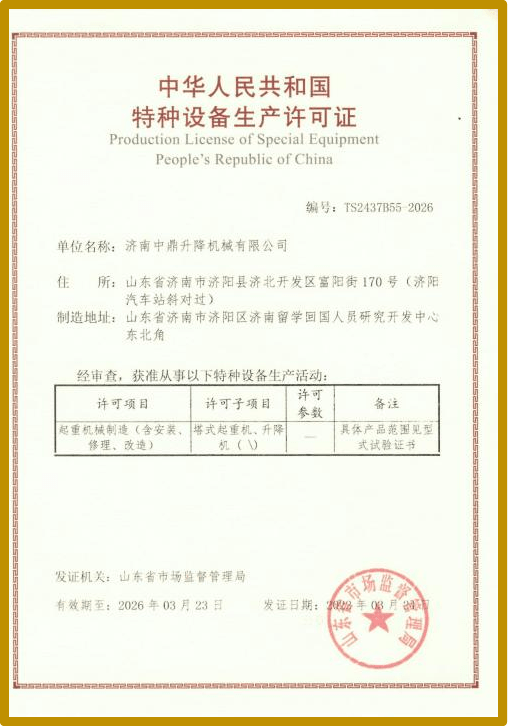
Product Certificates
FAQ
If you want to customize your material handling equipment, please contact us →.