 EN
EN  ES
ES  PT
PT  FR
FR  RU
RU  KO
KO RESOURCE CENTER > CASE STUDIES
18m 4-Stop Reciprocating Lift for Wet Wipes Industry
RELATED MEDIA
SHARE







POSTED: 17/7/2026
Overview
Project Type: Chain reciprocating lift (4 stops / 4 levels)
Client: Intelligent wet wipes manufacturing equipment provider
Industry: Wet wipes and hygiene products smart manufacturing
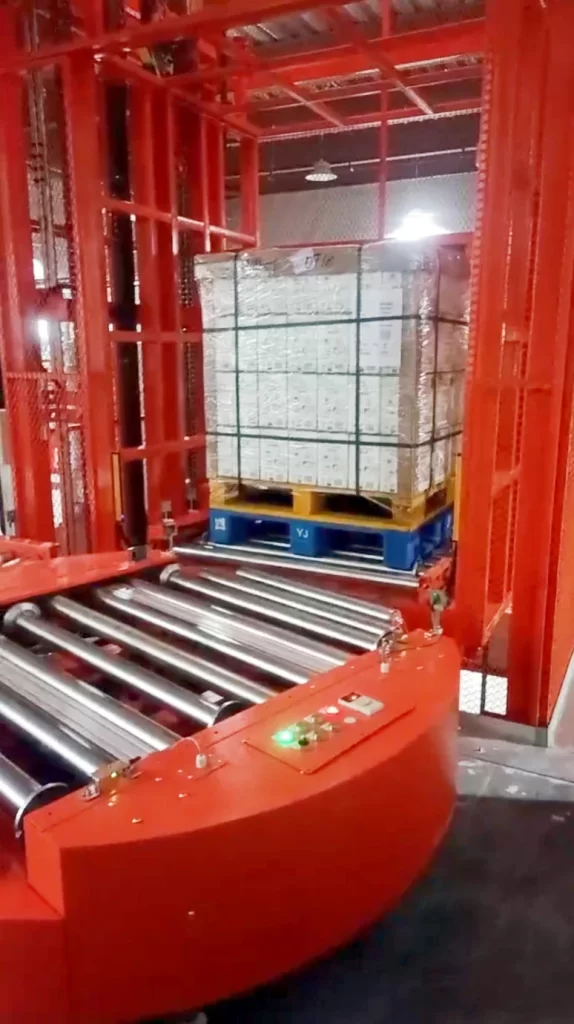
Core Function: Automated vertical transfer of palletised wet wipes products between four floors
Key Parameters: 1000kg capacity, 18,600mm travel, 4 stops / 4 levels, 50-60m/min speed, 15kW SEW drive, Siemens PLC, RAL2009 orange powder coating with full diamond mesh enclosure
Industry Context
Driven by consumption upgrading and automation trends, wet wipes manufacturers are placing increasing demands on fully integrated, continuous production lines – from raw material conveying, folding, liquid adding, cutting, and packaging to palletising – requiring seamless automated connectivity across the entire process.
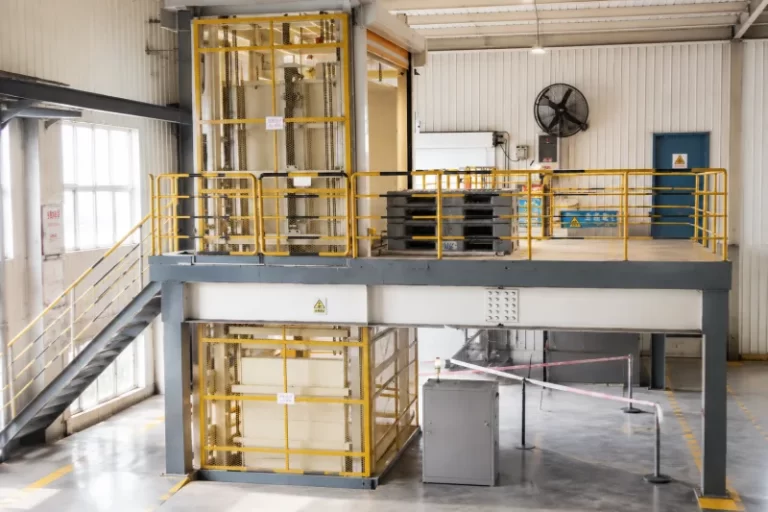
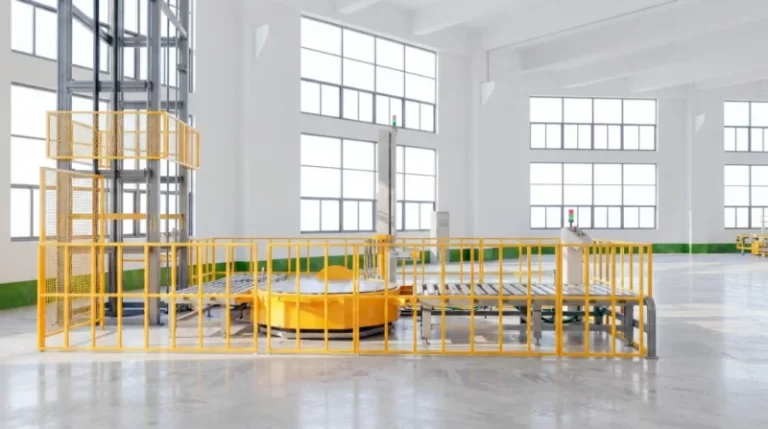
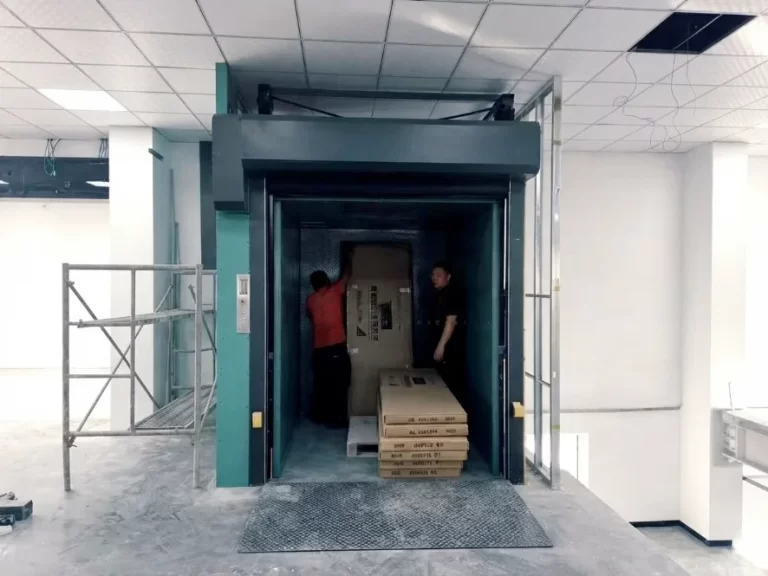
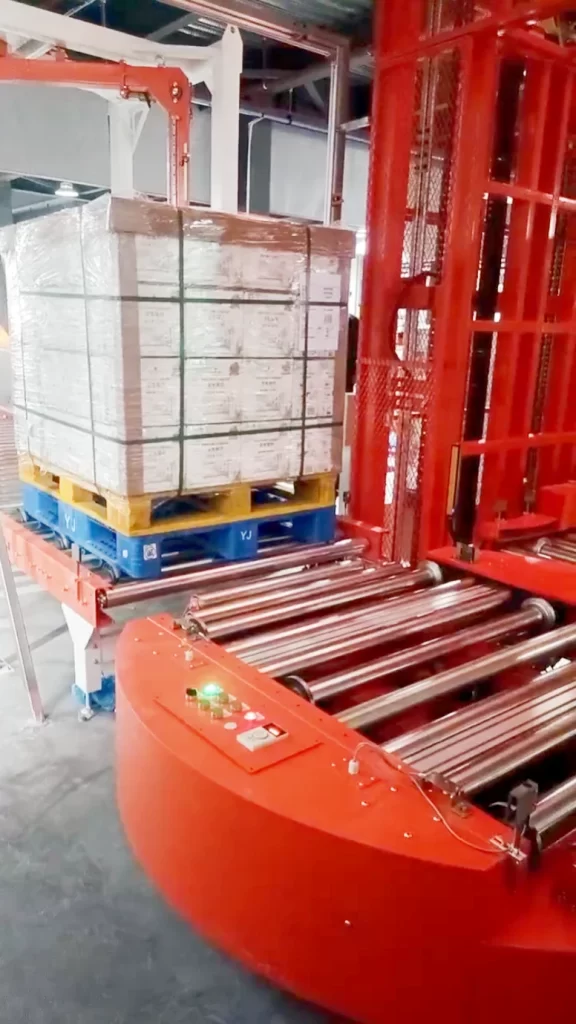
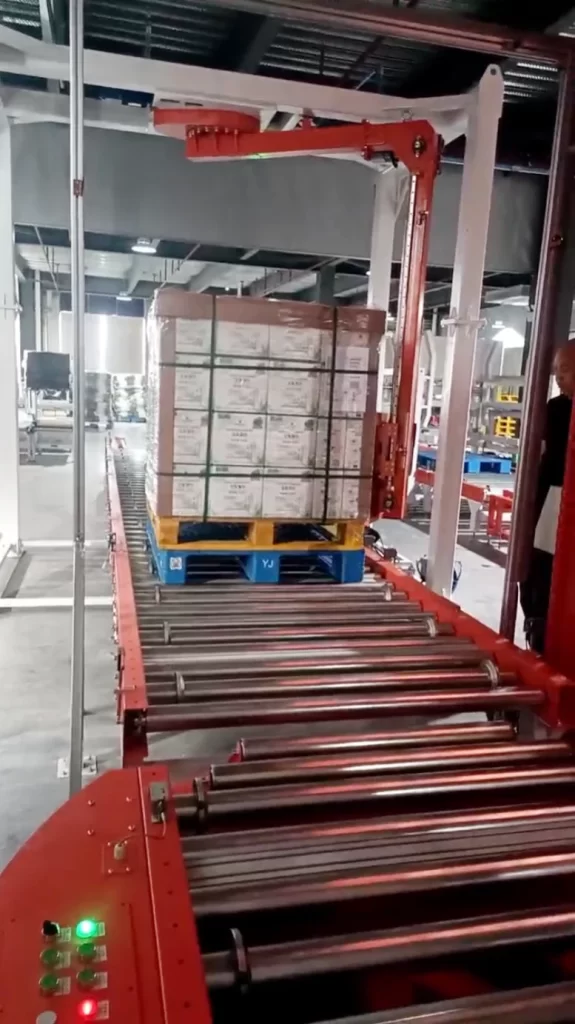
This equipment is installed at the client’s factory, for automatic vertical transfer of finished wet wipes products (palletised on Chuan‑style pallets, dimensions W1100×D1300×H2000mm) between four floors. Products enter and exit the lift car via the customer‘s roller conveyor system (500mm above floor level), enabling efficient cross‑floor material flow.

Basic Parameters
| Parameter | Value |
|---|---|
| Rated load | 1000 kg |
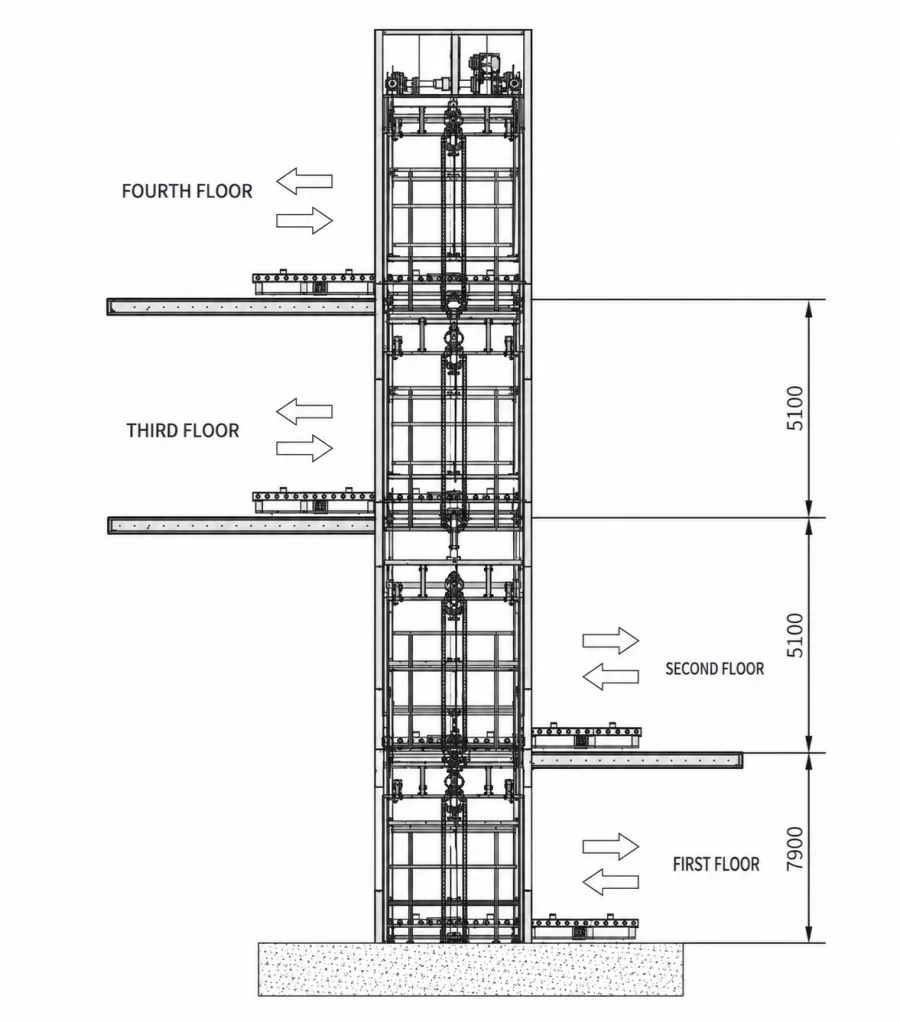
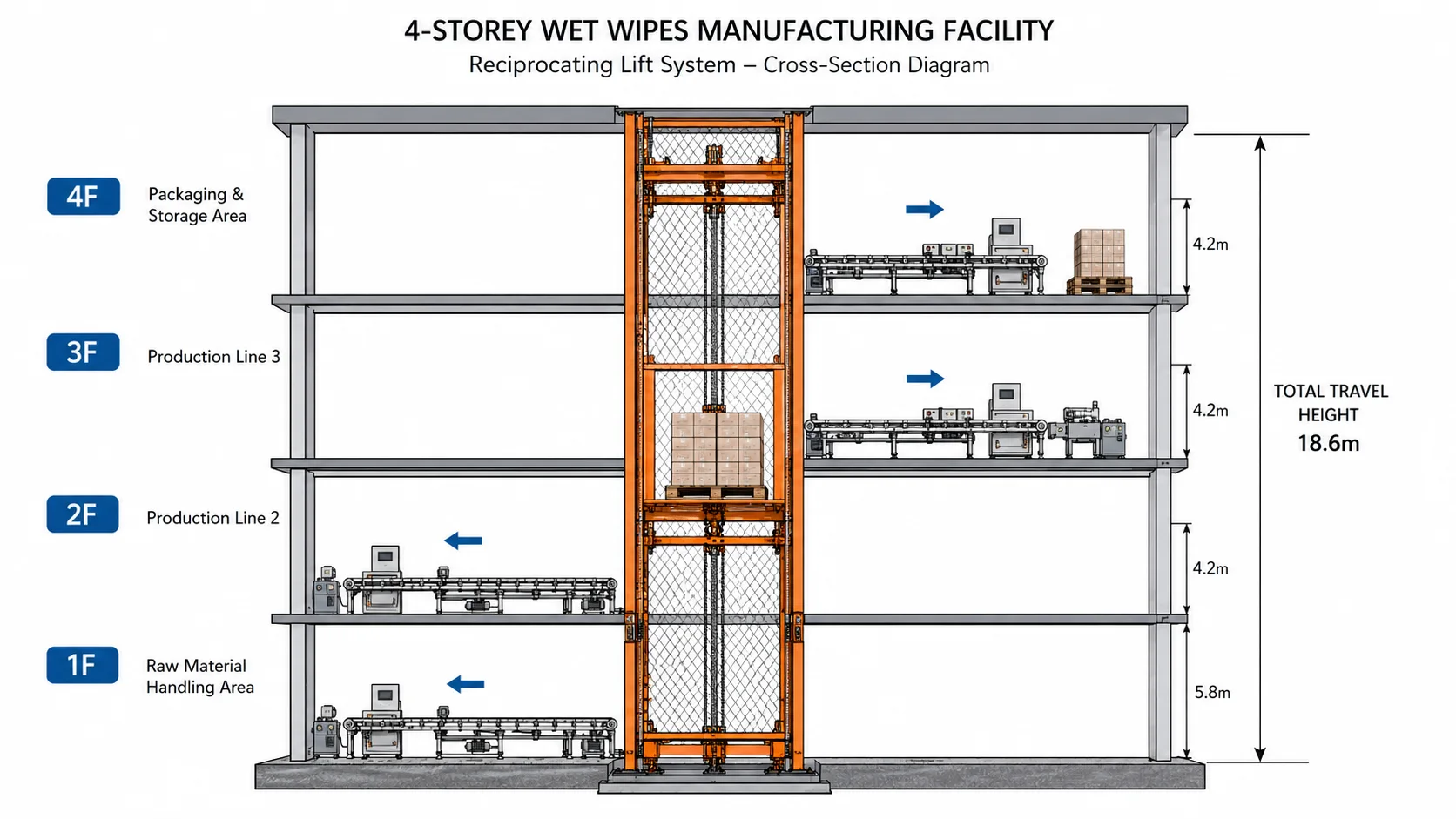
| Travel height | 18.6 m (4 stops / 4 levels) |
| Car size (W×D×H) | 1700×1500×2500 mm |
| Lifting speed | 50-60 m/min |
| Drive motor | 15 kW SEW |
| Control system | Siemens PLC + VFD, Beckhoff I/O communication |
| Access direction | Floors 1&2 same / Floors 3&4 opposite (1700mm side) |
| In-car conveyor | W1200×D1500mm, SEW motor |
| Safety features | T90 guide rails, safety gear, polyurethane buffer, light curtain |
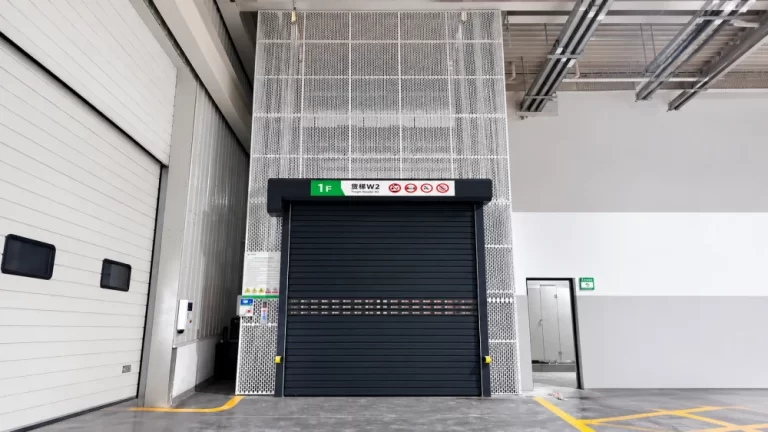
| Enclosure colour | RAL2009 orange, diamond steel mesh with powder coating |
| Installation | Pit-less floor mounting |
Solutions
Ultra‑High Travel with 4‑Stop Positioning – Elevator‑Grade Rails + Precision Levelling
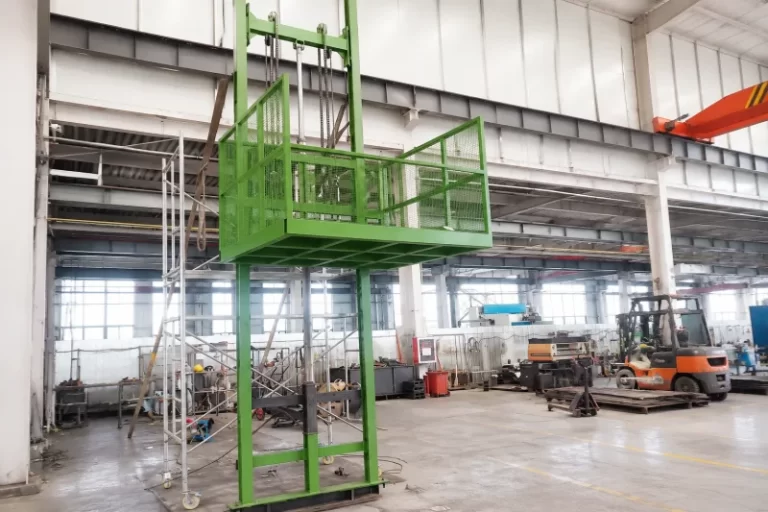
- Guide rail system: T90 car guide rails + TA5A counterweight guide rails – ensuring verticality across the full 18.6m travel
- Levelling accuracy: Precision levelling sensors at each stop – accuracy within ±3mm
- Safety devices: Polyurethane buffer + safety gear – automatic braking in case of overspeed or suspension failure
- Top limit: Anti‑over‑travel protection
Opposite‑Direction Access Configuration – Intelligent Floor Recognition & Control
- Access direction: W1700mm side – same direction on Floors 1 & 2, opposite direction on Floors 3 & 4
- Control logic: PLC automatically identifies the access direction based on target floor – conveyor operates in the preset direction once the car is in position
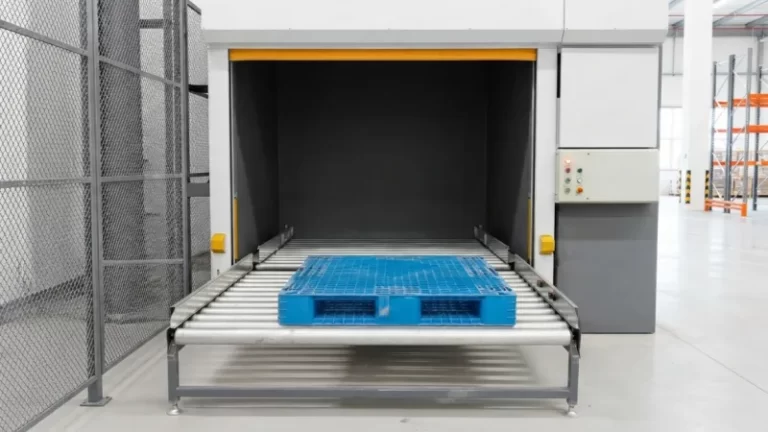
- Flexible docking: In‑car roller conveyor (W1200×D1500mm, SEW motor) precisely aligns with customer conveyors on each floor
Open‑Frame Car & Rigid Structure
- Car frame: 120×60×5mm rectangular tube – ensuring overall rigidity with an open structure
- Unenclosed car: No floor, side panels, or roof – products enter and exit directly via roller conveyor
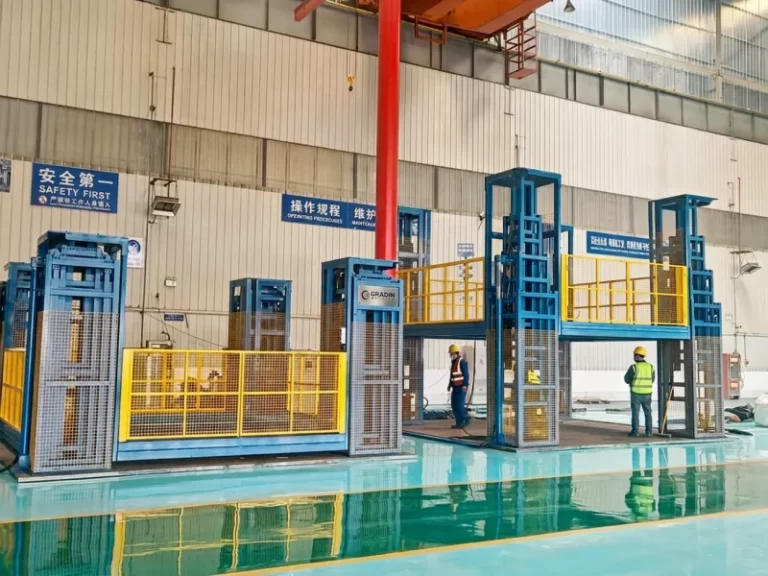
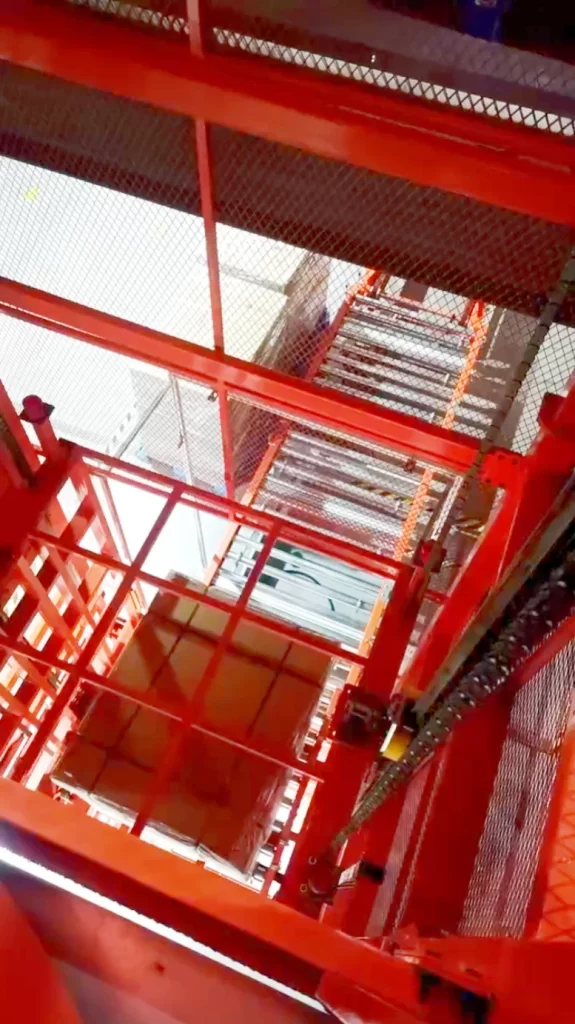
- Enclosure: Full diamond steel mesh with powder coating – balancing safety protection with ventilation
Pit‑less Floor Mounting
- Equipment mounted directly on indoor concrete floor – floor openings sized per design specifications
- Car docking height matches customer conveyor system (500mm above floor)
- Saves civil work costs and shortens installation time
Intelligent Control System & Third‑Party Communication
- Main control: Siemens PLC + Siemens VFD
- Low‑voltage components: Schneider Electric
- Communication protocol: I/O communication with customer‘s Beckhoff PLC for integrated line control
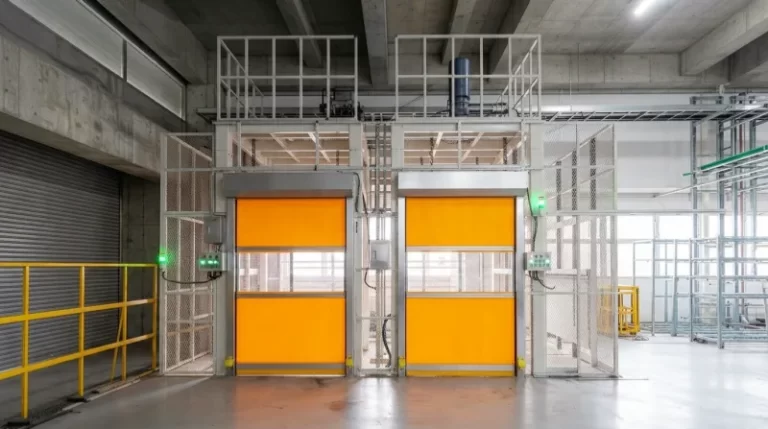
- Safety detection: Over‑width and over‑height detection light curtains at entry/exit (domestic quality brand)
- Drive motor: 15kW SEW geared motor – ample power for high‑frequency start/stop cycles
- Lifting speed: 50‑60 m/min adjustable
Workflow
Step 1: Load enters car – Palletised wet wipes products are transferred from customer roller conveyor (500mm above floor) onto the in‑car conveyor (W1200×D1500mm). Load‑in‑position sensor triggers the next action.
Step 2: Vertical lifting – The car lifts at 50‑60 m/min to the target floor. T90 guide rails + precision levelling sensors ensure positioning accuracy within ±3mm.
Step 3: Load exits in correct direction – Based on the target floor, the system automatically determines the exit direction: same direction on Floors 1 & 2, opposite direction on Floors 3 & 4. The in‑car conveyor starts, transferring the load to the customer‘s floor conveyor.
Step 4: Cycle repeats – The car returns to standby or accepts the next task. Fully automated material flow across all four floors.
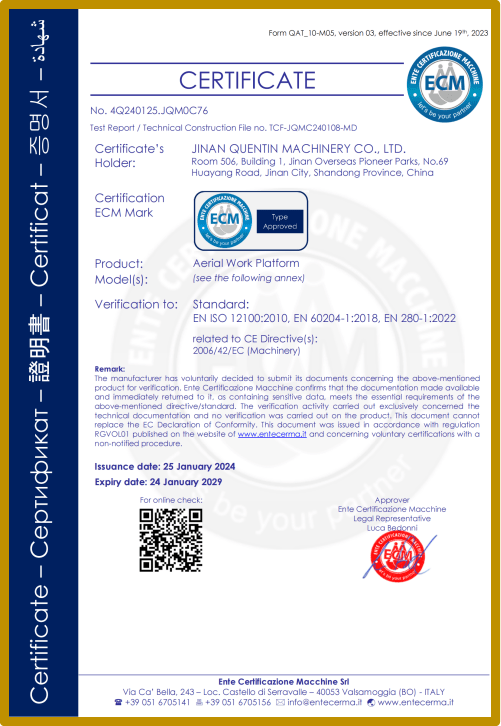
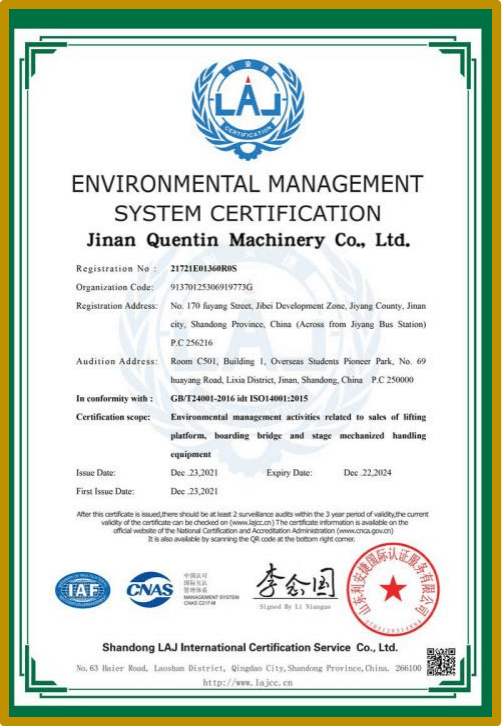
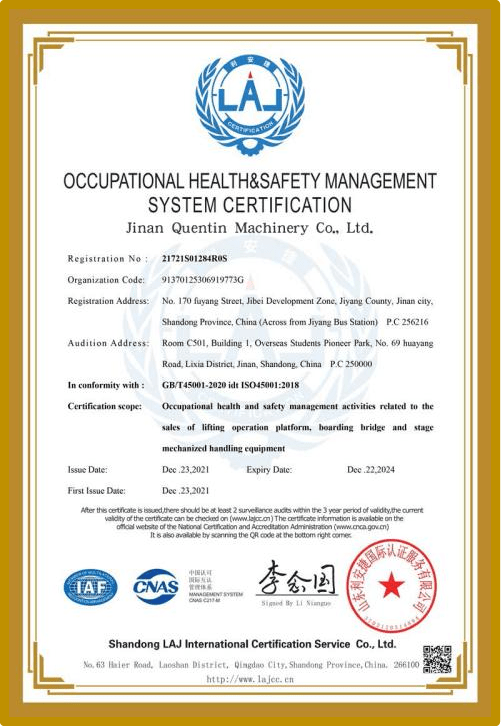
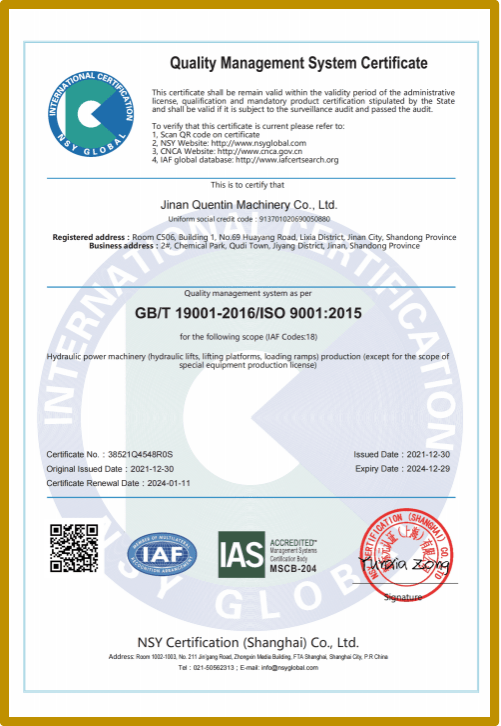
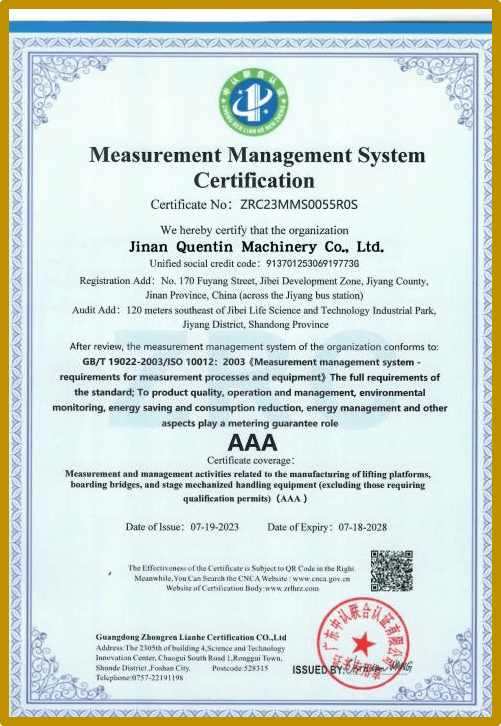
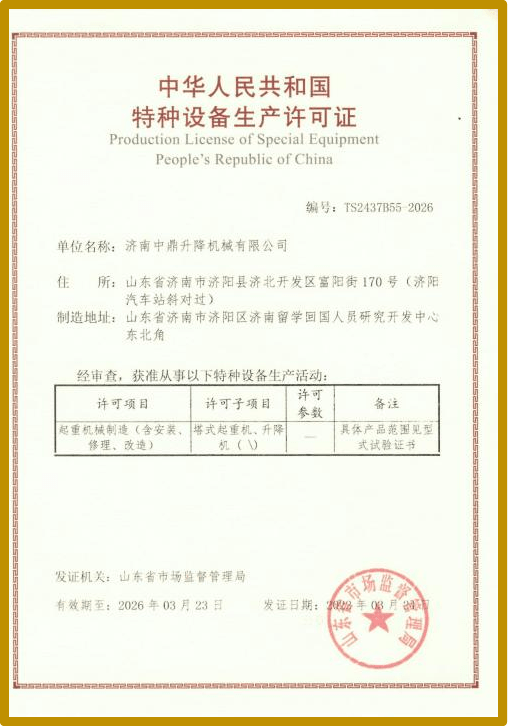
Product Certificates
FAQ
If you want to customize your material handling equipment, please contact us →.