 EN
EN  ES
ES  PT
PT  FR
FR  RU
RU  KO
KO RESOURCE CENTER > CASE STUDIES
Fixed Hydraulic Dock Leveler|10‑Ton Capacity|3x Efficiency Gain for Bearing Warehouse
RELATED MEDIA
SHARE







POSTED: 6/22/2026
Overview
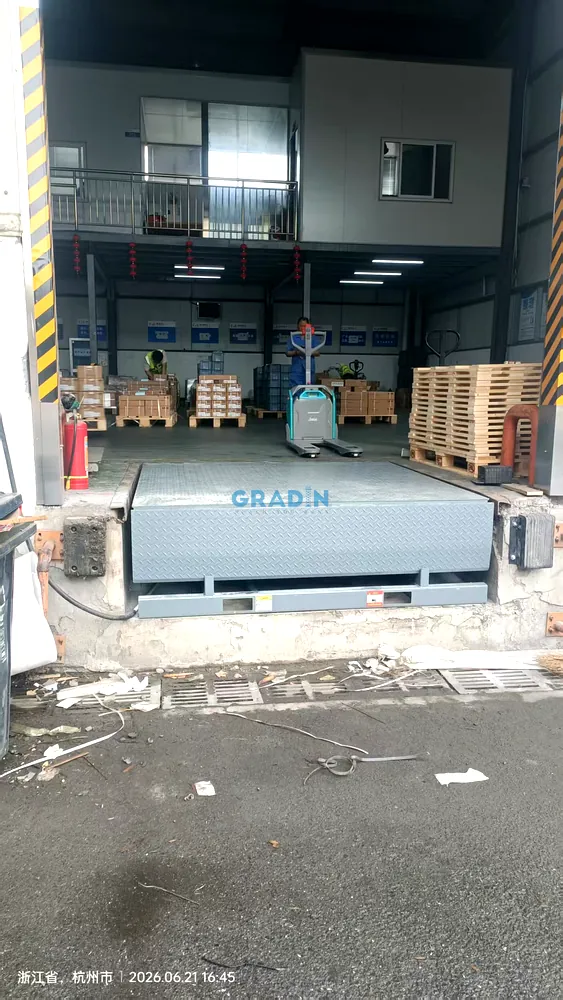
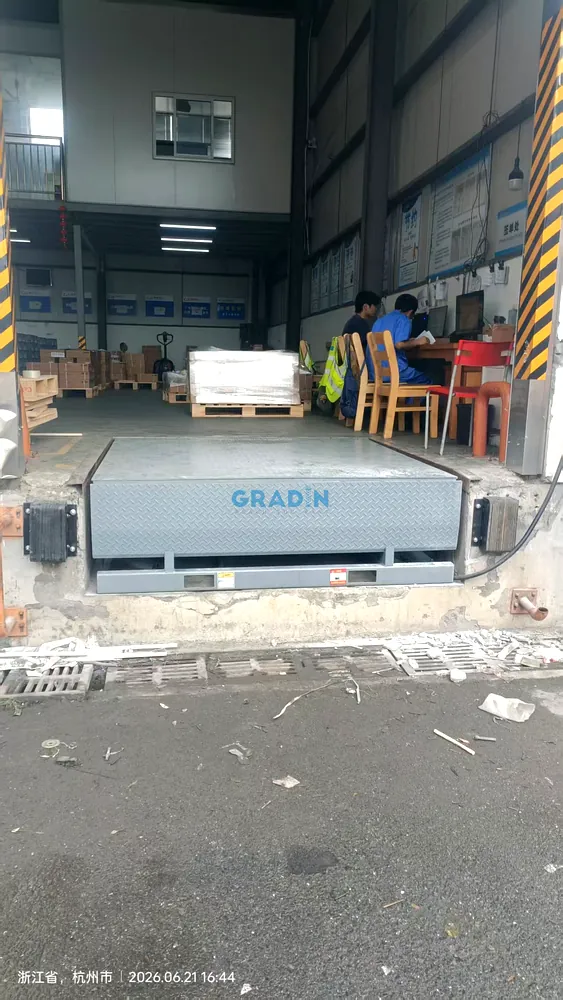
Project Type: Fixed hydraulic dock leveler
Client: A leading bearing manufacturing group
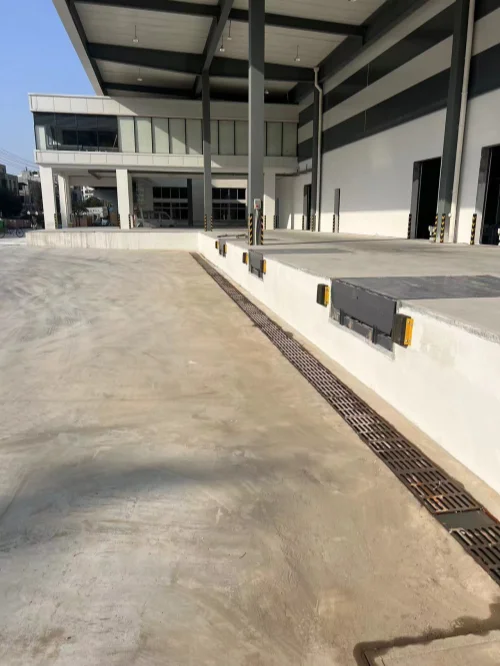
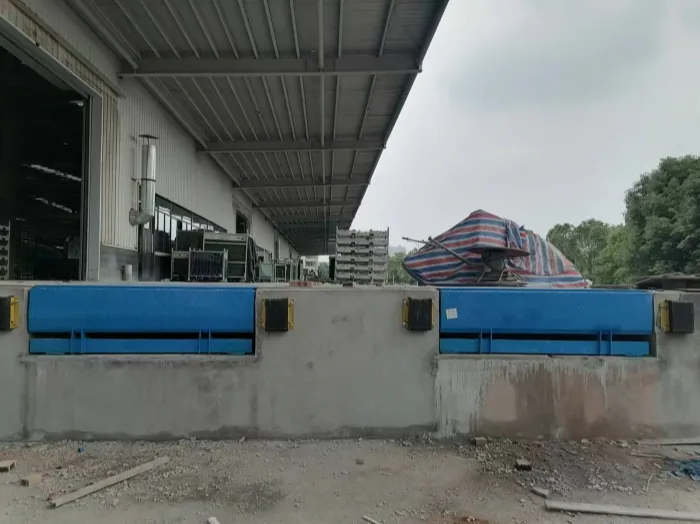
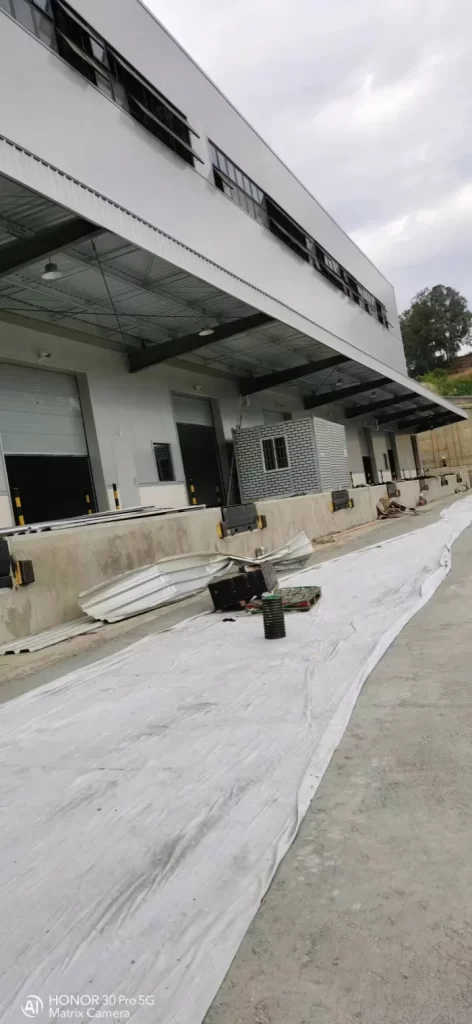
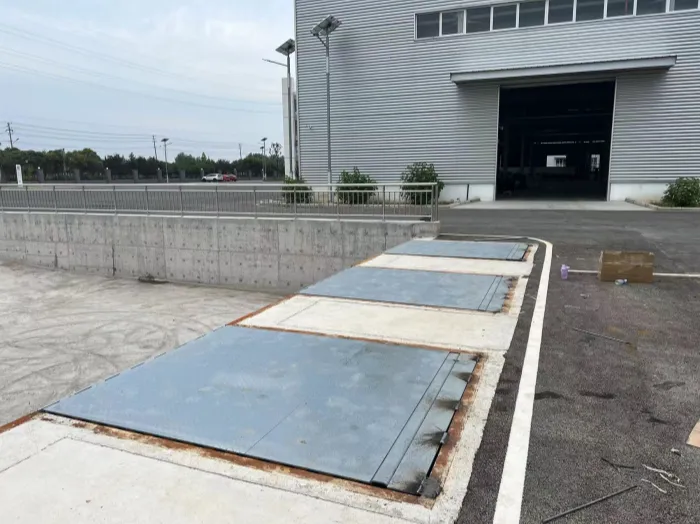
Installation Location: Central warehouse loading bay
Application: Rapid loading/unloading of wooden palletised goods to/from container trucks
Core Function: Bridge the gap between warehouse dock and container trucks, enabling forklifts to enter trailers directly for bulk handling
Client Background & Project Requirements
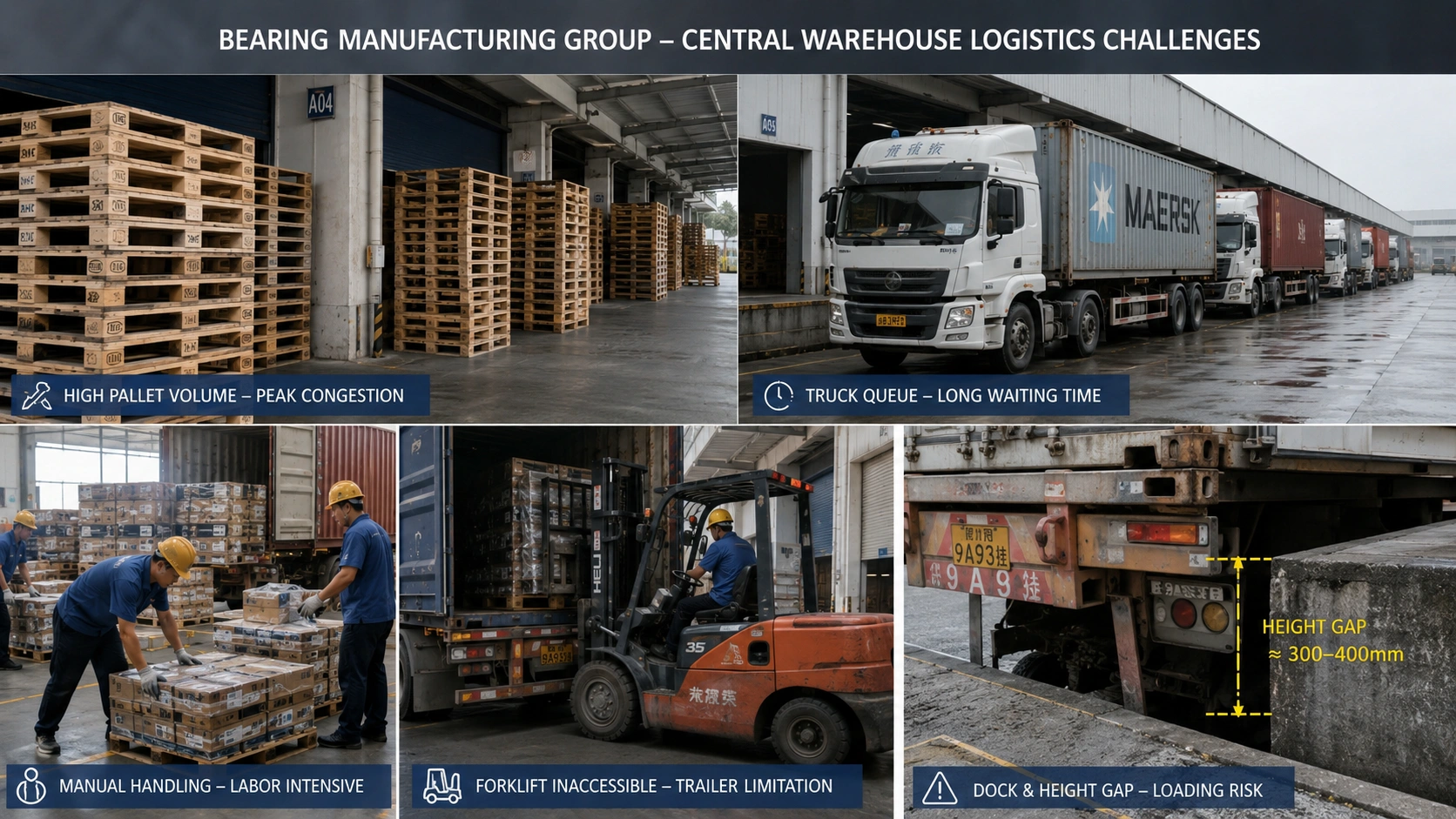
This bearing group is a market leader in China‘s bearing industry, manufacturing thousands of product variants including automotive bearings, industrial bearings, and precision bearings. With continuous production expansion, the central warehouse faced surging daily cargo throughput – the original loading/unloading method could no longer meet operational demands.
Logistics bottlenecks identified:
- Height differences between the warehouse dock and container truck beds prevented forklifts from entering trailers directly
- Wooden palletised goods had to be manually moved in and out of trailers – each loading/unloading cycle took 1.5‑2 hours
- Manual handling was not only inefficient but also increased product damage and worker injury risks
- Multiple trucks waiting in line caused severe logistics bottlenecks
To address these issues, the client chose to install a fixed hydraulic dock leveler at the central warehouse loading bay, enabling seamless forklift access and dramatically improving loading/unloading efficiency.
Basic Parameters
| Parameter | Specification |
|---|---|
| Equipment type | Fixed hydraulic dock leveler |
| Rated load capacity | 10,000 kg |
| Platform width | 2,000 mm |
| Platform length | 2,500 mm |
| Lip length | 400 mm |
| Travel (up) | 500 mm |
| Travel (down) | 500 mm |
| Main frame material | High‑strength manganese steel |
| Deck material | Non‑slip chequer plate |
| Drive system | Hydraulic power unit |
| Control | Multi‑function control box with emergency stop |
| Safety features | Anti‑slip safety skirt |
| Application | Warehouse dock-to-container truck loading/unloading |
Solution
2.1 Equipment Selection
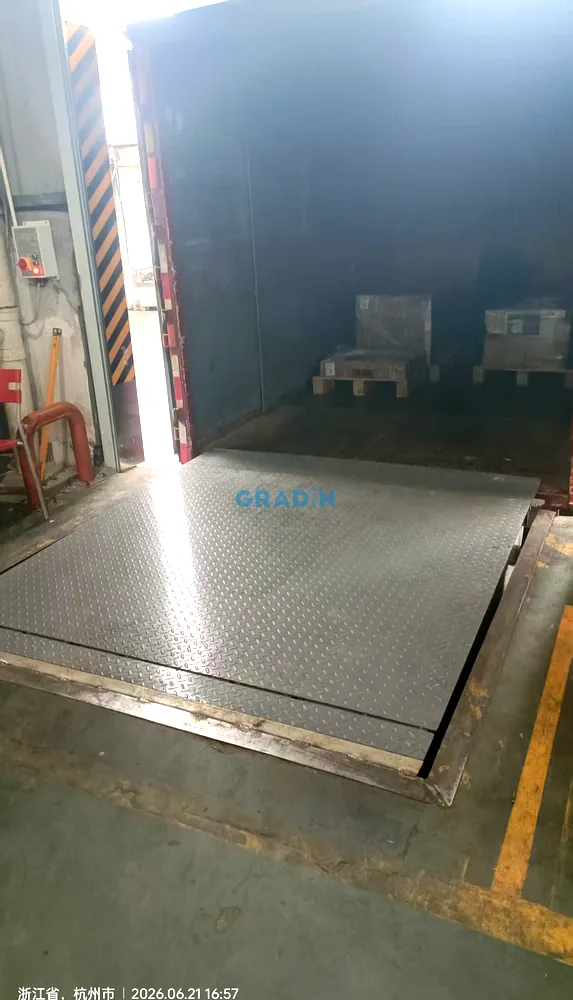
Based on dock conditions and daily throughput, we supplied a Fixed Hydraulic Dock Leveler with a high‑strength manganese steel main frame and a non‑slip chequer plate deck. The unit is permanently mounted to the dock and can be adjusted to match various truck bed heights – allowing forklifts to drive directly into trailers for efficient loading/unloading.
2.2 Core Operation Workflow
Loading/Unloading Cycle:
- Truck positioning: The container truck reverses up to the dock, aligning its rear with the dock leveler.
- Height adjustment: Hydraulics raise the main platform, extending the lip to rest securely on the truck bed.
- Forklift entry: The forklift, loaded with wooden pallets, drives directly into the trailer via the dock leveler.
- Bulk loading/unloading: The forklift completes pallet placement or retrieval inside the trailer – no manual handling required.
- Cycle complete: The leveler returns to its stored position once loading/unloading finishes, and the truck departs.
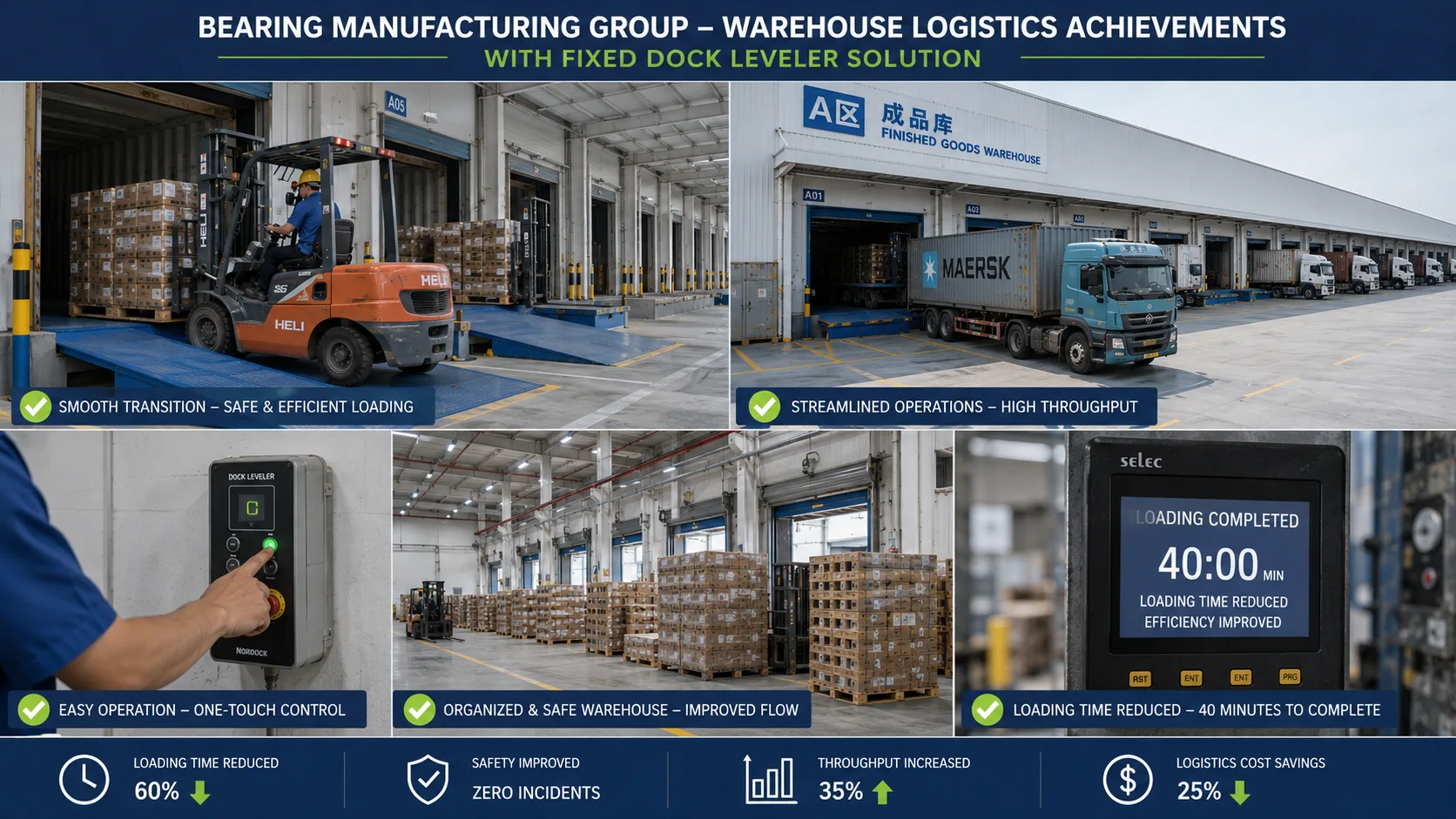
Efficiency gain: Each loading/unloading cycle was reduced from 1.5‑2 hours to 30‑40 minutes – representing a 3‑fold efficiency improvement.
2.3 Equipment Features & Advantages
- Heavy‑duty construction: High‑strength manganese steel frame; non‑slip chequer plate deck for excellent load capacity.
- Hydraulic drive: Premium hydraulic power unit – simple operation, high reliability.
- Safety features: Emergency stop button, anti‑slip safety skirt, and other protective devices.
- Single‑operator system: One forklift driver handles the entire loading/unloading process – minimising labour requirements.
- Adjustable height: Adapts to different truck bed heights automatically.
Project Value
- Dramatically improved efficiency: Cycle time cut to one‑third of its original duration – daily throughput significantly increased.
- Reduced labour costs: Single forklift operator handles the entire process – fewer workers required.
- Reduced product damage: Forklift‑based handling replaces manual lifting – minimising drops, bumps, and scratches.
- Enhanced safety: Eliminates manual handling injuries; multiple safety devices protect personnel and equipment.
- Faster logistics turnaround: Minimised truck waiting times – overall logistics efficiency improved.
Case ID: Gradin‑DL‑2024‑001
Applications: Warehouse loading/unloading in bearing manufacturing, machining, automotive parts, and general industrial logistics.




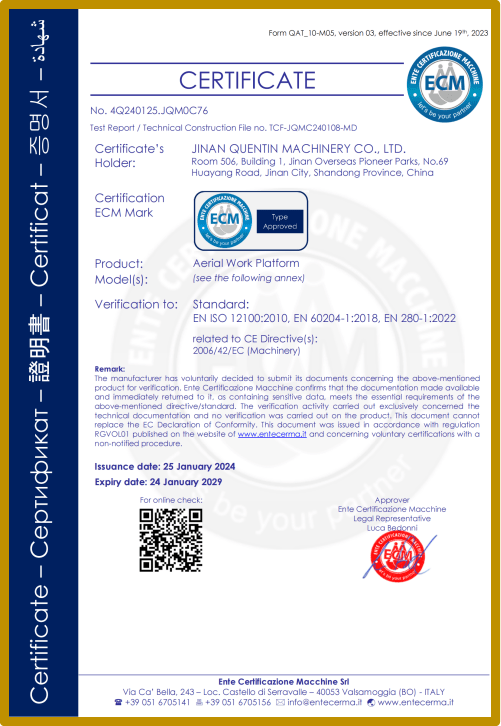
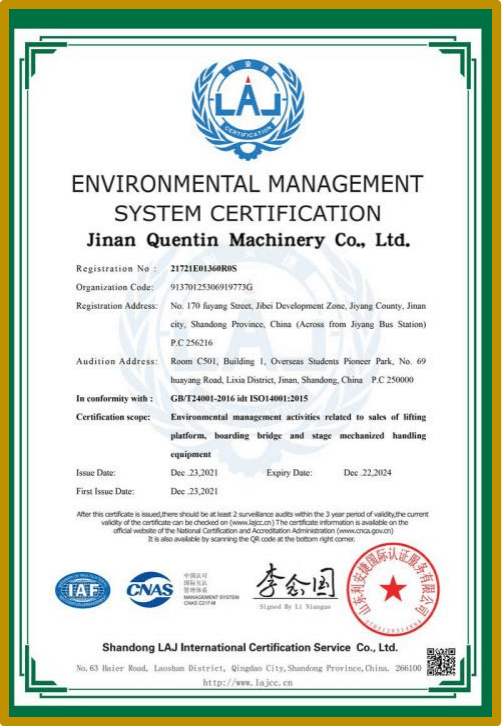
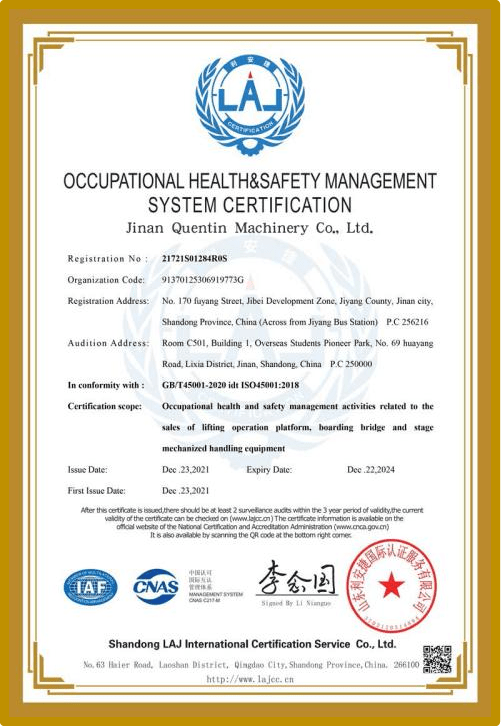
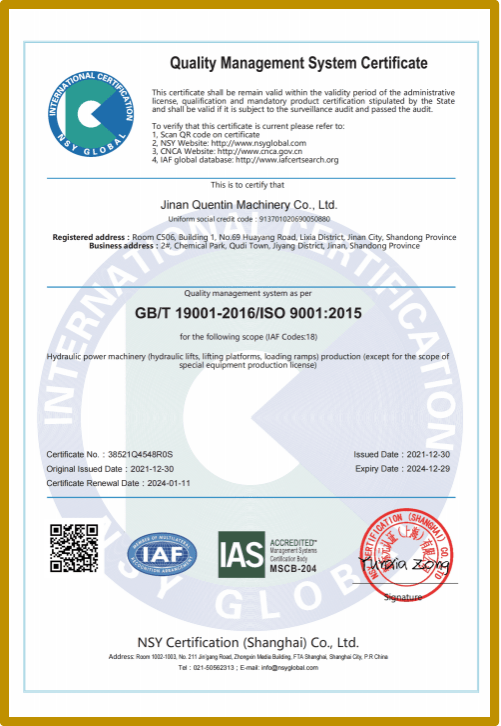
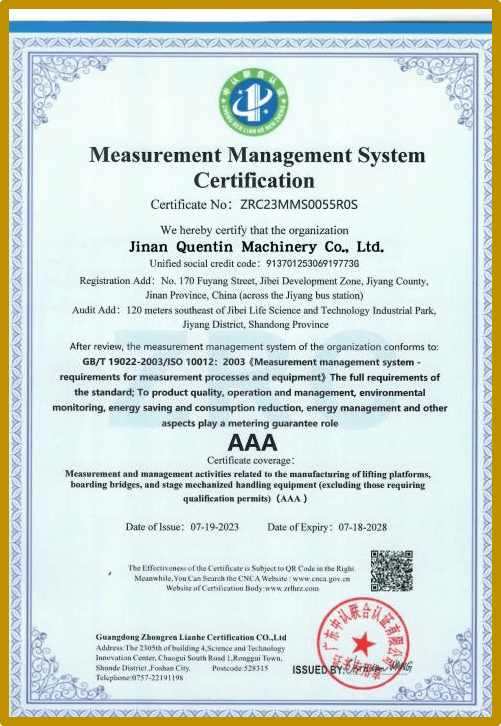
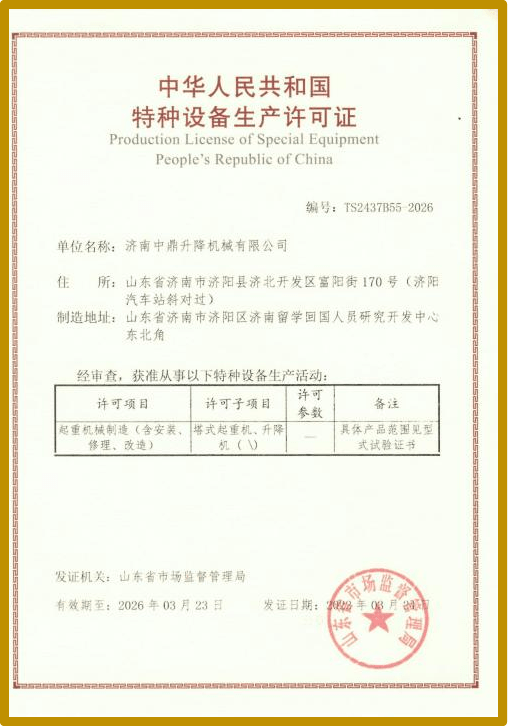
Product Certificates
FAQ
If you want to customize your material handling equipment, please contact us →.