 EN
EN  ES
ES  PT
PT  FR
FR  RU
RU  KO
KO RESOURCE CENTER > CASE STUDIES
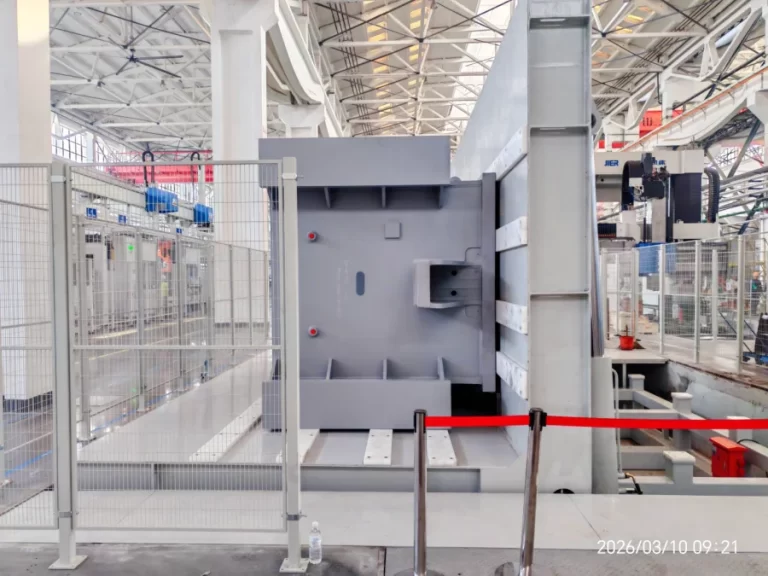
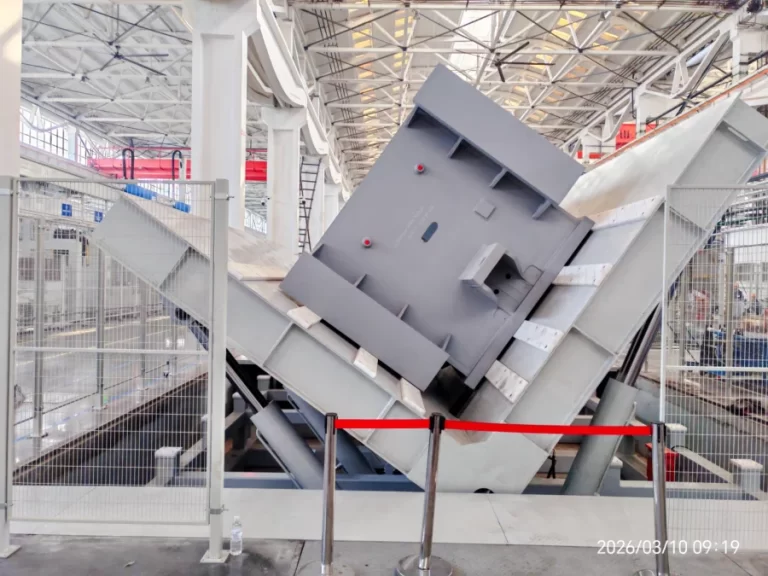
50-Ton Hydraulic Tilter for Machine Tool Industry
RELATED MEDIA
SHARE







POSTED: 6/15/2026
Industry Background
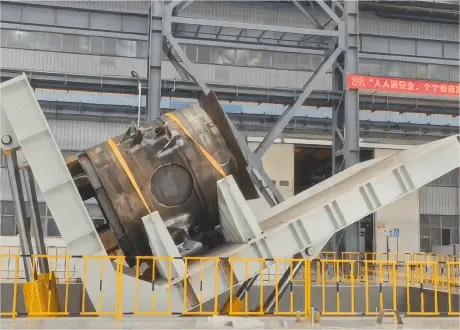
As heavy machinery, machine tool, and industrial equipment manufacturers continue to produce larger and more complex components, the safe handling and rotation of oversized workpieces has become an increasingly important challenge.
In many production processes, including welding, machining, assembly, inspection, and painting, large components must be rotated between horizontal and vertical positions multiple times. Traditional turning methods often rely on overhead cranes, manual intervention, or temporary fixtures, which can be inefficient, difficult to control, and potentially hazardous when handling ultra-heavy loads.
The challenge becomes even greater when workpieces feature irregular geometries, protruding structures, or varying dimensions. Manufacturers require a solution that can not only handle extreme loads safely, but also provide precise positioning, operational flexibility, and long-term reliability.
As a result, custom hydraulic tilting machines are increasingly being adopted across industries such as machine tool manufacturing, wind energy, pressure vessels, steel structures, transformers, and heavy equipment production to improve safety, efficiency, and workflow consistency.
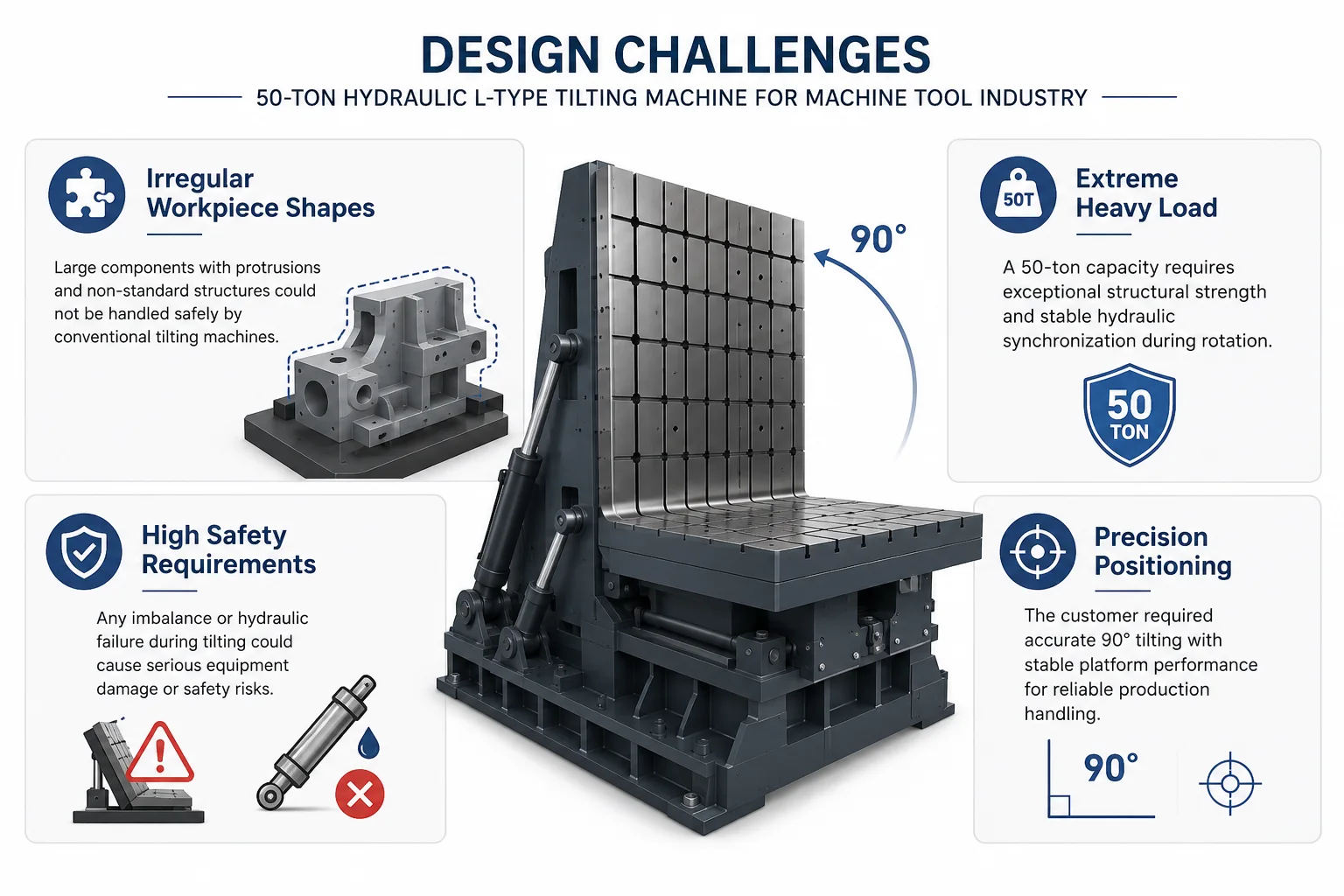
Challenges
- Irregular Workpiece ShapesLarge components with protrusions and non-standard structures could not be handled safely by conventional tilting machines.
- Extreme Heavy LoadA 50-ton capacity requires exceptional structural strength and stable hydraulic synchronization during rotation.
- High Safety RequirementsAny imbalance or hydraulic failure during tilting could cause serious equipment damage or safety risks.
- Precision PositioningThe customer required accurate 90° tilting with stable platform performance for reliable production handling.
This concise version is more suitable for a website case study and easier for international customers to read quickly.
Solutions
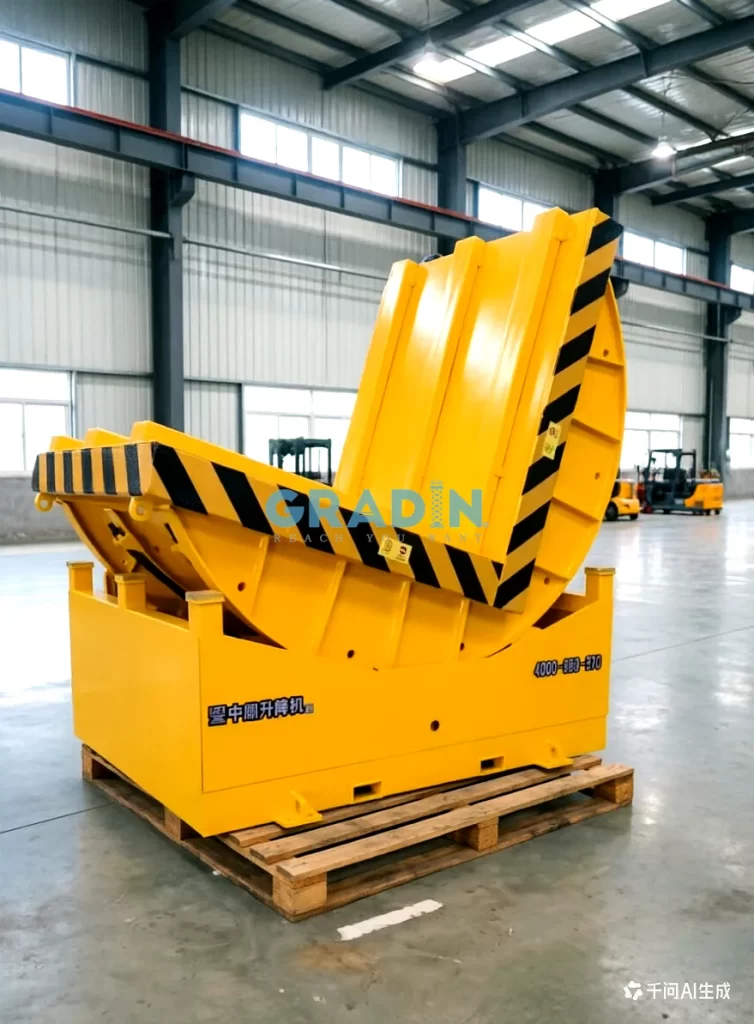
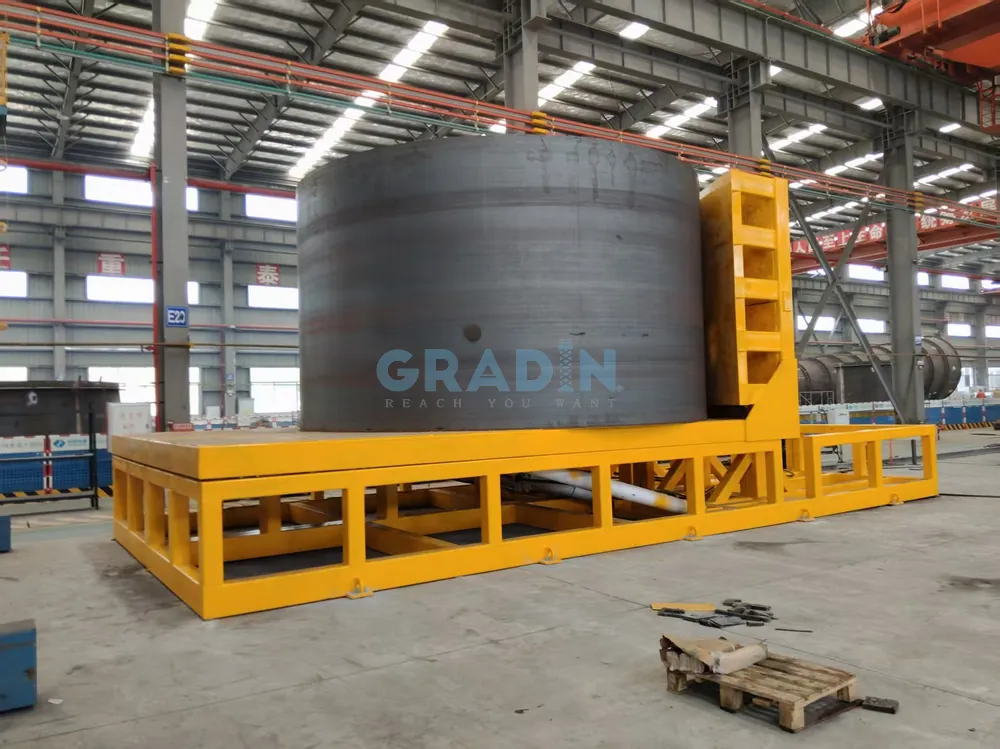
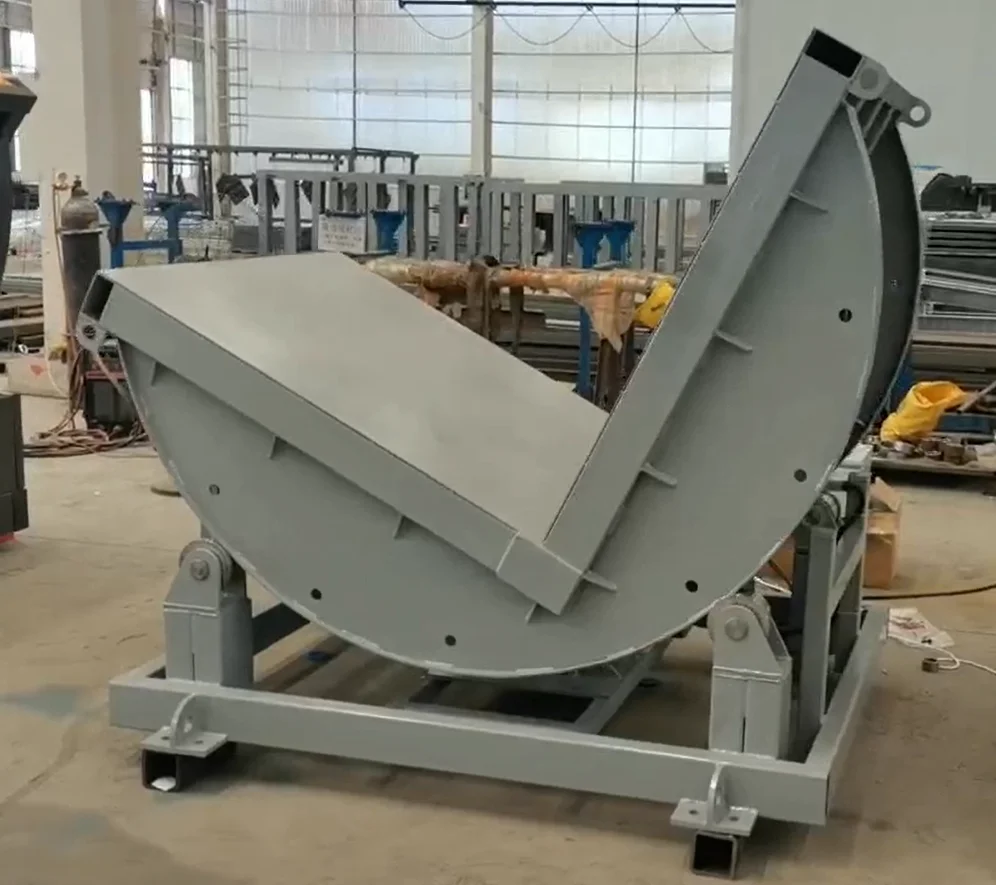
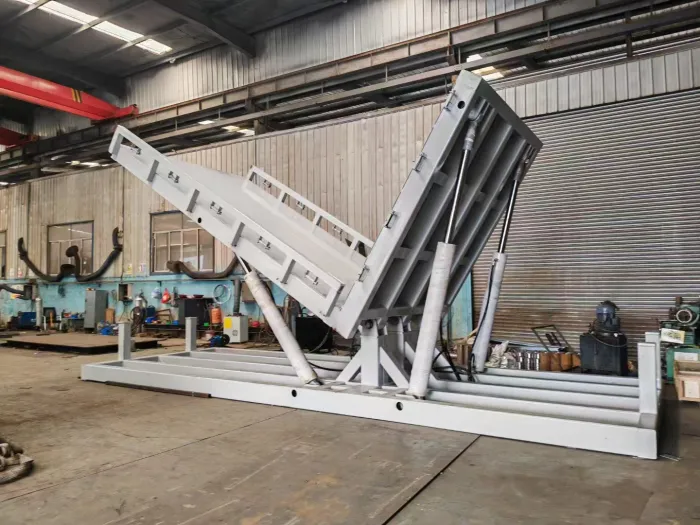
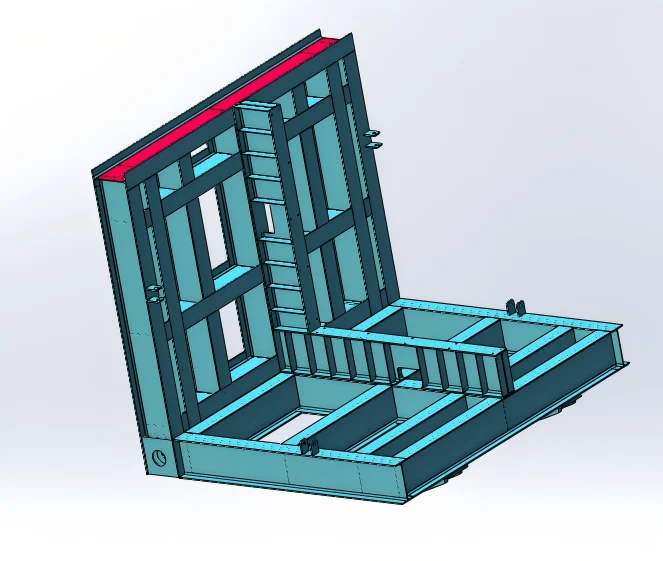
Heavy-Duty L-Type Structural Design
The L-type configuration provides excellent support throughout the tilting process while maintaining a compact footprint.
The main structure utilizes:
- Reinforced H-beam platform construction
- Heavy-duty welded steel framework
- Oversized pivot assembly
- High-strength load-bearing structure
All major structural components were designed with a safety factor exceeding standard industrial requirements to ensure long-term reliability.
Customer Benefits
✔ Stable support throughout rotation
✔ Reduced structural stress
✔ Longer equipment lifespan
✔ Suitable for continuous industrial operation
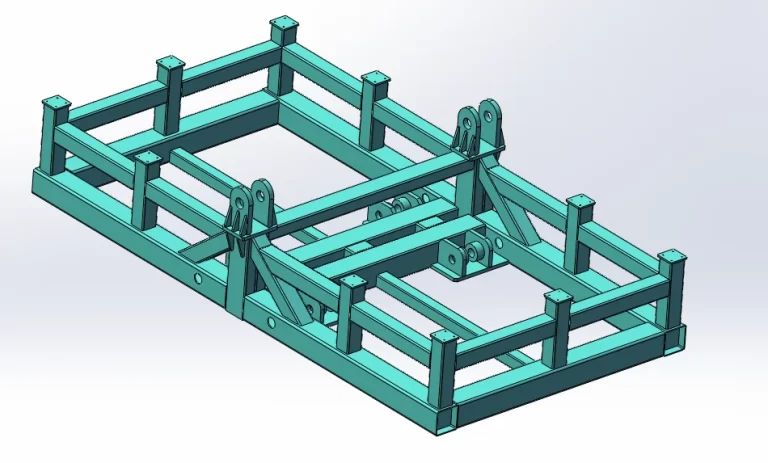
Adjustable Crossbeam System
One of the project’s most important innovations was the movable crossbeam design.
Unlike traditional fixed-beam tilters, the adjustable crossbeam can move along precision linear guides and lock at any required position.
This allows operators to:
- Avoid protruding structures
- Accommodate multiple workpiece designs
- Reduce fixture complexity
- Protect finished surfaces
The result is significantly greater flexibility for manufacturers producing a wide range of products.
Four-Cylinder Synchronized Tilting Technology
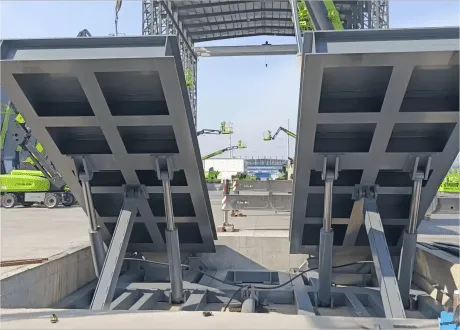
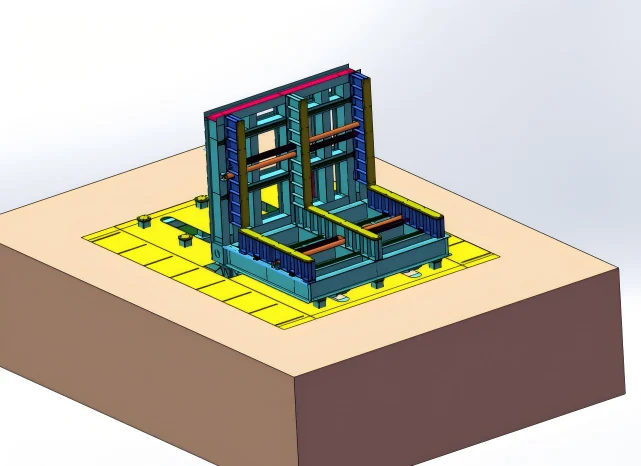
To ensure stable movement under extreme loads, Gradin adopted a four-cylinder synchronized hydraulic system.
The system includes:
- Four heavy-duty hydraulic cylinders
- Flow-dividing synchronization motors
- Real-time pressure monitoring
- Load imbalance detection
This design maintains consistent movement across all lifting points, minimizing stress concentrations and improving operational stability.
Why Four Cylinders Instead of Two?
For workpieces approaching 50 tons, a two-cylinder configuration can create higher localized loading and reduced stability.
A four-cylinder design provides:
- Better load distribution
- Higher structural rigidity
- Improved synchronization performance
- Increased safety margins
This approach significantly improves overall reliability during heavy-duty operation.
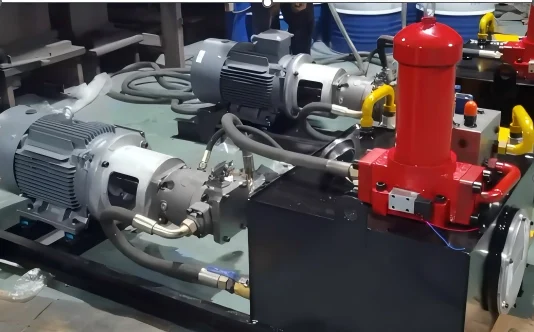
Intelligent Hydraulic Control System
The hydraulic system was designed around the principle of smooth, predictable movement.
Key features include:
- Soft-start and soft-stop control
- Adjustable tilting speed
- Automatic synchronization correction
- Pressure-based safety monitoring
The complete tilting cycle can be completed within six minutes while maintaining controlled motion throughout the process.
This helps eliminate sudden impacts and protects high-value workpieces from unnecessary stress.
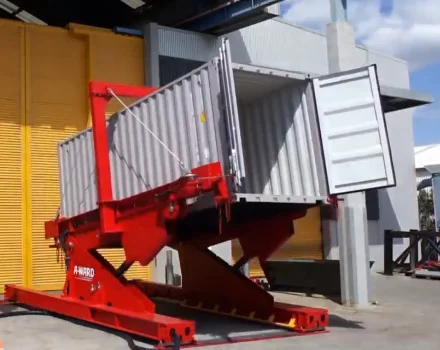
Why an L-Type Tilter Was Selected
Several turning solutions were evaluated during the engineering phase.
After reviewing the customer’s production process, the L-type design was selected because it offers:
Better Workpiece Accessibility
Operators can load and unload oversized components more easily.
Greater Stability
The workpiece remains continuously supported throughout the entire rotation cycle.
Compact Installation Footprint
Compared with alternative turning systems, the L-type structure requires less workshop space.
Higher Adaptability
The design can accommodate multiple workpiece dimensions without extensive modifications.
For this application, the L-type configuration provided the best balance between safety, flexibility, and long-term operational efficiency.
Multi-Layer Safety Architecture
Heavy-duty workpiece handling requires more than a single safety mechanism.
Gradin implemented a comprehensive protection strategy that combines mechanical, hydraulic, electrical, and operational safeguards.
Mechanical Protection
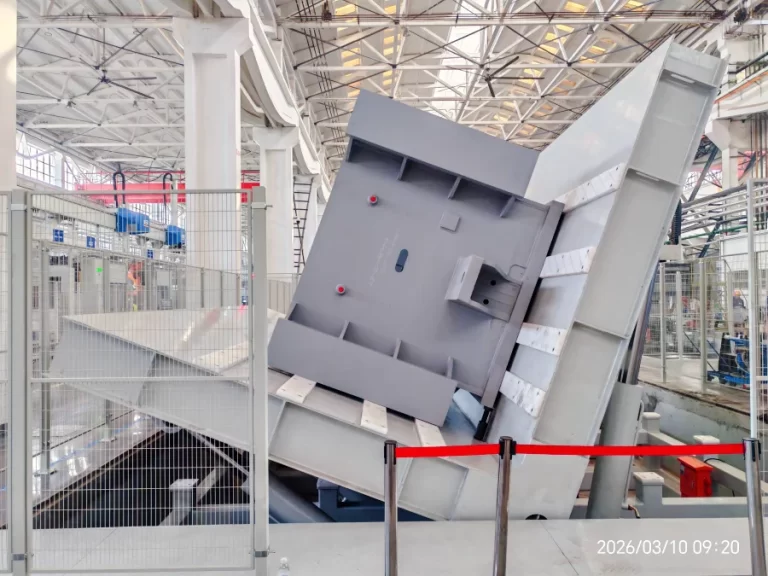
- Full perimeter safety fencing
- Safety gate interlocking system
- Infrared personnel detection
- Anti-swing restraint devices
Hydraulic Protection
- Hose rupture protection valves
- Hydraulic lock system
- Balance valves
- Pressure retention accumulator
Even in the event of a hydraulic line failure, the workpiece remains securely supported.
Electrical Protection
- Emergency stop circuits
- Overload protection
- Phase-loss protection
- Dual-position limit control
These systems continuously monitor equipment status and prevent unsafe operation.
Maintenance Safety
- Pit-entry safety interlock
- Inspection access covers
- Clear maintenance labeling
- Visual and audible alarm systems
The machine cannot be started while personnel are inside designated maintenance zones.
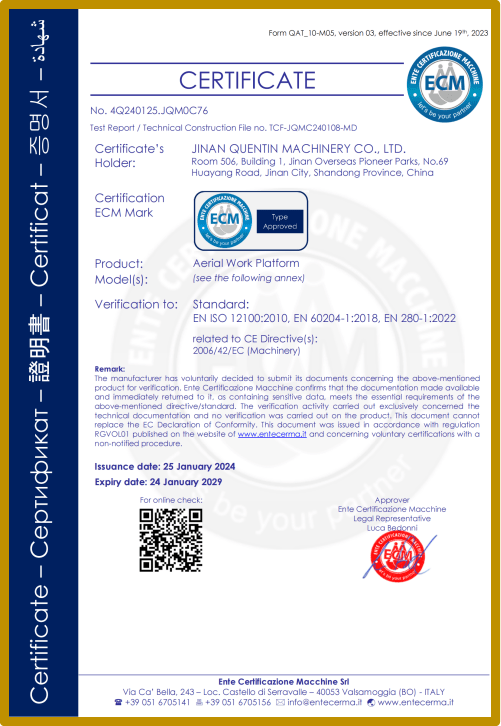
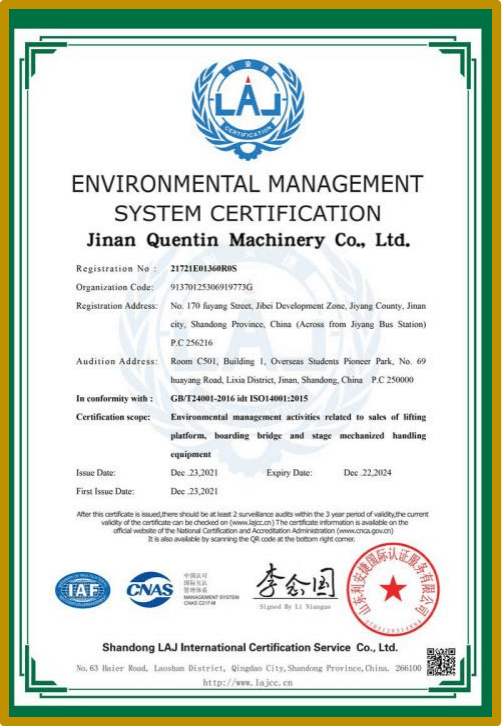
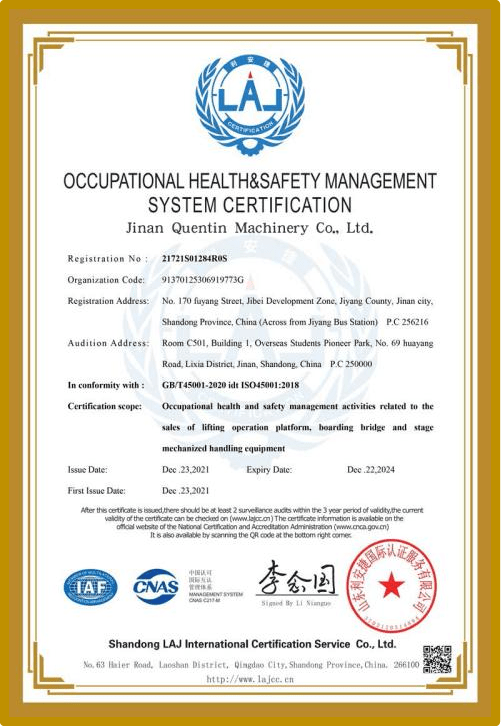
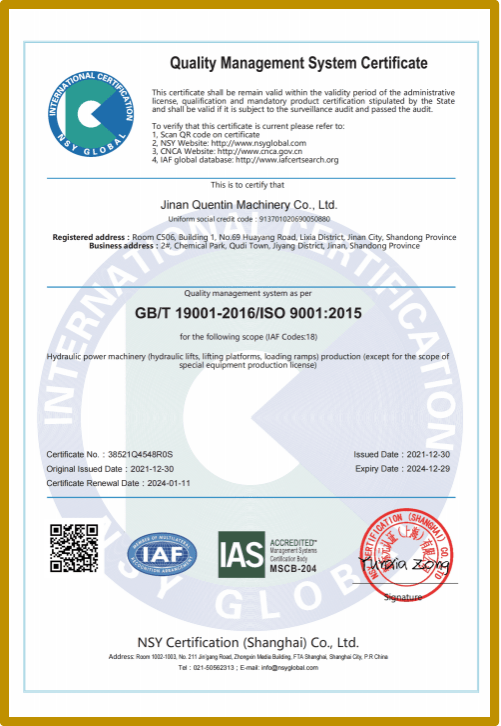
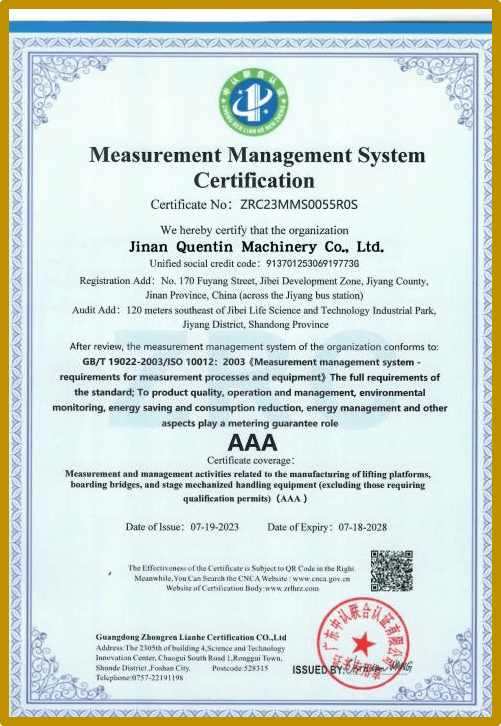
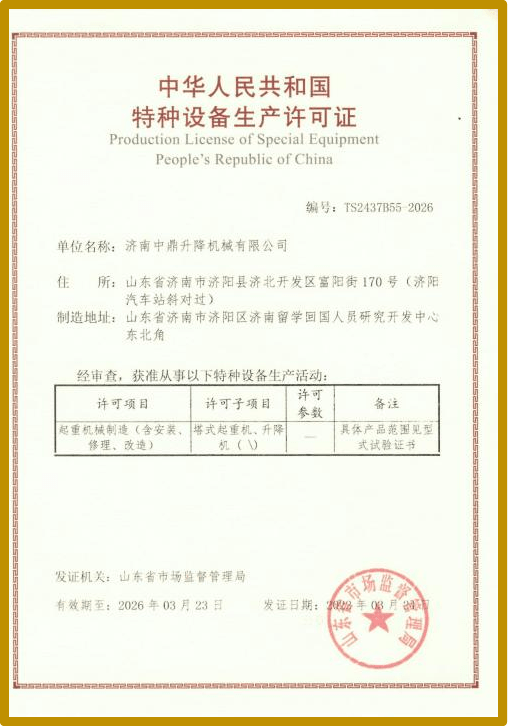
Product Certificates
FAQ
If you want to customize your material handling equipment, please contact us →.