 PT
PT  EN
EN  ES
ES  FR
FR  RU
RU  KO
KO Com que frequência os elevadores tipo tesoura devem ser inspecionados?
Início > Elevador tipo tesoura > Com que frequência os elevadores tipo tesoura devem ser inspecionados
FAQ
Tags
4 Posts (1) Escada Articulada (1) Automatizado (2) Automação (1) Bateria elétrica (2) Elevador de lança (4) Design compacto (1) Diesel (1) Corrente dupla (1) Durabilidade (2) Fácil de usar (1) Atuação eficiente (1) À prova de explosão (1) Instalação rápida (1) Fixo (3) Trilho-guia (3) Serviço pesado (3) Alta resistência (4) Hidráulico (20) Abertura hidráulica da íris (1) Elevadores industriais (1) inspecionar (2) Equipamentos de logística (1) Soluções de logística (1) Manutenção amigável (1) MEZZANINE (1) Celular (1) Projeto modular (2) Elevador externo (1) Soluções para linhas de produção (1) Corrente rígida (1) Correntes de rolos (2) Segurança (5) elevador tipo tesoura (9) Autopropelido (3) Semi-automático (1) Pequeno (3) Inoxidável (1) Montado sobre trilhos (1) Rastreado (1) Elevação vertical (1) Transporte vertical (1) VRC (1) Soluções de armazém (2) Resistência às intempéries (1)
Com que frequência os elevadores tipo tesoura devem ser inspecionados?
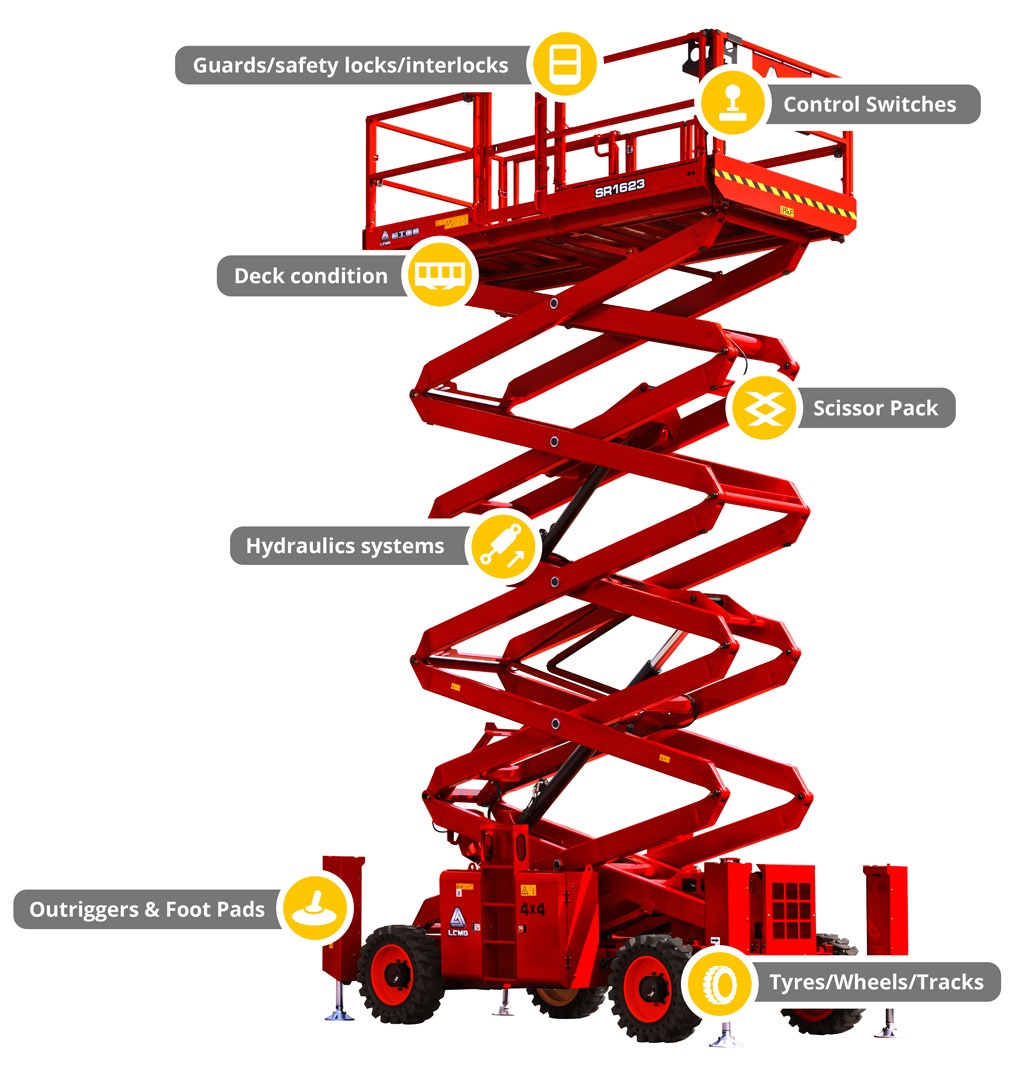
Os elevadores tipo tesoura são ferramentas essenciais em vários setores, proporcionando acesso seguro a áreas de trabalho elevadas. No entanto, para garantir sua segurança e funcionalidade contínuas, é fundamental realizar inspeções regulares. Mas com que frequência essas inspeções devem ocorrer?
Inspeções diárias
A maioria dos fabricantes recomenda que os elevadores tipo tesoura passem por uma inspeção diária antes do uso. Essa verificação antes do uso normalmente envolve o exame das condições gerais do elevador, incluindo:
- Sistemas hidráulicos: Verifique se há vazamentos e se os níveis de fluido estão adequados.
- Recursos de segurança: Certifique-se de que as grades de proteção, paradas de emergência e alarmes de segurança estejam funcionando.
- Pneus e freios: Inspecione quanto a desgaste e inflação adequada.
- Controles: Teste todos os controles para garantir que funcionem sem problemas.
A realização dessas verificações diárias ajuda a identificar possíveis problemas antes que eles levem a acidentes.
Inspeções mensais
Além das verificações diárias, uma inspeção mais completa deve ser realizada mensalmente. Essa inspeção pode incluir:
- Integridade estrutural: Procure sinais de desgaste, corrosão ou danos.
- Sistemas elétricos: Inspecione a fiação e as conexões quanto a sinais de desgaste ou danos.
- Manutenção da bateria: Verifique os níveis da bateria e os terminais quanto à corrosão.
As inspeções mensais ajudam a garantir que o elevador permaneça em condições seguras de funcionamento e podem ajudar a prolongar a vida útil do equipamento.
Inspeções anuais
Além das verificações diárias e mensais, são essenciais as inspeções anuais abrangentes realizadas por um técnico qualificado. Essas inspeções geralmente incluem:
- Teste de carga: Verificar se o elevador pode suportar sua capacidade nominal.
- Verificações detalhadas de segurança: Envolvendo um exame completo de todos os sistemas, componentes e recursos de segurança.
- Verificação de conformidade: Garantir que o elevador atenda a todas as normas e padrões de segurança relevantes.
As inspeções anuais são essenciais para manter a conformidade com a OSHA e outras normas de segurança, garantindo a segurança do operador e a conformidade legal.
Conclusão
Em resumo, os elevadores tipo tesoura devem passar por inspeções diárias antes de cada uso, por inspeções mensais para uma revisão mais aprofundada e por inspeções anuais conduzidas por profissionais qualificados. A manutenção e as inspeções regulares não apenas garantem a segurança dos operadores, mas também prolongam a vida útil do equipamento. Ao aderir a essas diretrizes, as empresas podem minimizar os riscos e manter um ambiente de trabalho seguro.
Produtos mais bem avaliados
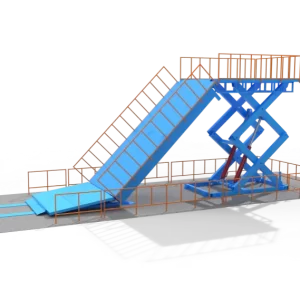
Rampa de carregamento com elevador tipo tesoura
LEIA MAIS 2 - 3 toneladas
 30˚ - 45˚
G-GTJZ16RT Elevador tipo tesoura a diesel de 16 metros
LEIA MAIS ≤ 1 tonelada > 11 m-
G-GTJZ13RT Elevador tipo tesoura a diesel de 13 metros
LEIA MAIS ≤ 1 tonelada > 11 m -
G-GTJZ10RT Elevador tipo tesoura a diesel de 10 metros
LEIA MAIS ≤ 1 tonelada 9 - 11 m 
CFPT1214LD Elevador tipo tesoura com esteiras de 10 m
LEIA MAIS ≤ 1 tonelada 9 - 11 m
Entre em contato com nossos especialistas ou solicite uma cotação agora.