 EN
EN  ES
ES  PT
PT  FR
FR  RU
RU  KO
KO RESOURCE CENTER > CASE STUDIES
Reciprocating Lift Case Study | Food Industry Bagged Material Lift







POSTED: 4/24/2026




Client Need
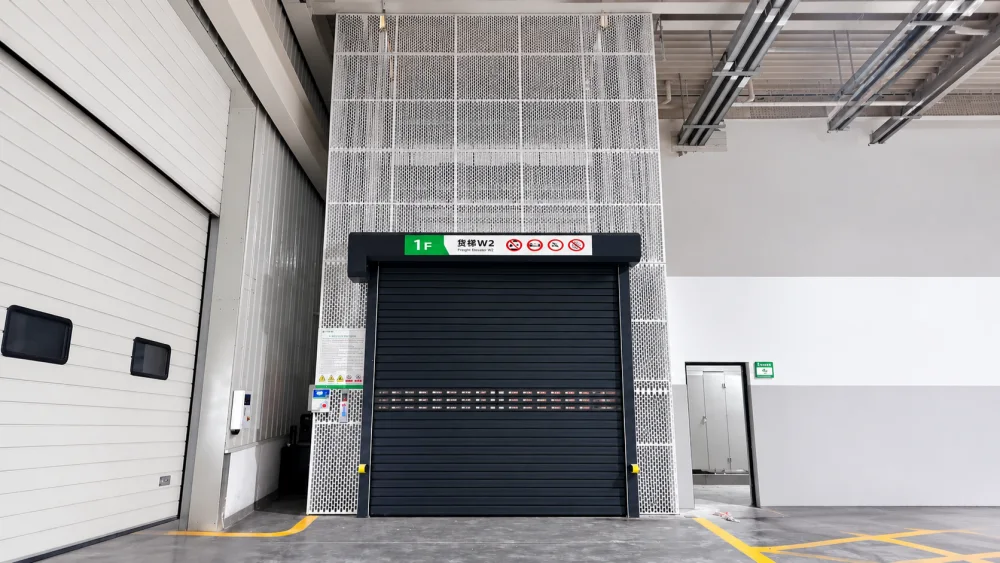
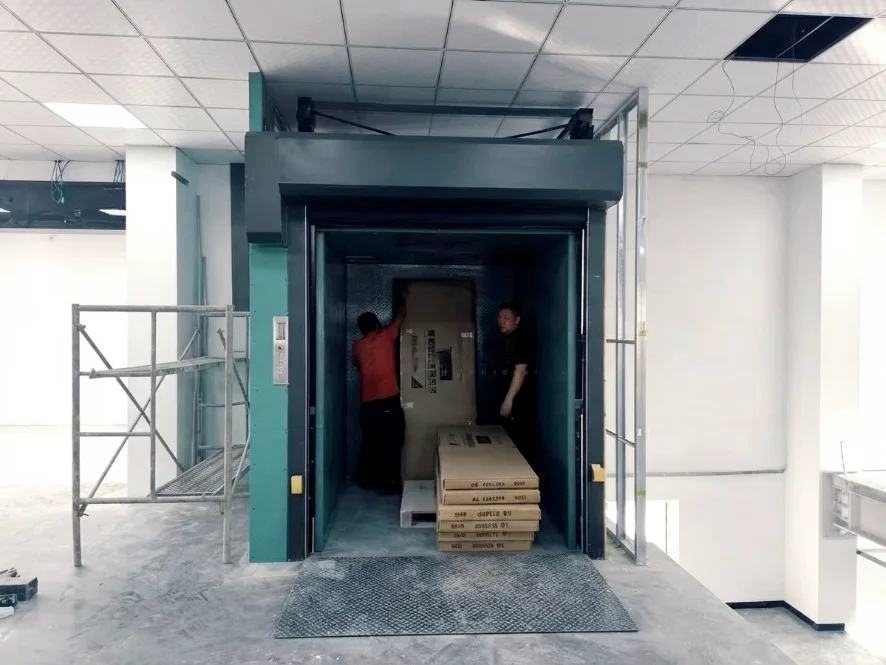
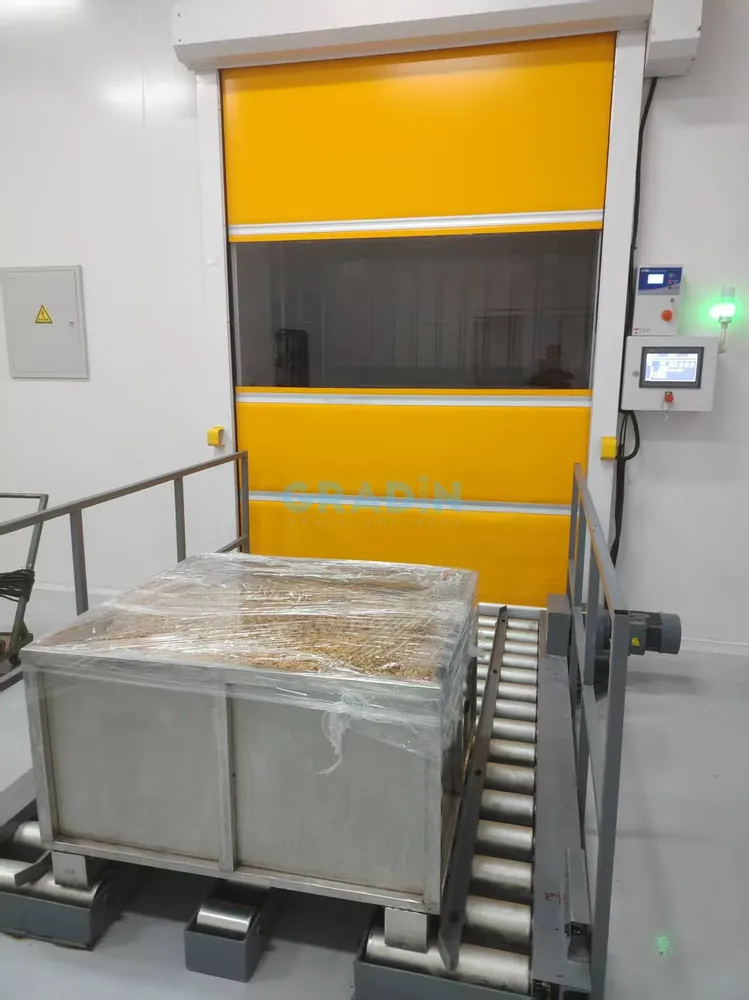
Defuxiang needed to lift bagged raw materials (cereal, oats, etc.) from ground floor warehouse to 2nd & 3rd floor processing areas, with long‑distance horizontal transfer to production lines.
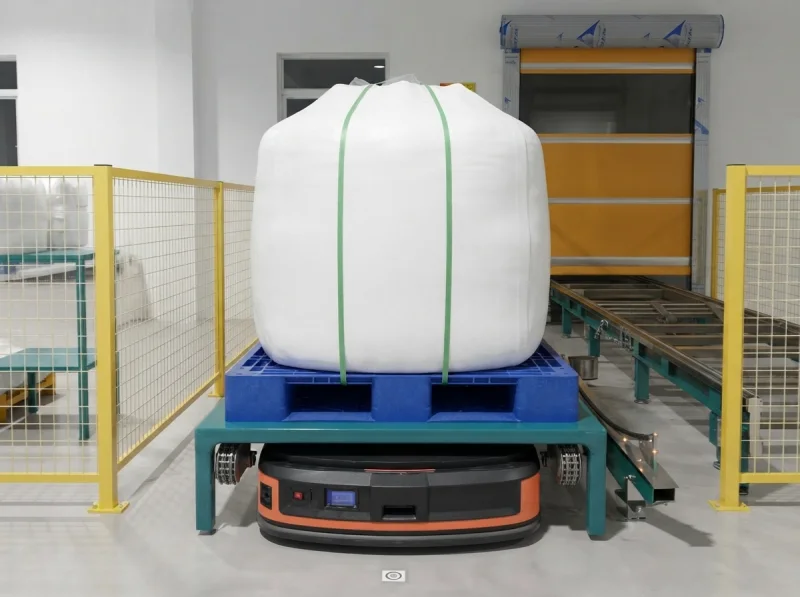
Bag size: W1300×L1500×H2200mm – prone to tilting and spillage.
Requires pallet jack loading/unloading.
Total travel: 17.5m (3 stops), rated capacity: 2500kg.
Core Specifications
| Parameter | Value |
|---|---|
| Rated capacity | 2500 kg |
| Travel height | 17.5 m (3 stops) |
| Car size | 1900×1600×3000 mm |
| Access | 1900mm through |
| Drive motor | Dongli 15 kW |
| Lifting speed | 30 m/min |
| Chain | 20A |
| Safety | Light curtain + safety gear + overload |
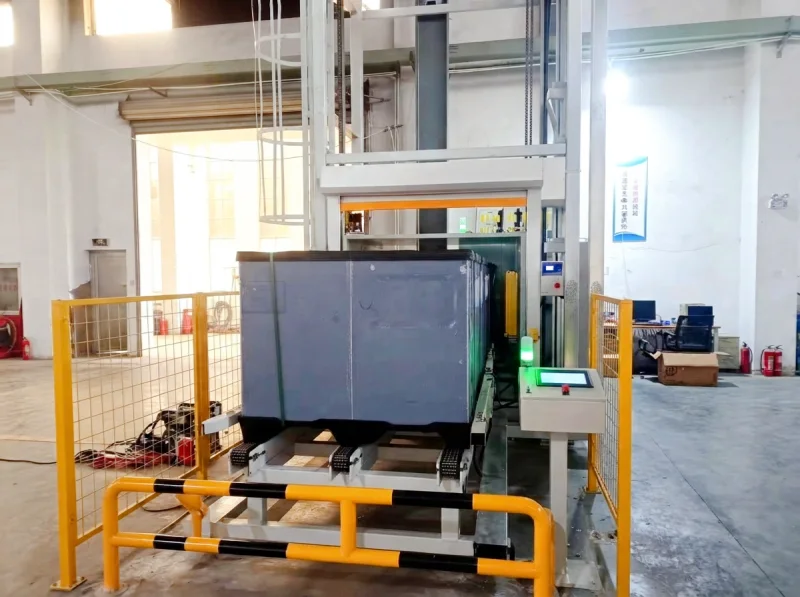
| Control | 10″ touch screen per floor |
| Pit depth | 600 mm |
Solution
2.1 Redundant Design for Heavy Load Drive
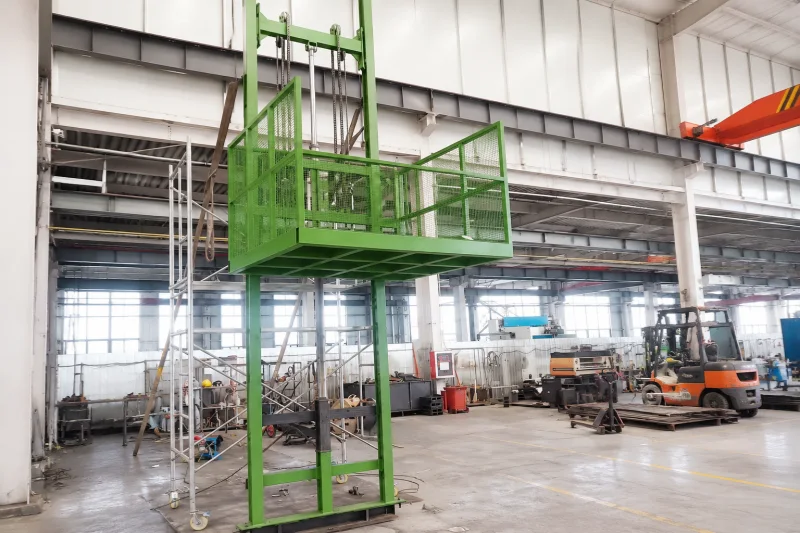
Approach: 2500kg imposes extreme demands on chains, motors, and frame rigidity. Standard food‑grade lifts are usually rated 500-1000kg. Simply scaling up leads to premature chain fatigue, motor overload, and frame deformation. We adopted a safety‑factor‑based redundancy strategy: chain grade upgraded two levels above theoretical requirement; motor power selected at 1.3× maximum load. The main frame uses thickened rectangular tubes with reinforcement ribs at key nodes.
Advantage: Even at full 2500kg continuous operation, the drive and structure retain ample fatigue margins. Expected service life increased by >30%.
2.2 “Zero Spillage” Conveying for Bagged Materials
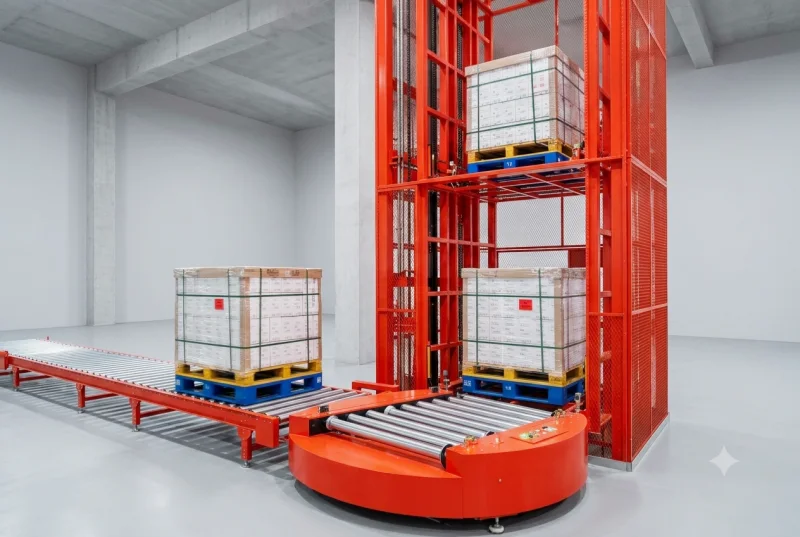
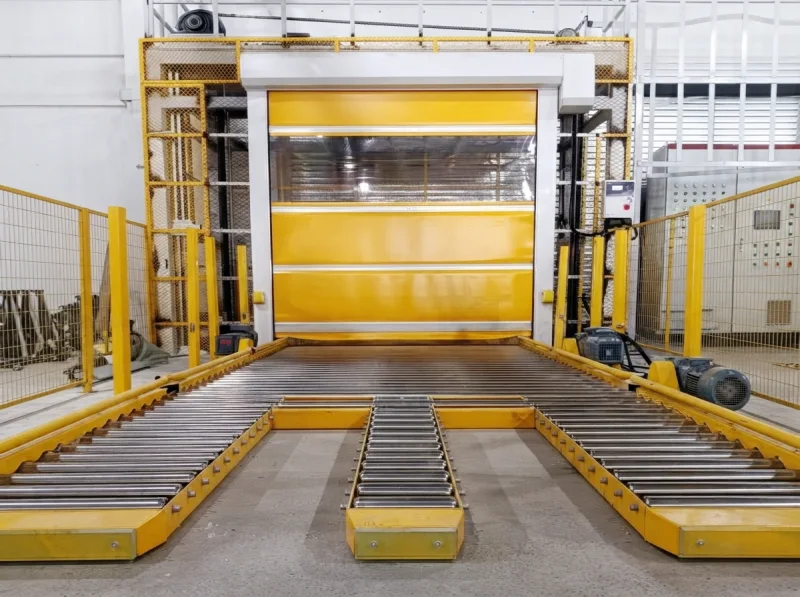
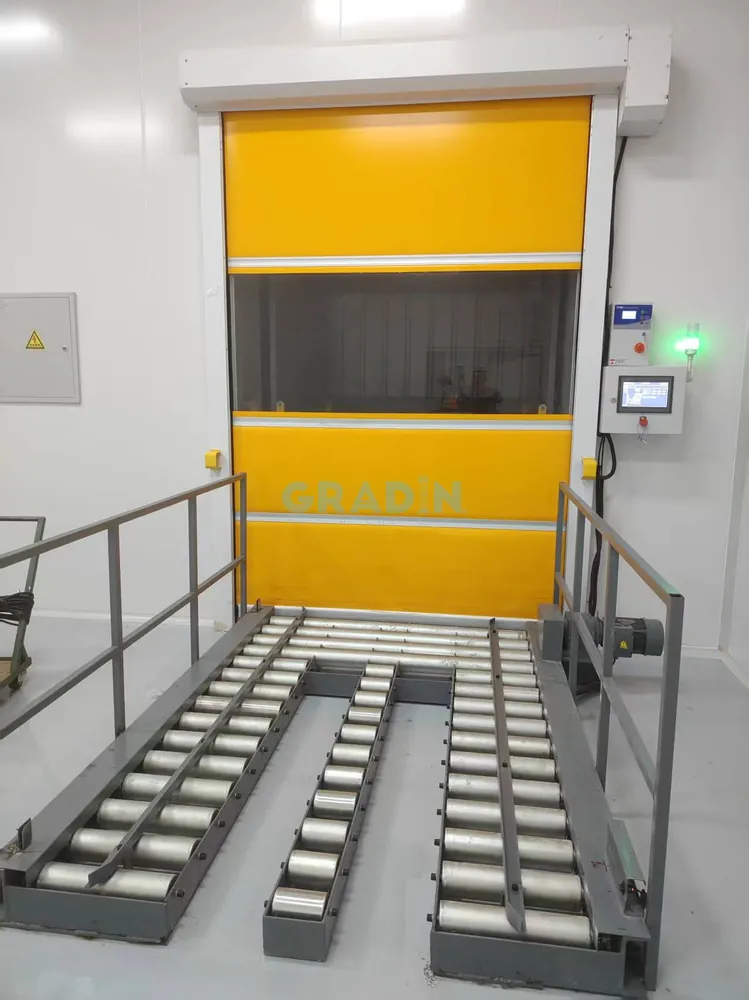
Approach: Bag tilting on roller conveyors stems from two root causes: excessive roller spacing causing uneven bottom support, and speed mismatch between conveyor sections causing stretching or bunching. Our dual‑layer solution: densely spaced rollers – multiple support points prevent local sagging; VFD‑synchronized speed control – all sections receive the same speed command from one controller. Full‑height side guards contain any accidental sway.
Advantage: Eliminates tilt conditions at source, rather than relying on correction. Tested with 800 consecutive bags – zero spillage, zero jamming.
2.3 Integrated “Horizontal+Vertical+Horizontal” Closed Loop
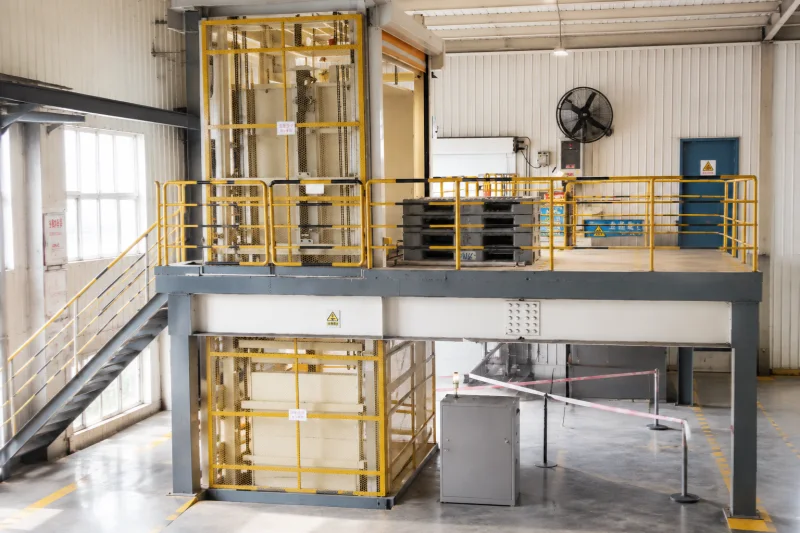
Approach: The shaft is nearly 10 meters away from the far production line. Manual transfer would break production rhythm. We designed a three‑stage continuous conveying network: ground floor conveyor → in‑car conveyor → upper floor conveyor → nearly 10m long connecting conveyor → direct interface to production equipment. Photoelectric sensors and PLC timing control start/stop automatically.
Advantage: A complete closed‑loop automation from intake to production line – cross‑floor feeding as smooth as a single assembly line.
2.4 Food‑Grade Safety Architecture
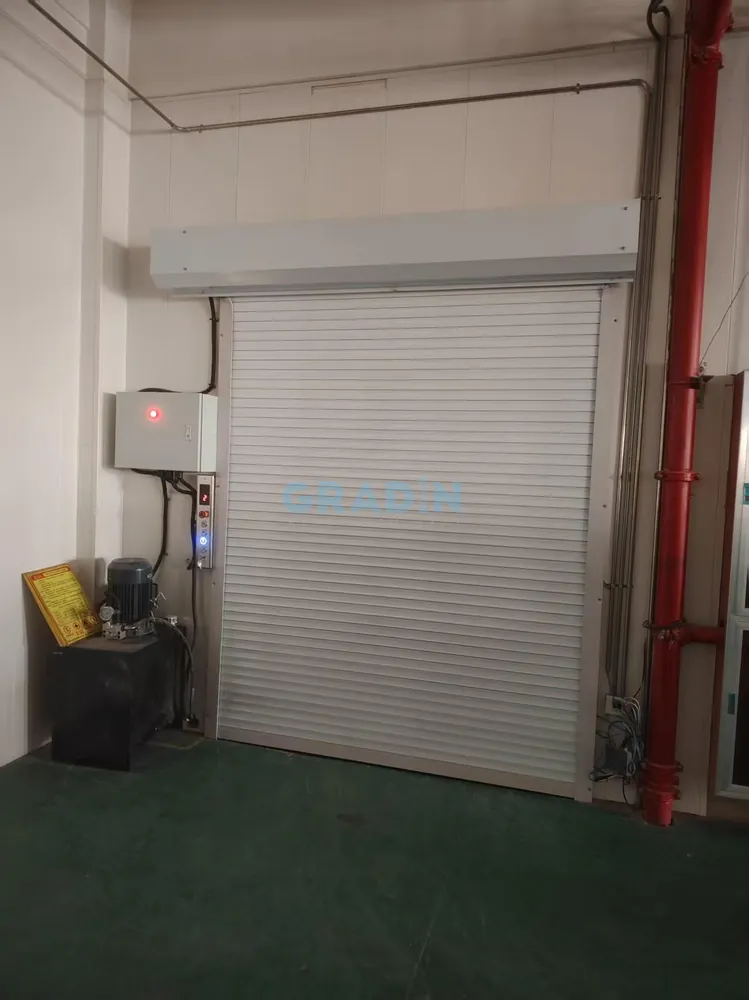
Approach: Food plants have high personnel traffic – safety must cover active prevention and passive redundancy. Active layer: light curtain (1.8m detection height) at each floor opening, plus integrated load cell – overloading triggers immediate alarm and stop. Passive layer: mechanical safety gear (elevator grade) with buffer – even if chain breaks, the safety gear locks the car within milliseconds.
Advantage: Triple safety mechanism – stop on intrusion, stop on overload, lock on fall – fully compliant with strict food plant safety audits.
2.5 Intuitive HMI Operation
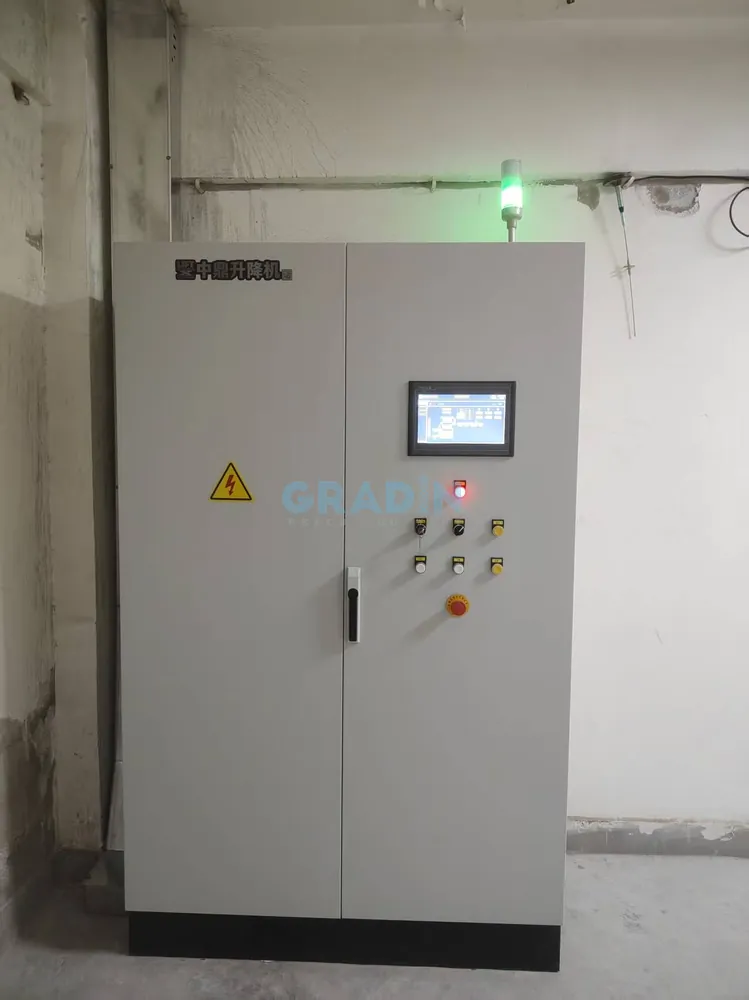
Touch screen on each floor replaces conventional button panels – real‑time status, fault codes, maintenance reminders. Supports manual/auto mode switching. Operators need minimal training, greatly reducing misoperation risk.
If you want to customize your material handling equipment, please contact us.