 EN
EN  ES
ES  PT
PT  FR
FR  RU
RU  KO
KO RESOURCE CENTER > CASE STUDIES
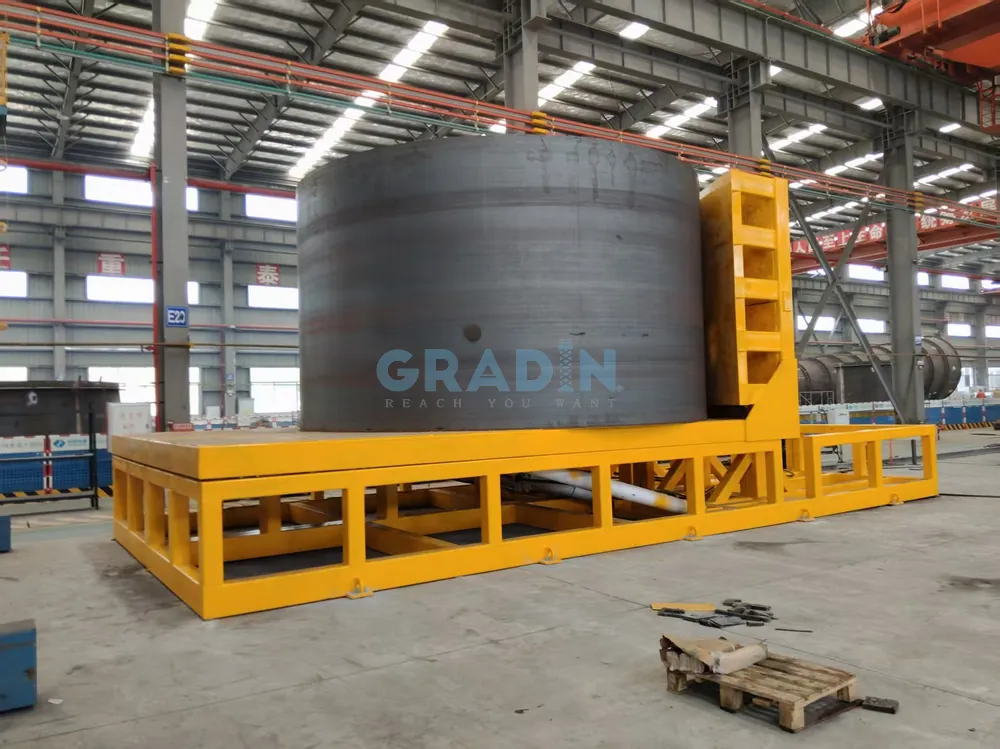
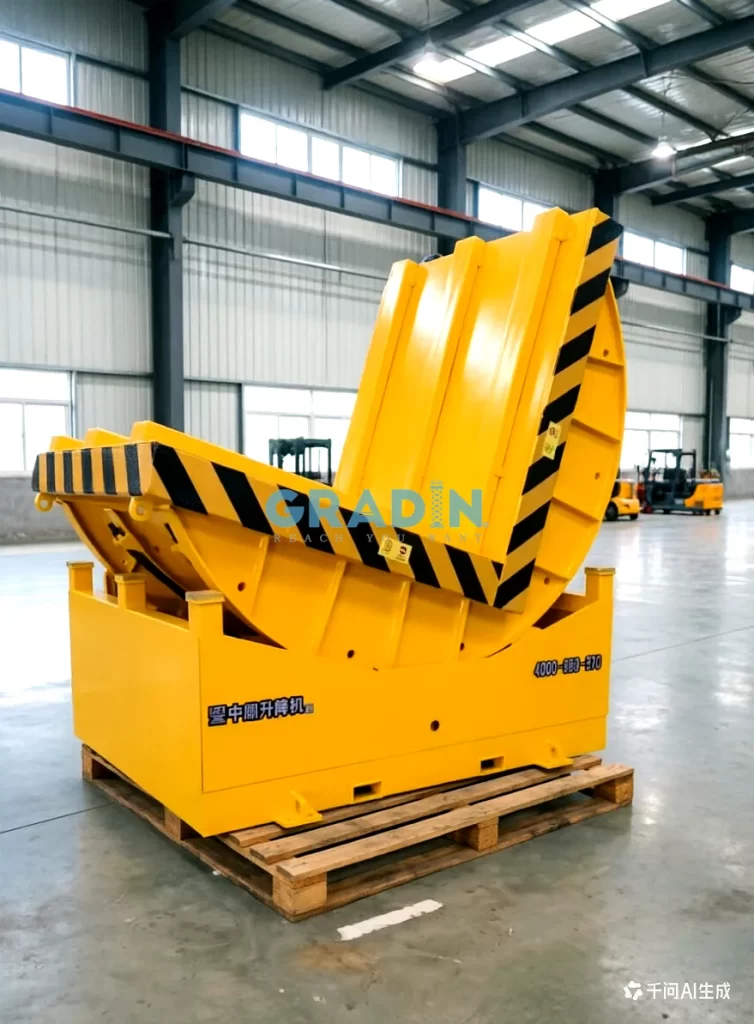
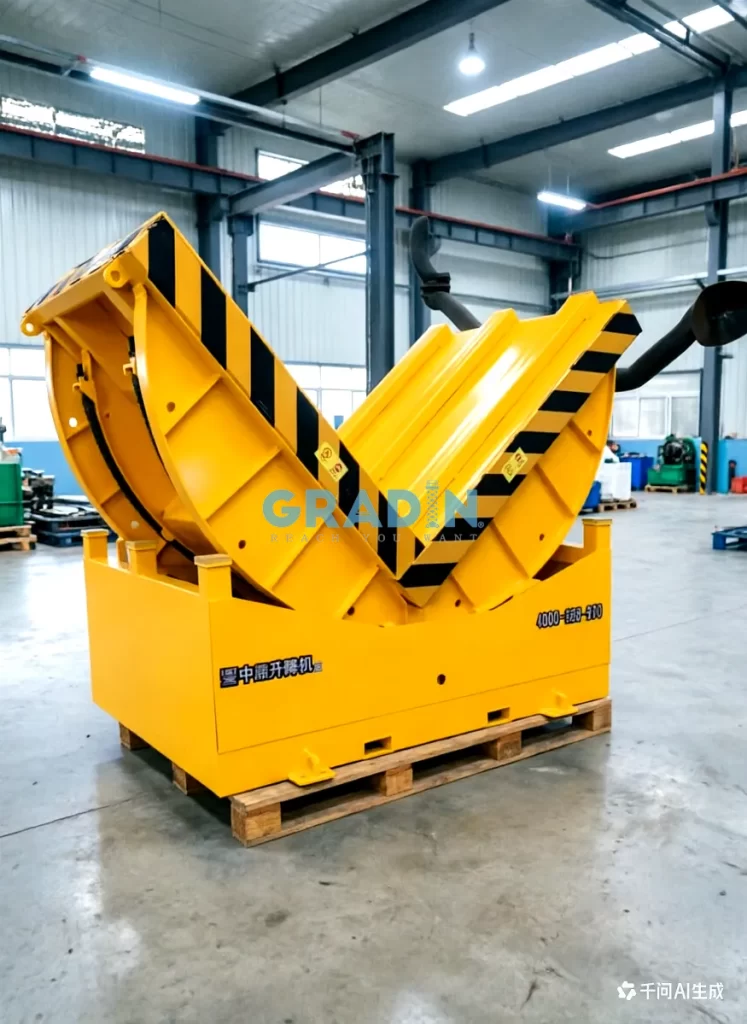
10‑Ton Mechanical Tipping Platform (Shandong University Rock Crushing Experiment)
RELATED MEDIA
SHARE







POSTED: 5/21/2026
Overview
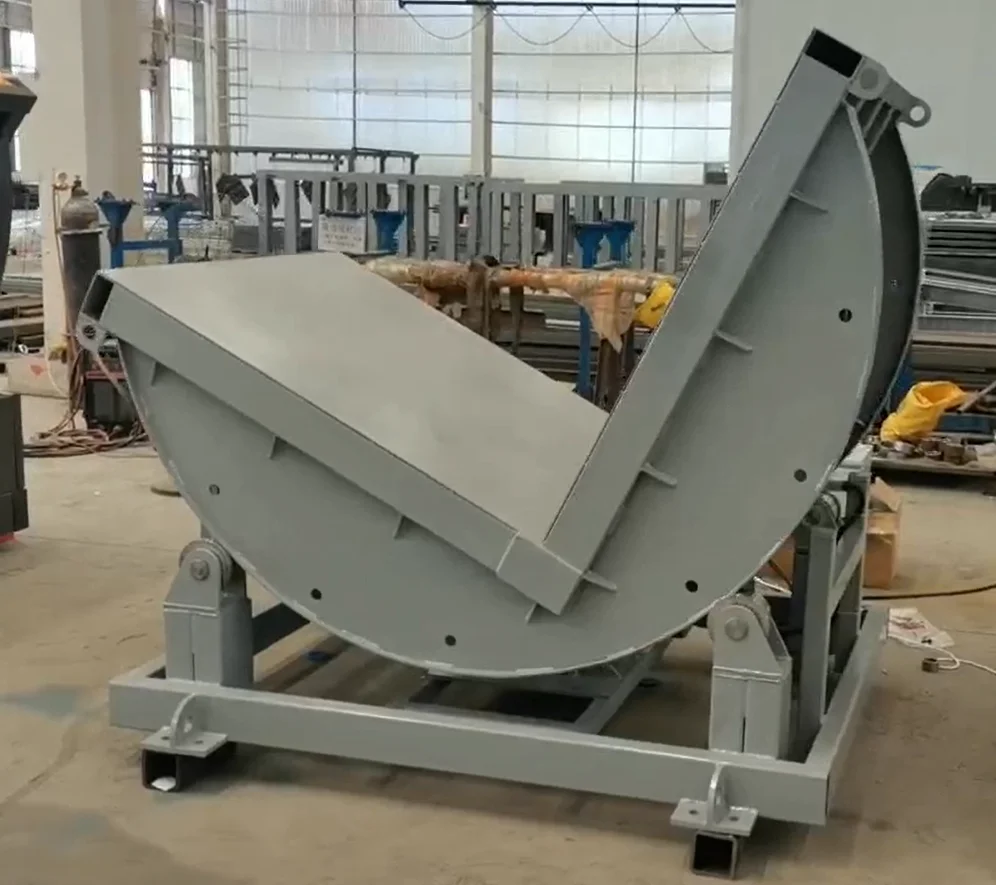
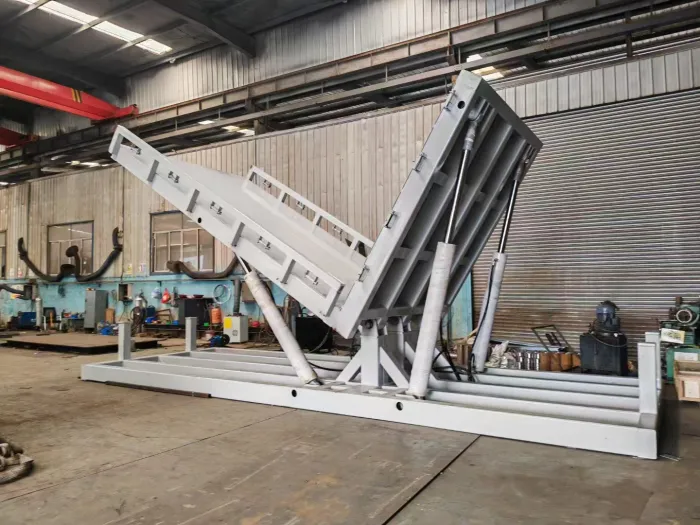
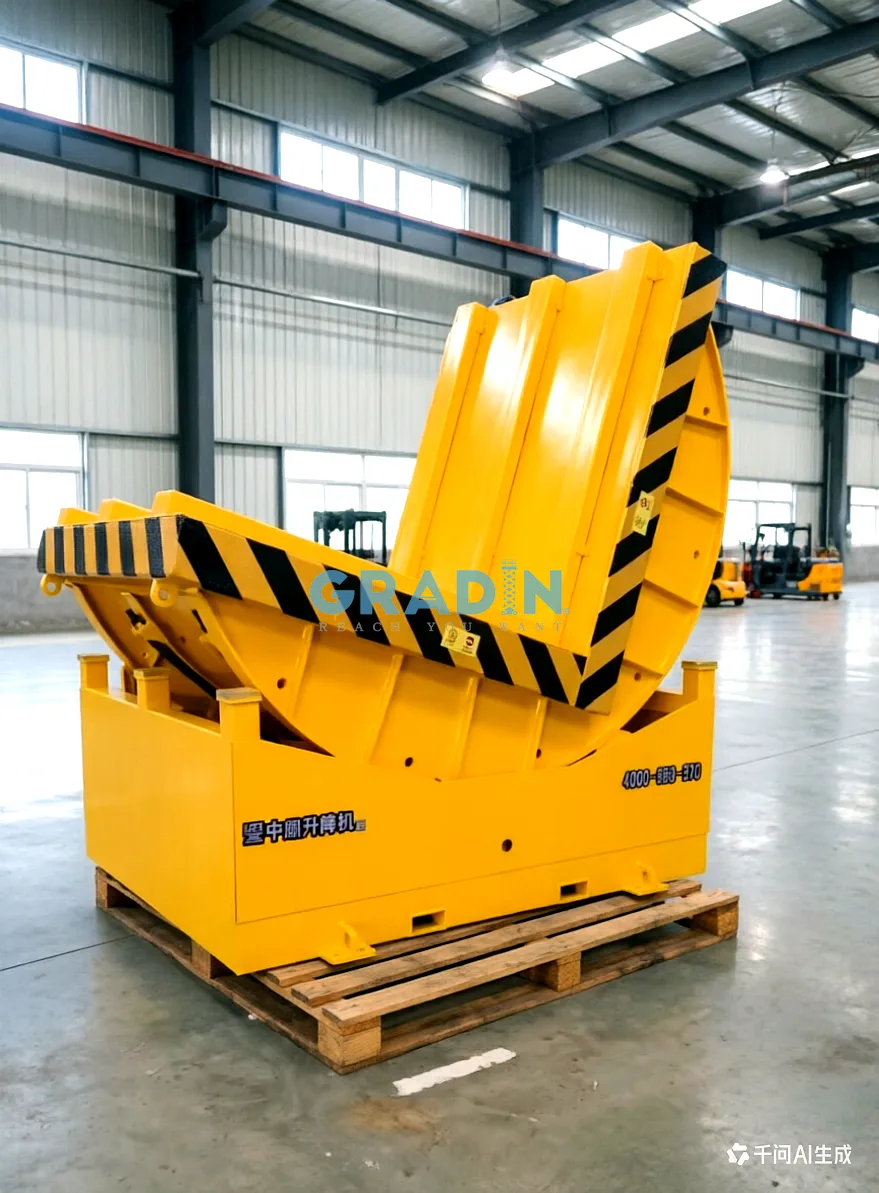
Project type: Heavy‑duty mechanical tipping platform (dual platforms, 90° tilt)
Client: Shandong University (Geology / Geotechnical Engineering Laboratory)
Industry: Higher education research (rock mechanics, mineral processing)
Key features: 10‑ton capacity, two independent platforms, removable wing plates, remote control, all‑mechanical chain drive
Client Background & Research Requirements
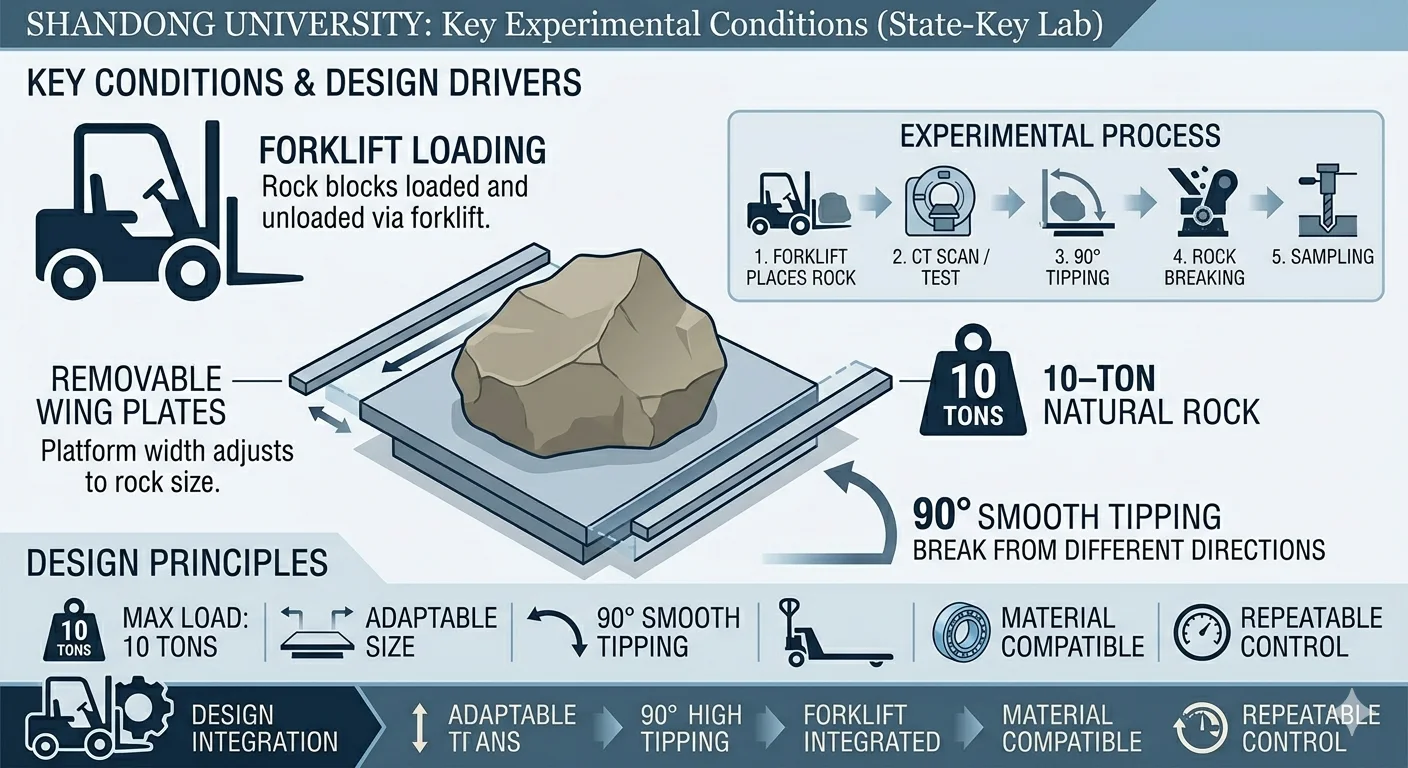
Shandong University has a state‑key laboratory in geological engineering, geotechnical mechanics and mineral processing. This custom tipping platform is used for rock crushing experiments – flipping a 10‑ton natural rock block 90° to allow breaking, sampling, CT scanning or compressive strength testing on different faces. Traditional methods (cranes or manual levers) are risky, offer poor angle control and can damage specimens. The client needed a device that can flip large rock blocks smoothly, precisely and repeatably.
Key experimental conditions:
- Irregular rock block, maximum weight 10 tons
- The rock must be turned 90° to be broken from different directions
- Forklift places the rock onto the platform and removes it after the experiment
- Platform size must adapt to different rock sizes (achieved by removable wing plates)
Core Specifications
| Parameter | Value |
|---|---|
| Rated load | 1,500 kg |
| Travel height | 6,000 mm (2 stops) |
| Car size (W×D×H) | 2,000×2,000×2,000 mm |
| Car material | 304 stainless steel (Cu‑free, Zn‑free) |
| Lifting speed | 40 m/min |
| Chain | 20A‑1 double strand |
| Safety | Mechanical safety gear + polyurethane buffer |
| Control | Siemens PLC + 10″ touch screen per floor |
| AGV interface | PROFINET / Modbus TCP reserved |
| Special | Lithium‑dedicated, 30‑day long‑distance delivery |
Solutions
Dual‑platform mechanical flip structure
Design approach: Conventional hydraulic tippers work well for regular workpieces but rock blocks have large centre‑of‑gravity offsets and rough surfaces. This equipment uses two independent platforms + mechanical chain drive. The two 1,500×1,500 mm platforms support the rock at two ends (or flip it in stages). The motor drives the chains to rotate both platforms synchronously 90° around a central shaft, turning the whole rock smoothly.
- Drive: 4 kW motor + 20A‑2 double‑strand chain (high safety factor, shock‑resistant)
- Frame: J200×100×8 rectangular tube – rigid enough for 10‑ton eccentric loads
- Platform deck: 8mm thick steel plate – wear‑resistant
Removable wing plates (size extension)
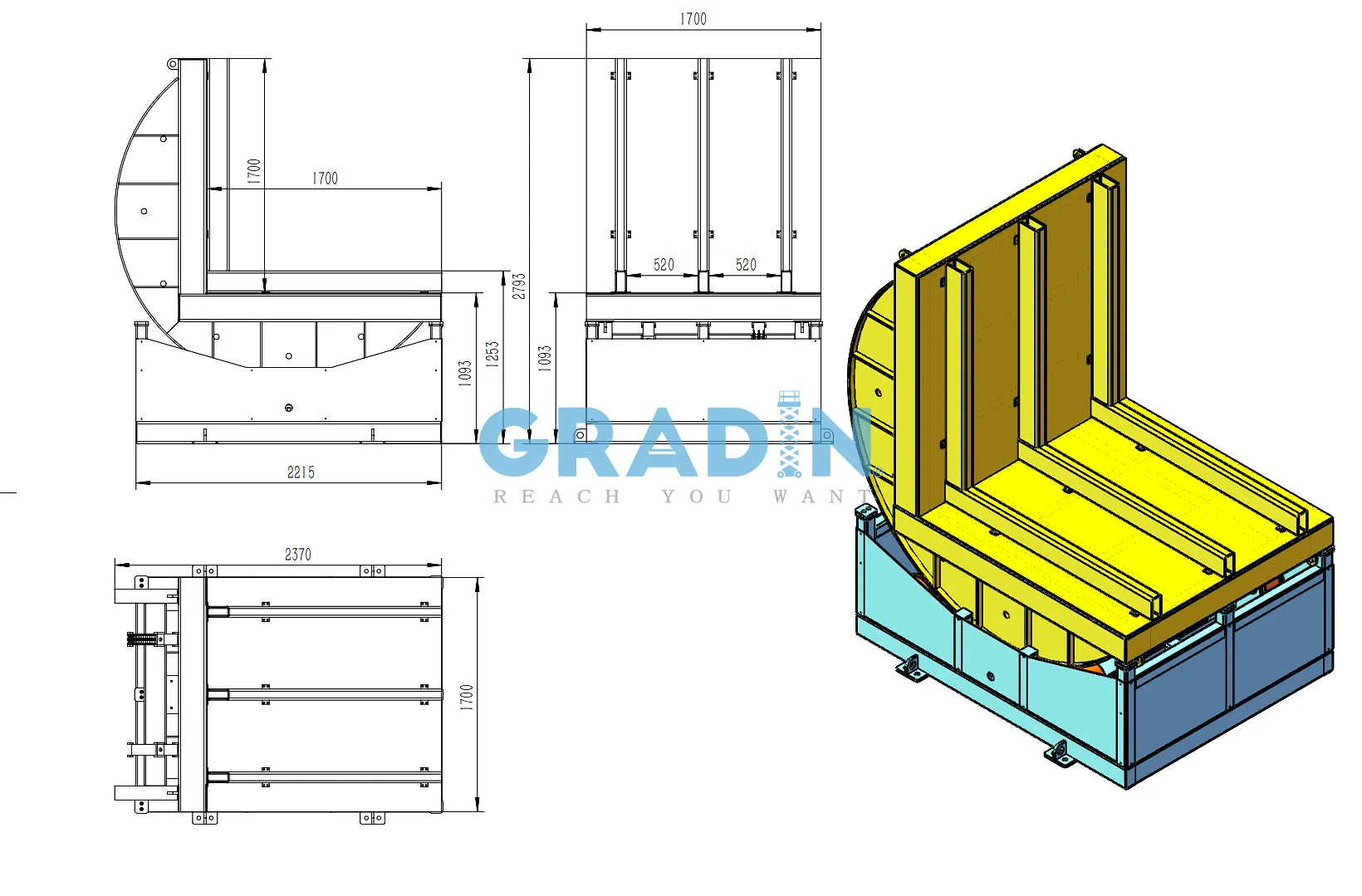
Requirement: Rock dimensions may exceed 1,500mm, requiring temporary platform enlargement.
Solution: Two 200mm wide removable wing plates (screw‑fixed) are added on the long and short sides of each platform. With wing plates installed, the platform size becomes 1,700×1,700 mm. The wing plates are removed when not needed, so they do not interfere with forklift access.
Advantage: One machine handles both standard and oversized rock blocks.
Forklift loading/unloading (rectangular tube guides)
Challenge: Forklift forks must slide under the platform to place the rock. A solid platform base blocks the forks.
Solution: Two removable rectangular tubes are added to each platform, fixed under the deck to form guide slots for the fork tines. The forklift slides its forks along the tubes, places the rock, then backs out. The tubes are screw‑mounted and can be removed after experiments, leaving a flat platform surface.
Remote control operation
Safety requirement: When flipping a 10‑ton rock, operators must stay at a safe distance to avoid injury from sudden cracking or overturning.
Solution: A wireless remote controller allows the operator to start, stop and reset the tilt from a distance. The motor has a self‑locking brake to hold the angle when power is off.
Other details
- Colour: Yellow (high‑visibility safety colour, complies with laboratory safety standards)
- Power supply: Standard 380V / 50Hz
- Delivery time: Only 20 days from order to shipment (urgent order)
FAQ
If you want to customize your material handling equipment, please contact us →.