 EN
EN  ES
ES  PT
PT  FR
FR  RU
RU  KO
KO RESOURCE CENTER > CASE STUDIES
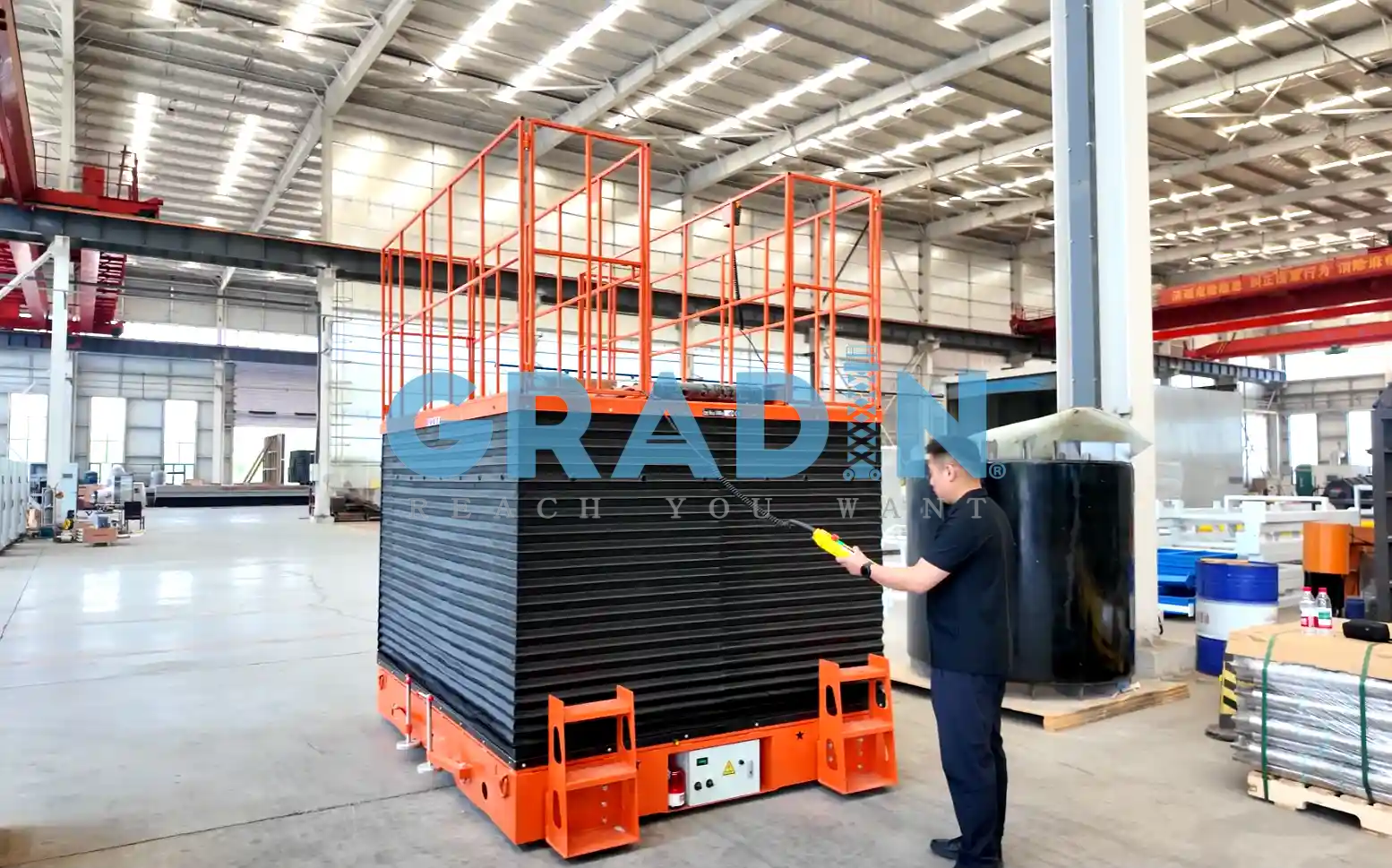
Self‑Propelled Cabinet Loading Lift|1‑Ton Scissor + Roller Conveyor + Remote Drive|Military Shelter Loading
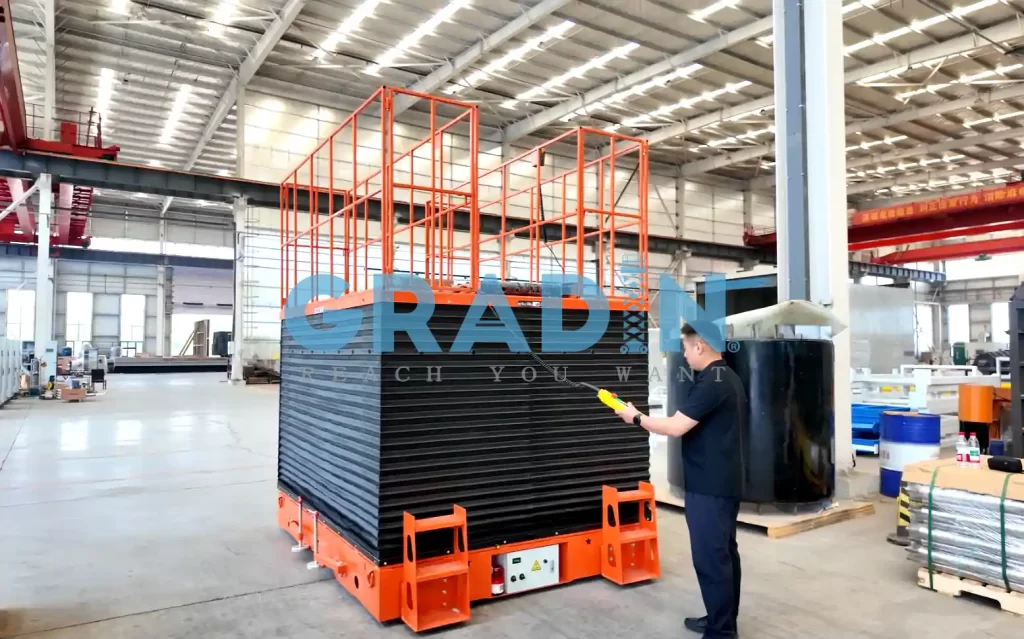
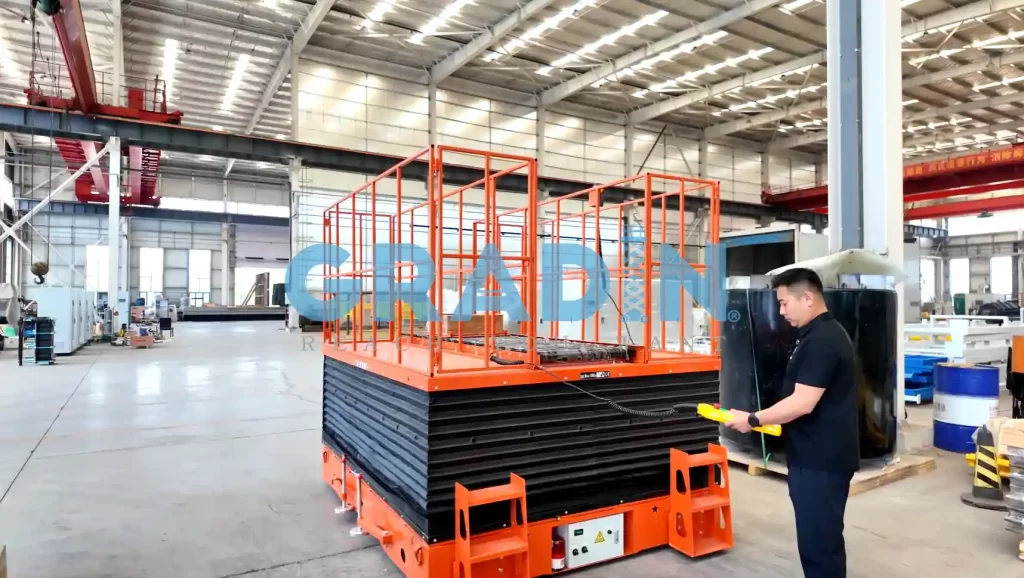
RELATED MEDIA
SHARE







POSTED: 5/18/2026





Overview
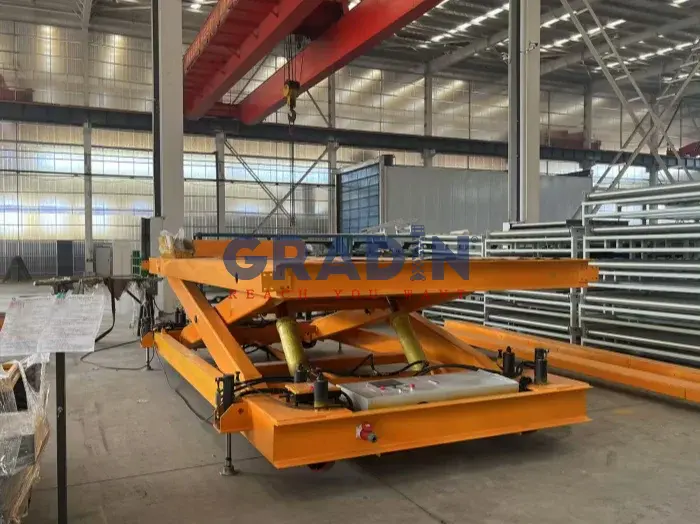
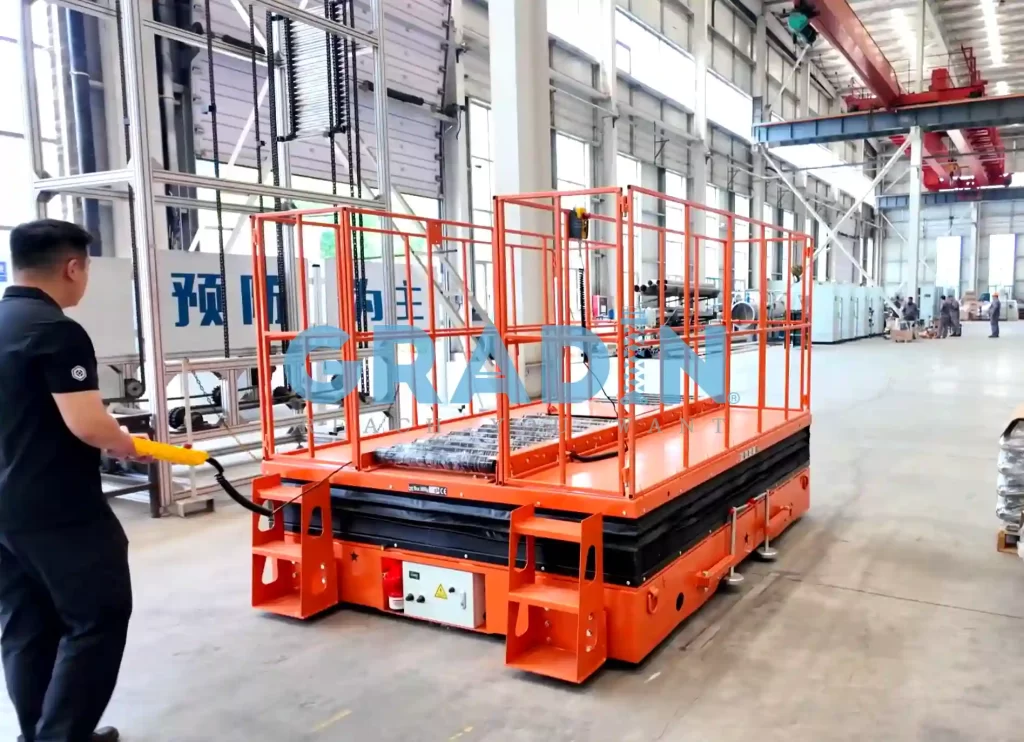
Project type: Electro‑hydraulic lift + roller conveyor + self‑propelled remote‑controlled platform
End user: A military unit (loading/unloading of equipment cabinets into military shelters)
Key features: Scissor lift, powered roller conveyor, four‑wheel drive (differential steering), remote control, safety guardrails, outriggers
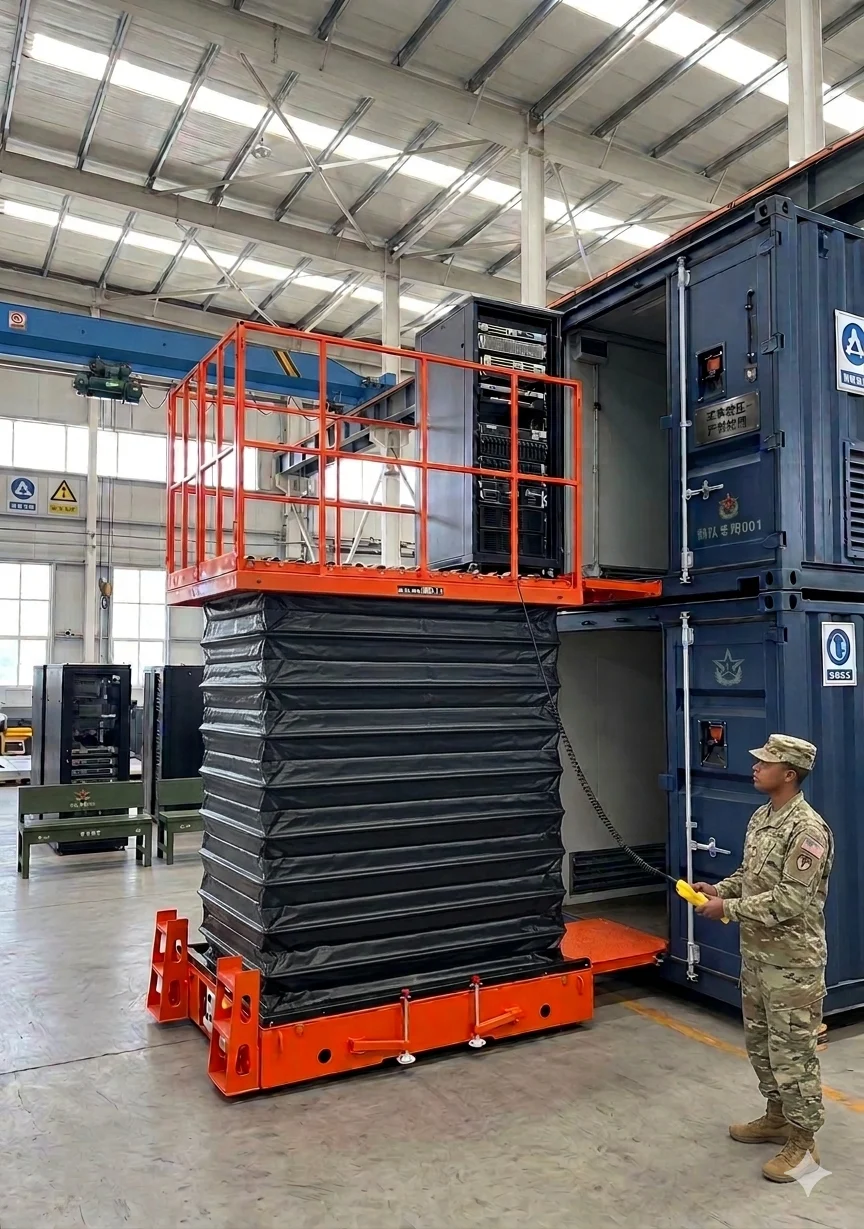
Primary use: Safely transfer heavy cabinets from ground level into a military shelter, eliminating swing risks of overhead cranes
Key Features
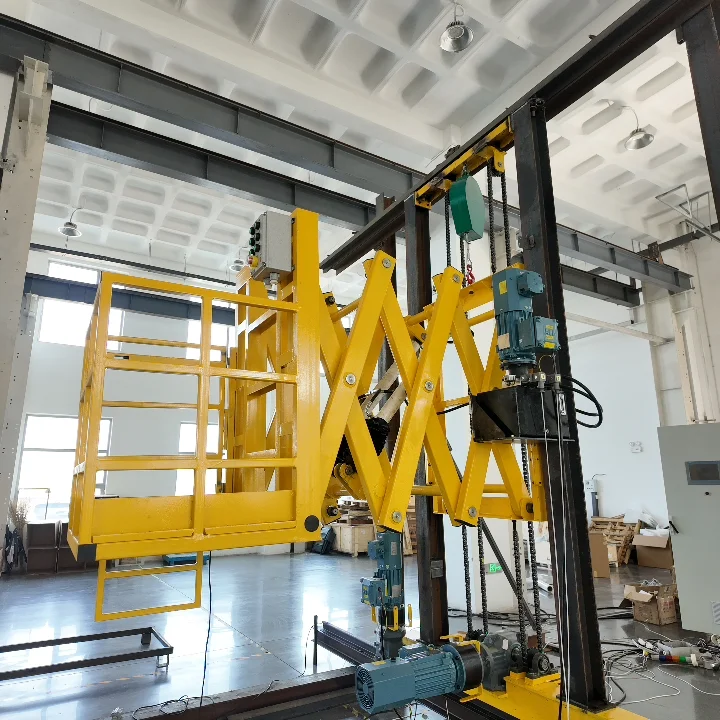
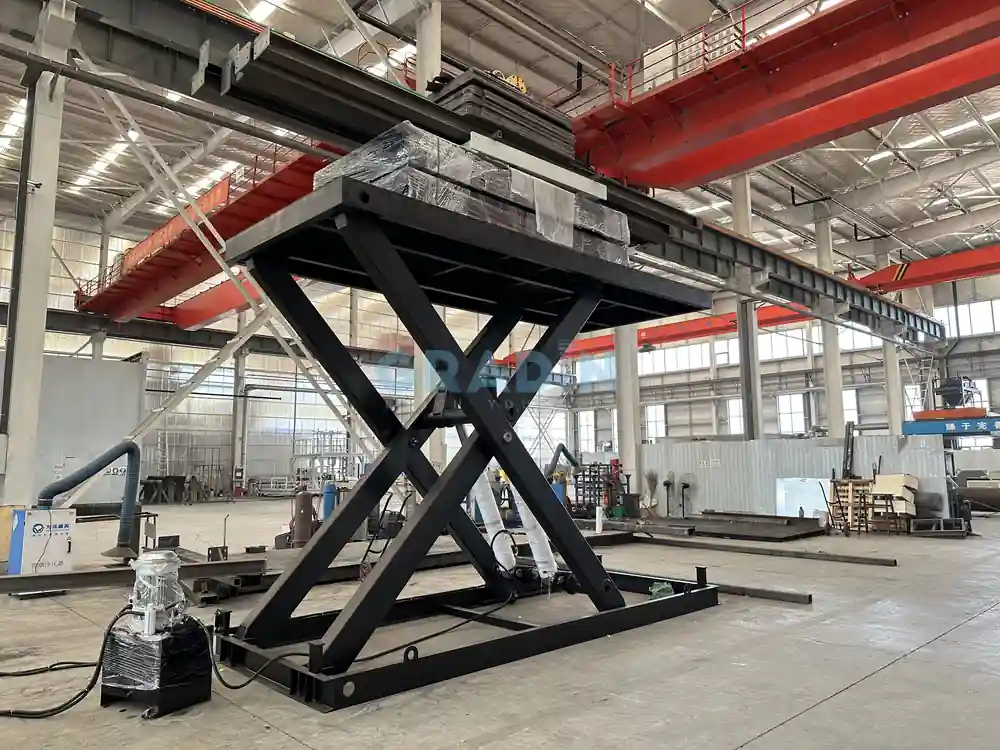
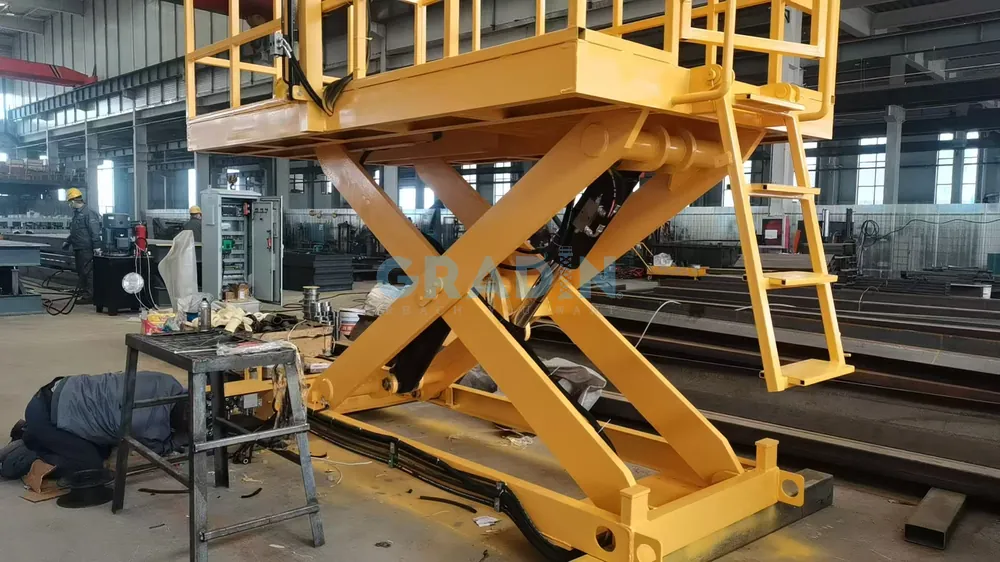
- Scissor lift – raises the platform from ~800mm to 2,500mm to align with the shelter floor.
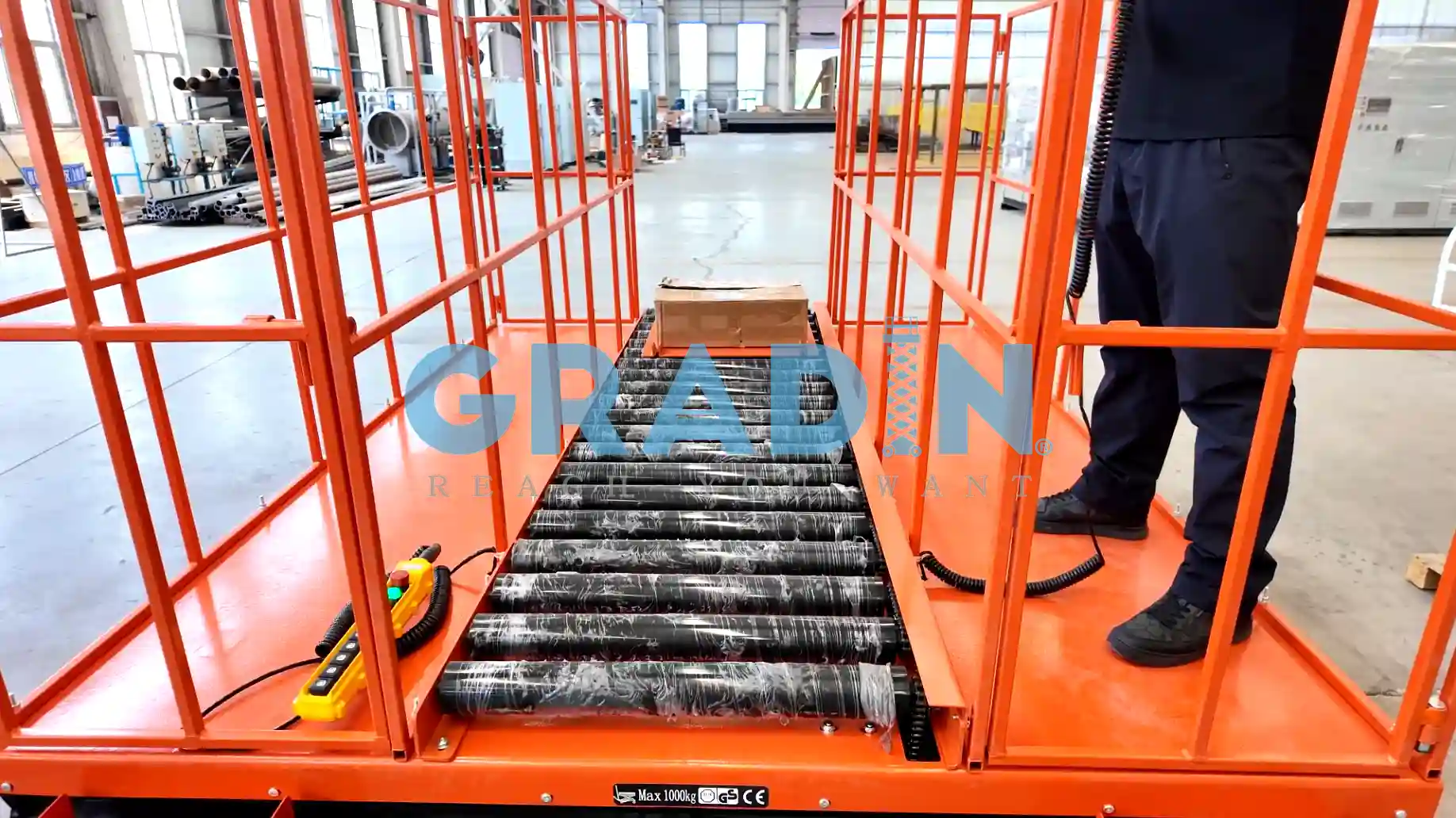
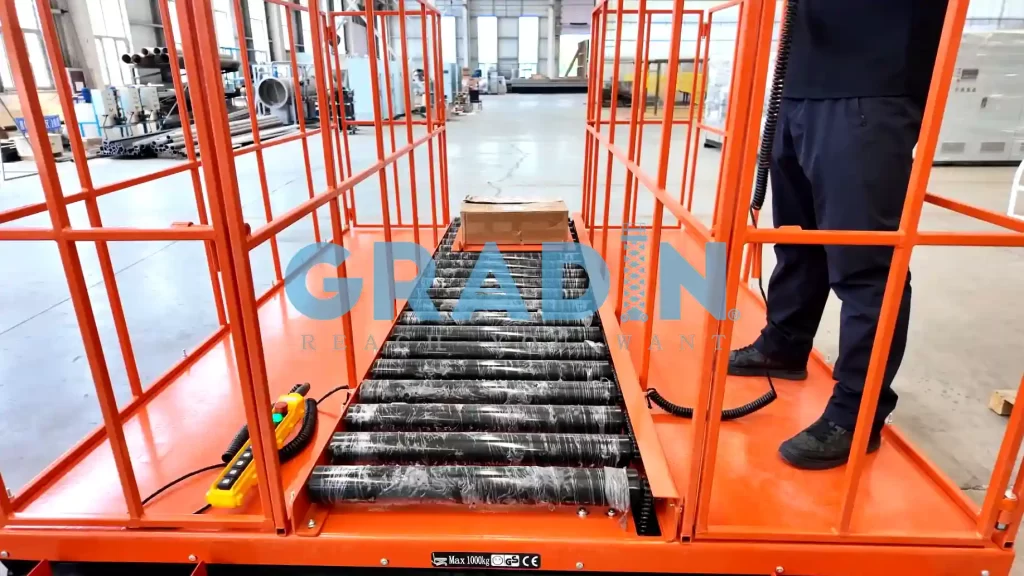
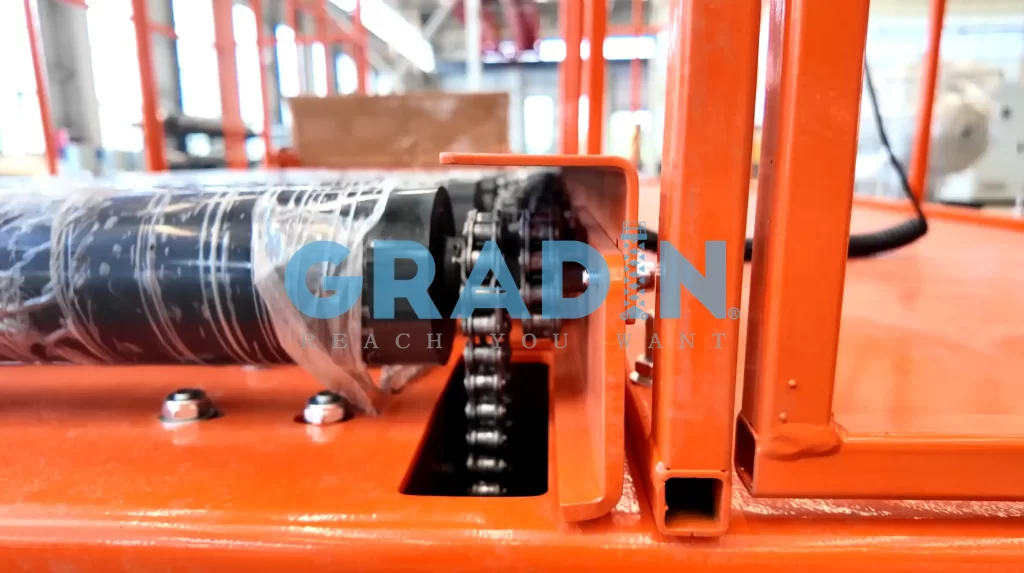
- Powered roller conveyor – built into the platform (900mm wide, rubber‑coated rollers) moves cabinets at a low speed (5 cm/s) into the shelter.
- Self‑propelled chassis – four wheels (2× Φ300 polyurethane drive wheels + 2 swivel castors), differential steering, max speed ≤8 km/h for moving around the workshop or outdoors.
Core Specifications
| Parameter | Value |
|---|---|
| Model | SJY1.0‑2.5 |
| Rated load | 1,000 kg |
| Platform size (L×W) | 2,600 × 2,200 mm (final as per approved drawing) |
| Roller conveyor width | 900 mm |
| Roller spacing | 50‑70 mm |
| Conveying speed | 5 cm/s (adjustable) |
| Lifting stroke | 1,800 mm (from 800 mm closed to 2,500 mm max) |
| Lifting speed | 4‑6 m/min |
| Travel speed | ≤8 km/h (stepless adjustment) |
| Drive wheels | 2× Φ300 polyurethane non‑marking drive wheels |
| Steering | Swivel castors + differential steering |
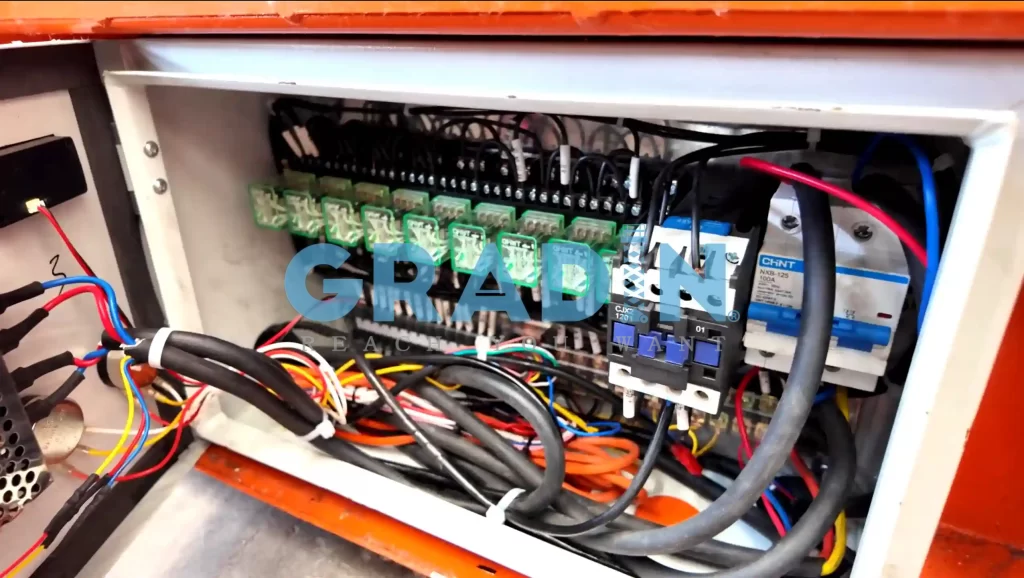
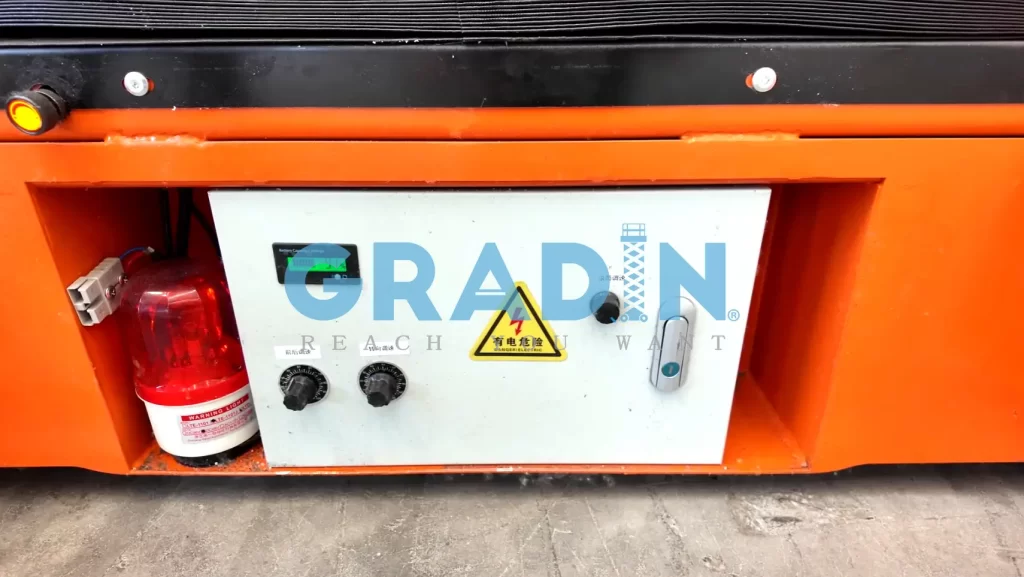
| Battery | 48V 200Ah (4×85Ah lead‑acid) |
| Drive motor | 1.5 kW with brake |
| Lift motor | 2.2 kW |
| Roller motor | 0.75 kW DC, adjustable |
| Guardrail height | 1,200 mm (removable) |
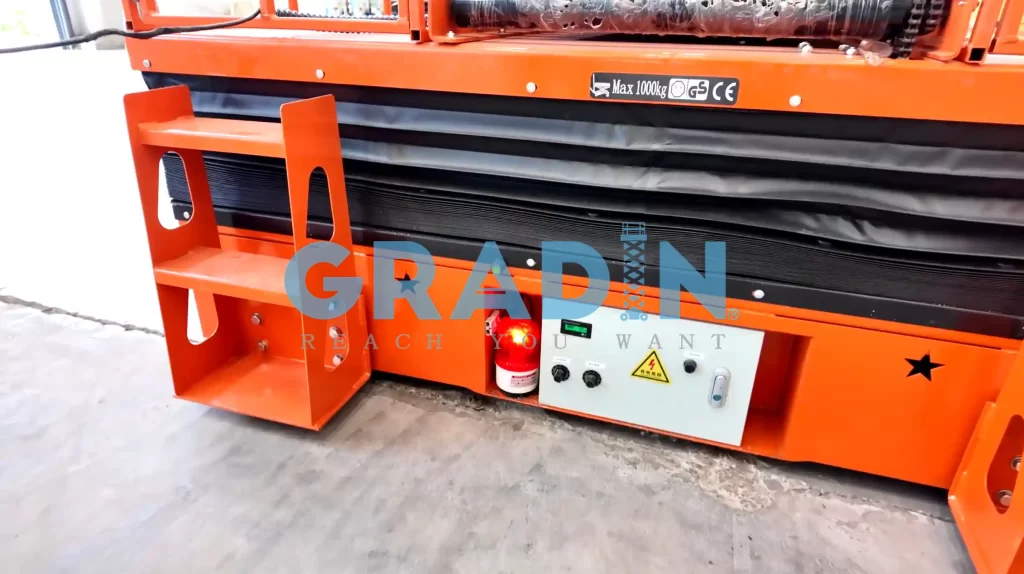
| Ladder height | 600‑700 mm |
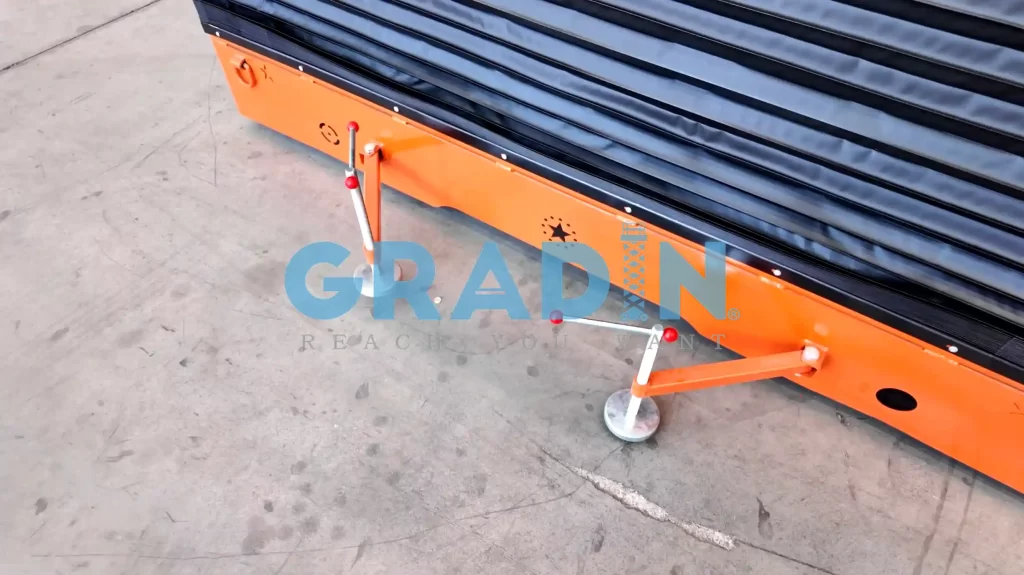
| Outriggers | 4 folding legs |
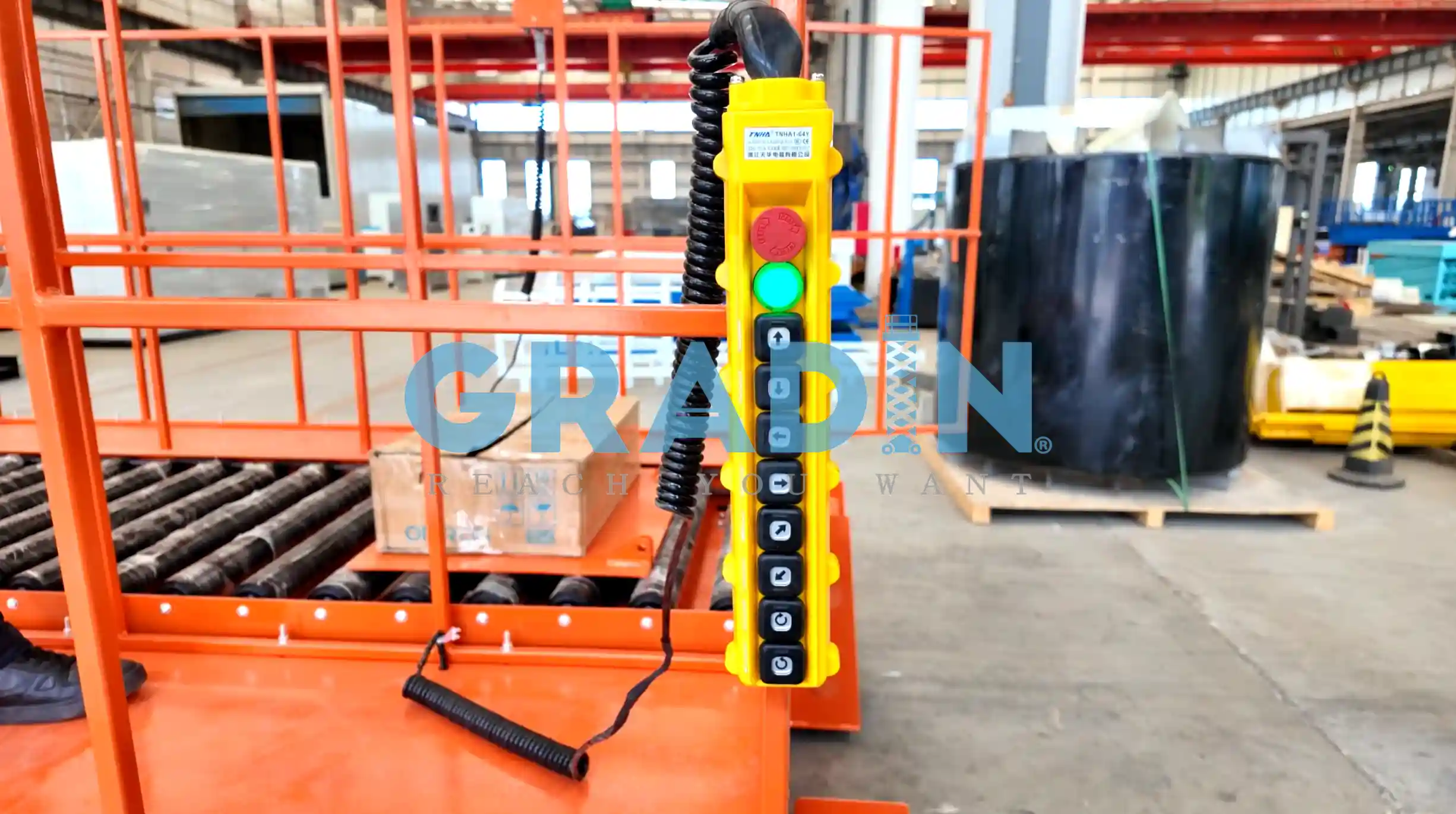
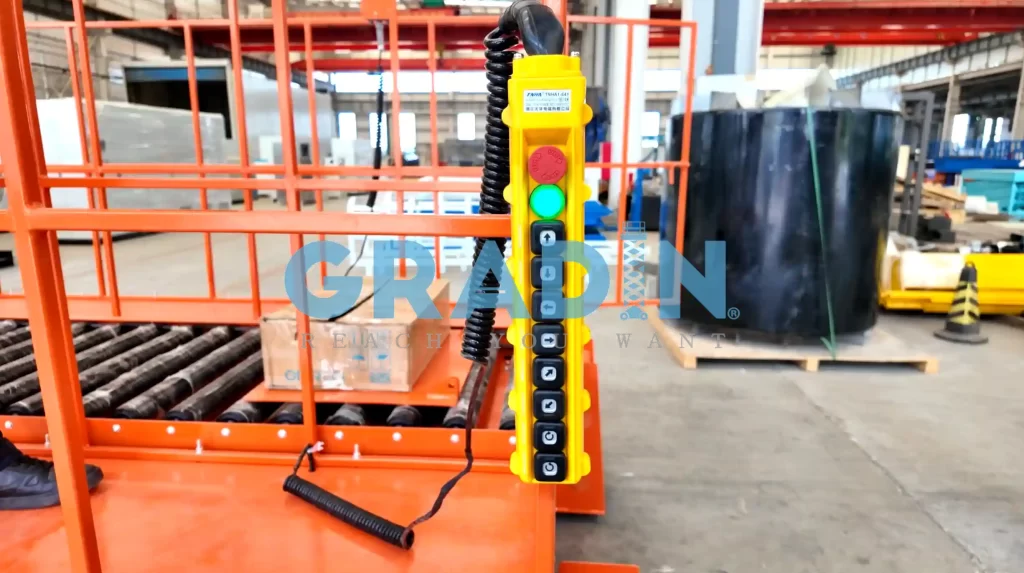
| Control | Wired remote (spring cable, max 6m) with mode interlock |
| Colour | Orange‑yellow (YR04), finish grade II |
| Order date | Feb 16, 2024 (confirmed March 2026) |
| Shipment date | April 8, 2026 |
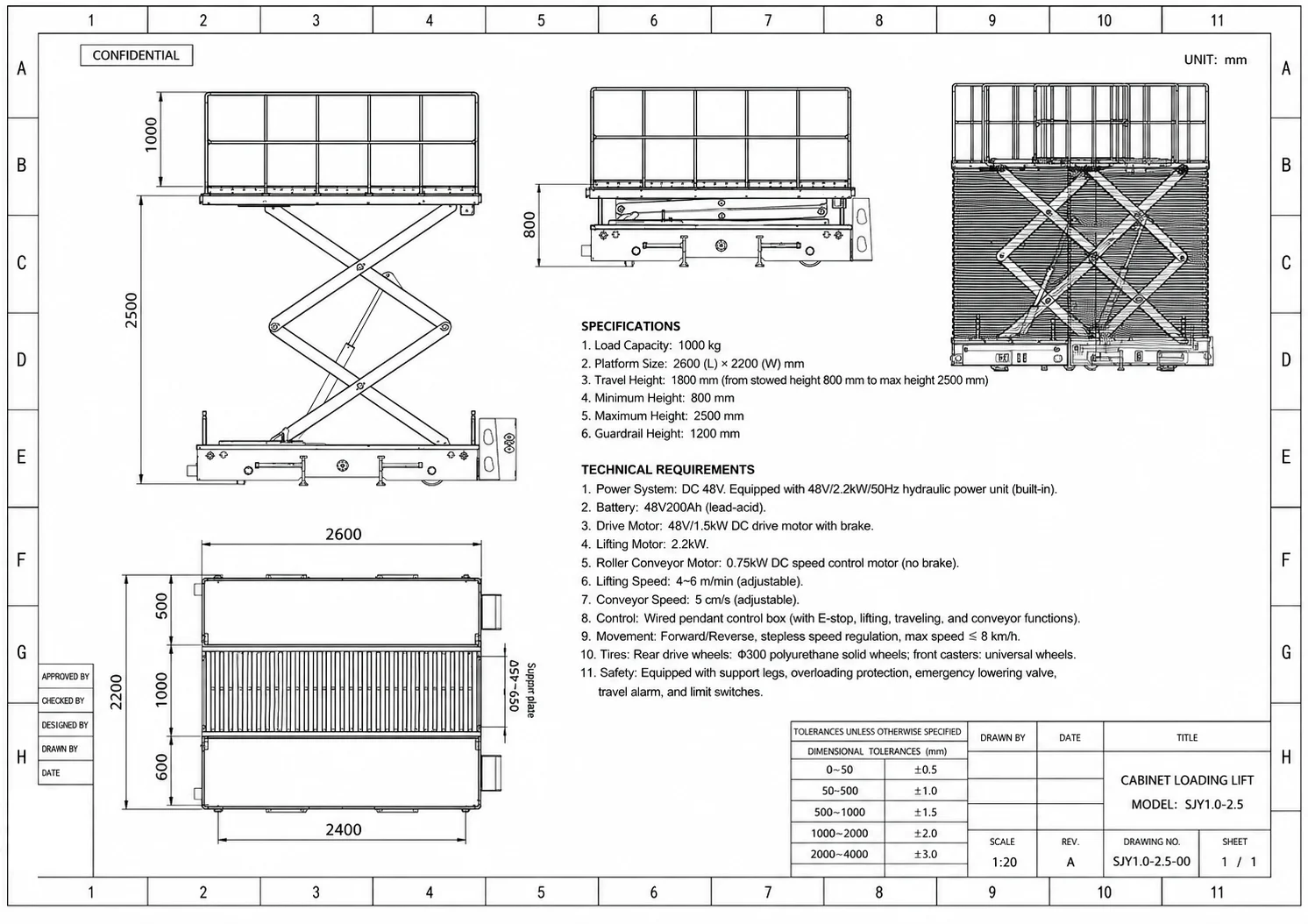
Key Mechanisms
Lifting system:
- Scissor arms made of 120×60×5 mm rectangular tube, driven by two Φ90 hydraulic cylinders.
- Power unit: 2.2 kW with emergency lowering valve (manual lowering even when power fails) and overload relief valve.
- Lifting speed: 4‑6 m/min, manually adjustable.
Roller conveyor:
- Roller diameter: 75 mm, spacing 50‑70 mm to evenly support the cabinet base.
- Rubber coating prevents scratching. 750W DC motor with speed controller, conveying speed 5 cm/s (adjustable).
- No brake – the cabinet stops by itself once it contacts the shelter floor or reaches the end.
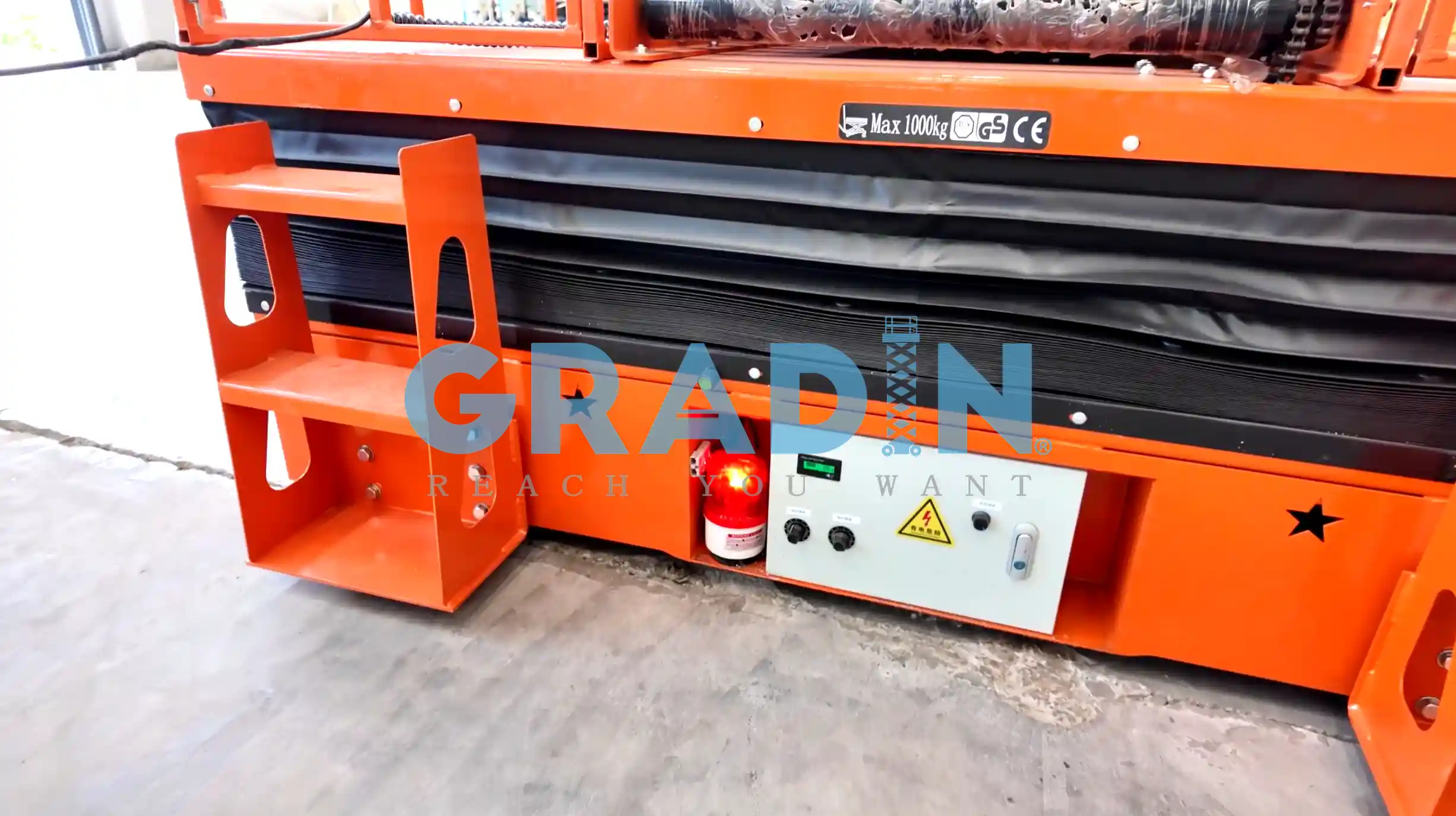
Driving & steering:
- Powered by 48V 200Ah lead‑acid battery (4×85Ah).
- 1.5 kW drive motor with brake. Rear fixed driving wheels, front swivel castors – steering achieved by differential speed.
- Inverter provides AC220V backup power.
Safety features:
- Four folding outriggers (deployed for stability during operation).
- 1,200 mm high removable guardrails on three sides (fixed on the outside, removable on the inside to access the shelter door).
- Tail ladder (600‑700 mm high) for operator access.
- Support plate bridges the gap to the shelter floor, compensating for height differences.
- Wired remote controller integrates emergency stop, lift, drive and roller controls – mode interlock: only one action (lift, drive or roll) can be active at any time.
Operation Workflow
- Drive into position: Use the remote to move the lift to the shelter door, then deploy the four outriggers.
- Raise to correct height: Lift the platform to match the shelter floor level (max 2,500 mm), adjust the support plate.
- Load the cabinet: Use a crane to place the cabinet onto the platform rollers (or roll it up via the tail ladder).
- Roll in: Start the rollers forward – the cabinet moves smoothly into the shelter. The operator can walk alongside using the wired remote.
- Retract: Reverse the rollers to pull the empty platform out, lower it, fold the outriggers and drive away.
All operations are done by one person with the remote – no manual pushing or pulling required.
Project Value
Value for the customer (military unit)
- Eliminates swing risk: Cabinets are fully supported by rollers throughout the transfer – no crane sway, protecting sensitive electronics.
- Greatly improved efficiency: One person can complete the whole loading/unloading cycle within 5 minutes – at least three times faster than crane operations.
- Reduces physical labour: No manual pushing or pulling, lowering the risk of back injuries.
- Adapts to confined spaces: Platform dimensions and the support plate design respect the shelter door’s limited opening (minimum approach distance ≥50 mm).
Significance for military equipment support
- Provides a standardised solution for loading heavy cabinets into military shelters, radar shelters, communication command vehicles, etc.
- Can be extended to field logistics, missile launch vehicles, armoured recovery vehicles – integrating transport, lifting and conveying in one unit.
- Modular design (lift + conveyor + self‑propelled) can be adapted to different shelter and cabinet sizes.
Details
FAQ
If you want to customize your material handling equipment, please contact us →.