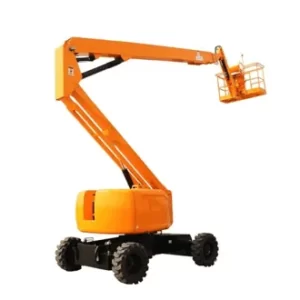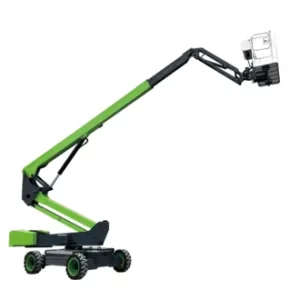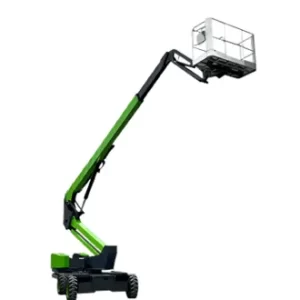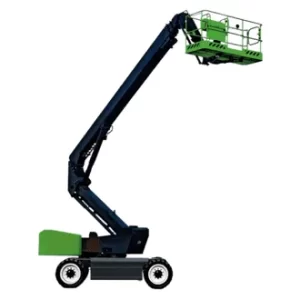
24m elektrische telescoophoogwerkers

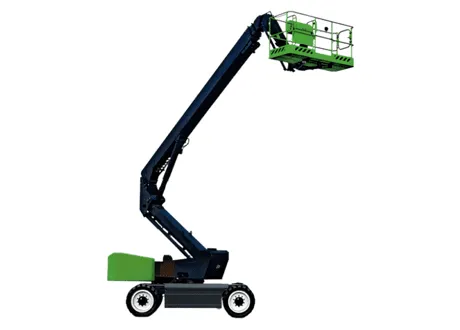
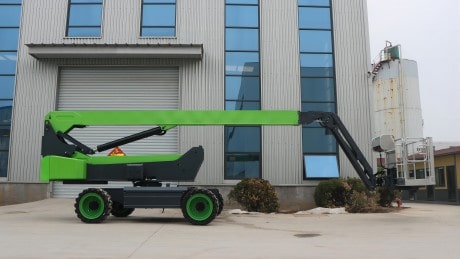
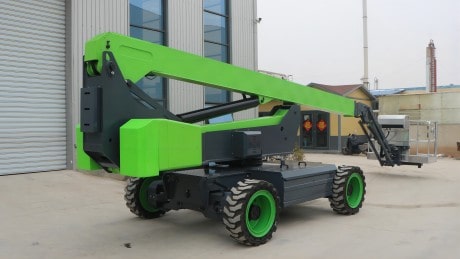
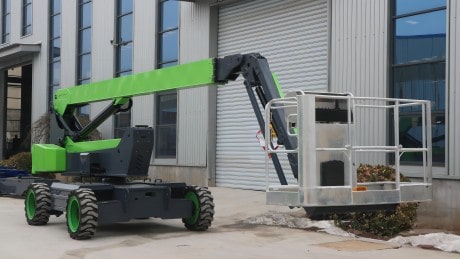
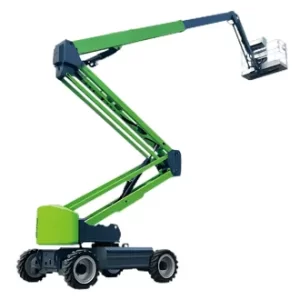
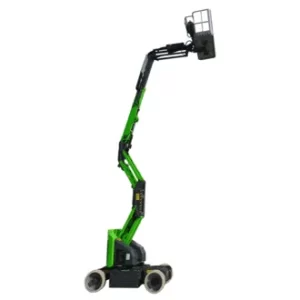
G-J24Li Electric Telescopic Boom Lifts, offering unmatched aerial productivity with a maximum working height of 26.2 meters. Perfect for high-rise construction, telecom tower maintenance, and industrial tasks, the G-J24Li features IP65 waterproofing for all-weather durability. Its electric powertrain ensures eco-friendly operation, while four-wheel drive and balanced axles provide superior traction and stability on any terrain. Enhance your productivity and safety with the versatile G-J24Li Electric Telescopic Boom Lifts.

Capaciteit: ≤ 1 ton
Afstand: > 11 m
Breedte: ≤ 1 m
Lengte: 1 - 3 m
G-J24Li 24m Electric Telescopic Boom Lifts

Modellen en specificaties

Specificaties
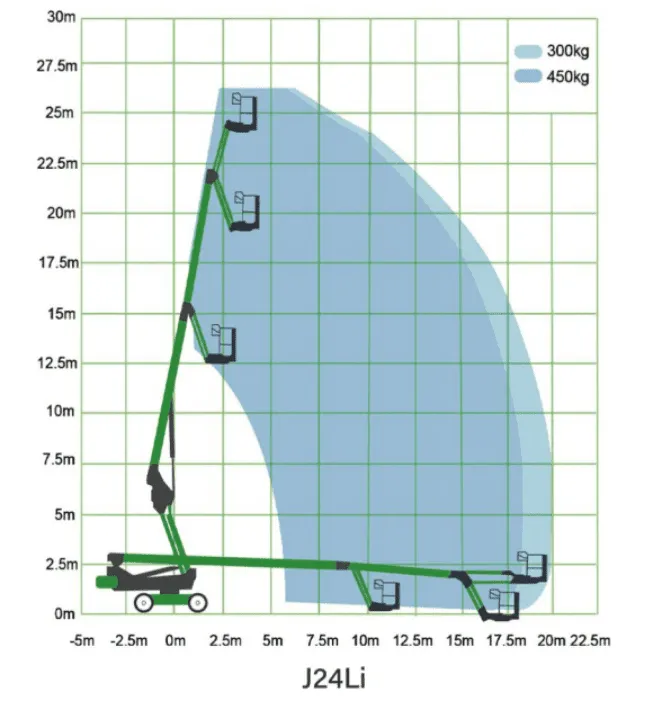
Max. Werkhoogte26.2m
Max. Hoogte platform24.2m
Max. Werkradius20m
Afmetingen platform2.4*0.9m
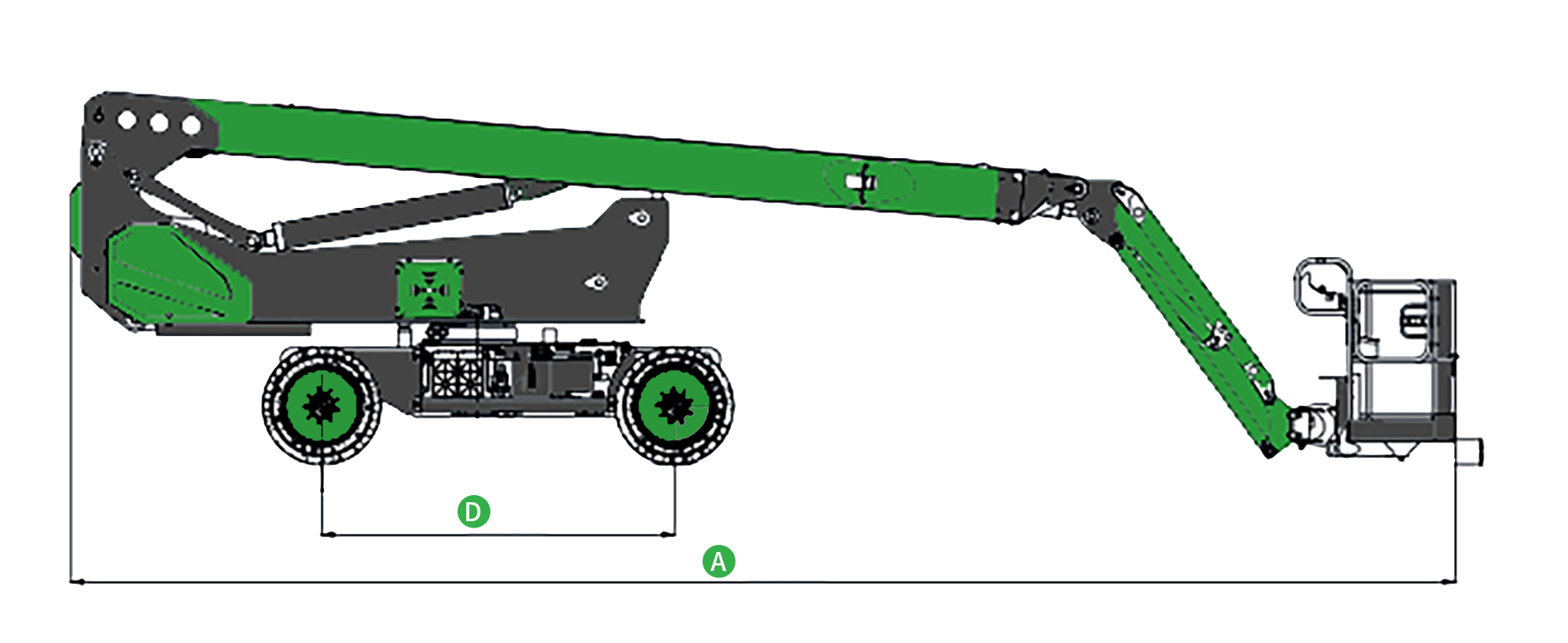
Ⓐ Length(stowed)10.9m
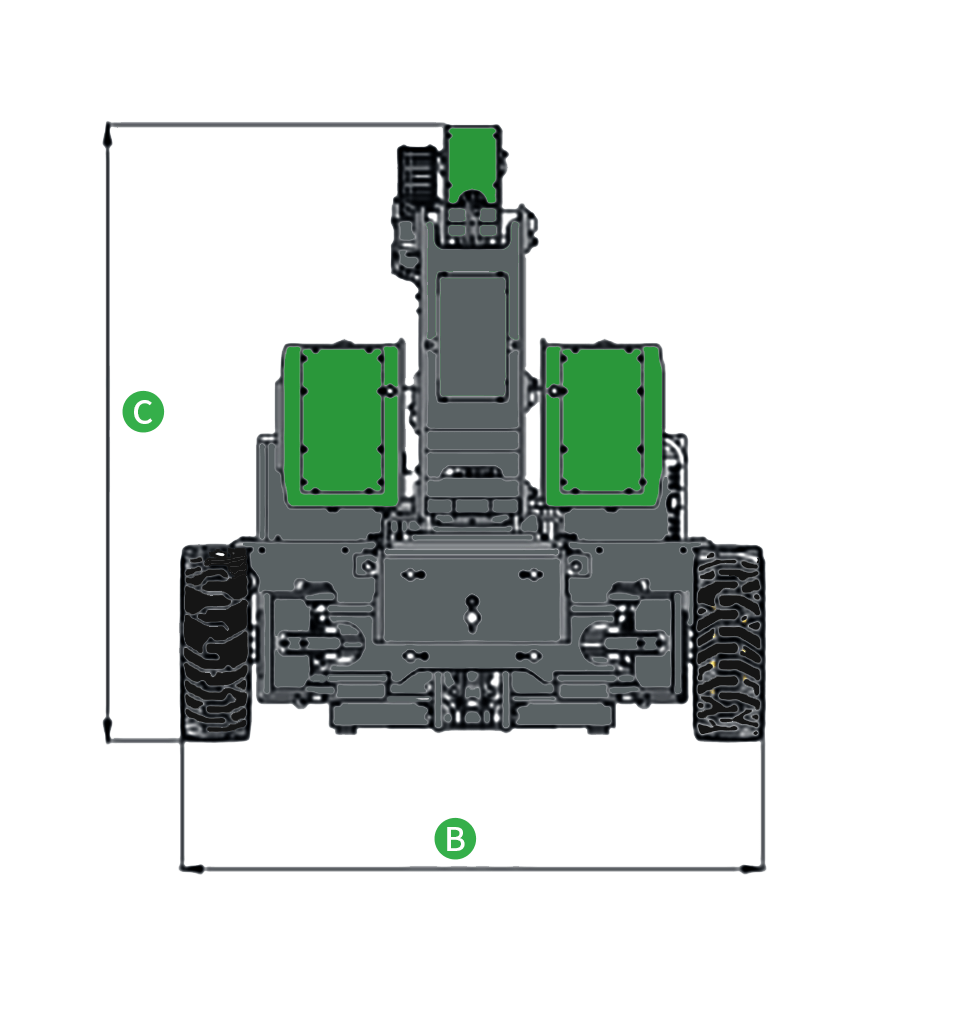
Ⓑ Width(stowed)2.49m
Ⓒ Height(stowed)2.92m
Ⓓ Wheelbase3.2m
Bodemvrijheid - midden0.3m
Gewicht15100kg
Productiviteit
Max. Hefcapaciteit300kg/450kg
Aantal platformbewoners3
Platform rotatie±80°
Draaitafel rotatie360° Continuous
Jib rotation (up/down)±70°
Rijsnelheid - opgeborgen5.5km/h
Gradeerbaarheid - opgeborgen45%
Max. Werkhoek (activering van kantelsensor)
Draaicirkel (buiten)6.5m
Drive and steer mode4*2
Stroom
Batterij80V/500Ah
Stuurspanning12V
Pompmotor30 kW
Aandrijfmotor5,2 kW
LithiumbatterijStandaard

Kenmerken

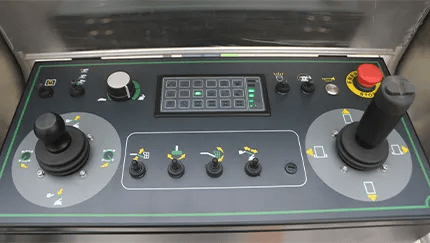
The Bosch Rexroth platform control panel is equipped with proportional joystick controls and an emergency stop button.
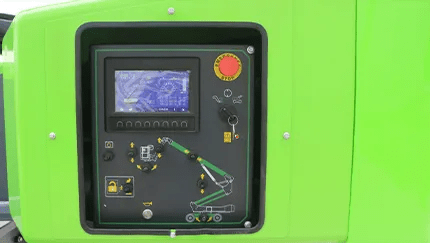
The Bosch Rexroth ground control panel features an IP65 waterproof design and an emergency stop button.
The boom utilizes self-weight lowering technology and a load-sensitive hydraulic system to ensure smooth and energy-efficient operation.
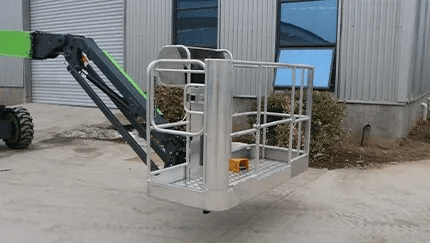
The platform can automatically level itself within a ±80° rotation range.
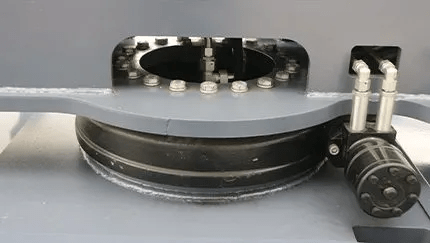
The 360° continuous rotation of the turntable allows the platform to reach worksites with enhanced flexibility.
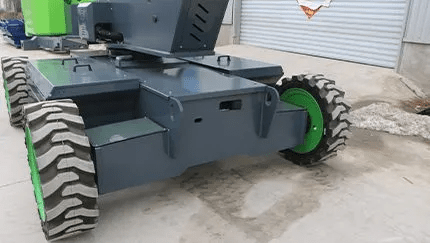
Advanced four-wheel AC drive technology combined with steering differential control significantly reduces tire wear and motor overload rates.
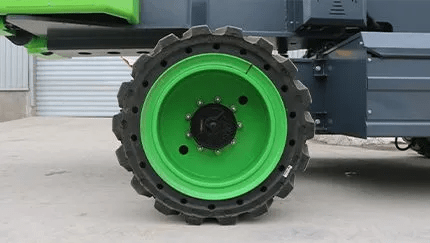
Uitgerust met massieve banden, slipvast en explosieveilig met een langere levensduur, voor een stabiele en arbeidsbesparende werking.
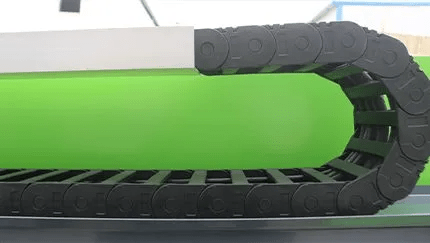
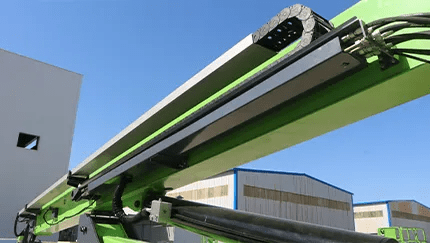
The international brand drag chain of the telescopic boom offers safety protection and guiding capabilities for the cables inside the booms.

Video's

18m Electric Telescopic Boom Lift
How to Operate Telescopic Boom Lifts Step by Step Guide

Diagram

Andere hoogwerkers
FAQ

Both telehandlers and telescopic boom lifts are versatile machines used in construction and industrial applications, but they serve different primary functions and have distinct features. Here’s a comparison:

Telehandler

  • Function: Primarily designed for material handling. Telehandlers can lift, move, and place heavy loads at varying heights and distances.
  • Design: Features a boom that extends out and up, often equipped with forks, buckets, or other attachments for different tasks.
  • Maneuverability: Generally has four-wheel drive and can navigate rough terrain, making it suitable for outdoor construction sites.
  • Load Capacity: Typically has a higher load capacity, ranging from 5,000 to 12,000 pounds or more, depending on the model.
  • Versatility: Can be used for lifting, towing, and transporting materials, making it a multi-functional machine.

Telescopic Boom Lift

  • Function: Primarily designed for reaching heights and providing aerial access for personnel and equipment. It is used for tasks such as maintenance, construction, and cleaning at elevated heights.
  • Design: Features a boom that extends vertically, with a platform or bucket at the end for workers to stand in. The platform can often rotate and articulate.
  • Maneuverability: While also capable of navigating uneven terrain, it is generally less rugged than telehandlers and is often used on smoother surfaces.
  • Load Capacity: Typically has a lower load capacity than telehandlers, usually around 500 to 1,000 pounds for the platform and occupants.
  • Focus: Primarily focused on providing elevated access rather than material handling.

A telescopic boom lift is a type of aerial work platform that is designed to provide elevated access for personnel and equipment to hard-to-reach areas. Here are the key features and aspects of telescopic boom lifts:

Key Features

  • Extendable Boom: The primary feature of a telescopic boom lift is its extendable boom that can be raised and extended horizontally. This allows operators to reach high or distant work areas safely.
  • Platform: At the end of the boom, there is typically a platform or basket where workers can stand while performing tasks such as maintenance, construction, or cleaning.
  • Height and Reach: Telescopic boom lifts come in various sizes, with maximum working heights typically ranging from around 30 feet to over 100 feet, depending on the model.
  • Stability: These lifts are designed with stability in mind, often equipped with outriggers or stabilizers to ensure safe operation on uneven surfaces.
  • Control Systems: Operators usually control the lift from within the platform, allowing for precise maneuvering and positioning at height.

Toepassingen

  • Construction: Used for tasks such as installing windows, roofing, and other high-altitude work.
  • Maintenance: Ideal for maintaining and repairing buildings, bridges, and other structures.
  • Cleaning: Commonly used for high-rise window cleaning and facade maintenance.

Voordelen

  • Access to Heights: Provides safe access to elevated work areas that may be difficult to reach with ladders or scaffolding.
  • Versatility: Can be used in various environments, including construction sites, warehouses, and industrial facilities.
  • Safety Features: Equipped with safety features like guardrails and emergency lowering systems to protect operators.

Een electric boom lift is a type of aerial work platform powered by electric motors, designed to provide elevated access for personnel and equipment. Here are the key features and aspects of electric boom lifts:

Key Features

  • Power Source: Electric boom lifts operate on electric batteries, making them more environmentally friendly compared to their diesel or gas counterparts. They are quieter and produce no emissions during operation.
  • Boom Design: Similar to other boom lifts, electric boom lifts have an extendable boom that can be raised and articulated to reach high or distant work areas.
  • Platform: They feature a platform or basket at the end of the boom, allowing workers to perform various tasks safely at height.
  • Height and Reach: Electric boom lifts come in various sizes, with working heights typically ranging from around 30 feet to over 60 feet, depending on the model.
  • Maneuverability: Many electric boom lifts are designed for indoor use, featuring compact designs that allow them to navigate tight spaces and doorways easily.

Toepassingen

  • Indoor Work: Ideal for use in warehouses, factories, and indoor construction sites where emissions and noise need to be minimized.
  • Maintenance: Commonly used for maintaining lighting, HVAC systems, and other infrastructure in high places.
  • Installation: Suitable for installing fixtures, signs, and other equipment at elevated heights.

Voordelen

  • Environmentally Friendly: Electric boom lifts produce zero emissions during operation, making them suitable for indoor environments and reducing environmental impact.
  • Lower Operating Costs: Typically have lower fuel and maintenance costs compared to diesel-powered lifts.
  • Quieter Operation: The electric motors operate more quietly, which is beneficial in noise-sensitive environments.

Elektrische hoogwerkers

  1. Stroombron:
    • Aangedreven door elektrische batterijen.
    • Emissievrij tijdens gebruik, produceert geen uitlaatgassen.
  2. Toepassingen:
    • Ideaal voor gebruik binnenshuis, zoals in magazijnen, productiefaciliteiten en winkelcentra.
    • Geschikt voor geluidsgevoelige omgevingen.
  3. Prestaties:
    • Looptijd: Beperkt door de levensduur van de batterij; moet mogelijk opnieuw worden opgeladen na langdurig gebruik.
    • Snelheid: Werkt over het algemeen met lagere hef- en manoeuvreersnelheden in vergelijking met dieselmodellen.
    • Stabiliteit: Vaak ontworpen voor een lager zwaartepunt, voor meer stabiliteit bij lichtere ladingen.
  4. Onderhoud:
    • Vergt over het algemeen minder onderhoud door minder bewegende onderdelen in vergelijking met dieselmotoren.
  5. Kosten:
    • Typisch lagere initiële kosten en operationele kosten door minder behoefte aan brandstof en onderhoud.

Diesel hoogwerkers

  1. Stroombron:
    • Aangedreven door dieselmotoren, die een robuust vermogen leveren voor zwaar hijswerk.
    • Produceert emissies en uitlaatgassen tijdens het gebruik.
  2. Toepassingen:
    • Het meest geschikt voor gebruik buitenshuis, met name op bouwterreinen, ruig terrein of gebieden waar een hoge mobiliteit vereist is.
    • Kan ruwe en oneffen ondergrond aan.
  3. Prestaties:
    • Looptijd: Kan langere perioden werken zonder op te laden; kan snel bijtanken.
    • Snelheid: Vaak sneller in tillen en manoeuvreren, waardoor ze geschikt zijn voor veeleisende taken.
    • Terreinbehandeling: Heeft meestal grotere banden en een betere tractie, waardoor hij beter over ruwe oppervlakken kan navigeren.
  4. Onderhoud:
    • Hebben mogelijk vaker onderhoud nodig vanwege de complexiteit van dieselmotoren en de noodzaak om het brandstofsysteem te onderhouden.
  5. Kosten:
    • Over het algemeen hogere brandstof- en onderhoudskosten in vergelijking met elektrische modellen.

Both scissor lifts and telescoping boom lifts are types of aerial work platforms, but they have distinct designs and functions. Here’s a comparison of the two:

Schaarlift

  • Design: Scissor lifts consist of a platform that moves vertically via a crisscrossing (scissor-like) mechanism. They typically have a rectangular base and extend straight up.
  • Height and Reach: Scissor lifts generally have a limited vertical reach compared to telescoping booms, with maximum heights typically ranging from 20 to 60 feet.
  • Stability: They provide a stable platform for workers and have a larger work area compared to boom lifts, making them suitable for tasks that require multiple workers or equipment.
  • Use Cases: Ideal for indoor applications, such as maintenance, installation, and warehousing tasks, where a stable platform is needed.
  • Maneuverability: Scissor lifts may have limited horizontal reach; they primarily move up and down, making them less versatile for reaching out over obstacles.

Telescoping Boom Lift

  • Design: Telescoping boom lifts have a long, extendable boom that can reach up and out, allowing for greater flexibility in accessing hard-to-reach areas.
  • Height and Reach: They can achieve greater heights, often exceeding 100 feet, and can extend horizontally, giving them the ability to reach over obstacles.
  • Stability: While they provide a stable platform, telescoping boom lifts can be less stable than scissor lifts when fully extended, especially on uneven terrain.
  • Use Cases: Suitable for outdoor applications, construction, and maintenance tasks where workers need to access areas at various heights and distances.
  • Maneuverability: They offer better maneuverability and can navigate around obstacles due to their ability to extend both vertically and horizontally.

Summary

In summary, the main difference lies in their design and functionality:

  • Scissor Lifts: Provide vertical access with a stable platform, best for tasks requiring height without horizontal reach.
  • Telescoping Boom Lifts: Offer both vertical and horizontal reach, ideal for accessing hard-to-reach areas in various applications.

Electric Boom Lift

  • Power Source: Powered by electric batteries, making them environmentally friendly with zero emissions during operation.
  • Noise Level: Operates quietly, which is advantageous for indoor use and in noise-sensitive environments.
  • Use Cases: Ideal for indoor applications, such as warehouses, factories, and maintenance tasks where emissions and noise need to be minimized.
  • Maneuverability: Generally more compact and designed for tight spaces, allowing easy navigation through doorways and narrow aisles.
  • Operating Costs: Typically have lower fuel and maintenance costs, but may require charging infrastructure.
  • Limitations: May have limited outdoor use capabilities, especially in rough terrain, and can be less powerful in extreme conditions compared to diesel lifts.

Diesel Boom Lift

  • Power Source: Powered by diesel engines, providing greater power and torque for heavy-duty applications.
  • Noise Level: Generally louder than electric lifts, which can be a consideration in urban or noise-sensitive areas.
  • Use Cases: Suitable for outdoor applications, especially on construction sites or rugged terrains where higher lifting capacities and durability are needed.
  • Maneuverability: Often larger and heavier, which may limit their ability to navigate tight spaces but allows for greater stability on uneven ground.
  • Operating Costs: Typically higher fuel and maintenance costs due to the nature of diesel engines, but they are well-suited for demanding tasks.
  • Limitations: Produces emissions, which can restrict indoor use and requires adequate ventilation.

Summary

In summary, the key differences between electric and diesel boom lifts include:

  • Electric Boom Lifts: Environmentally friendly, quieter, and ideal for indoor use with lower operating costs.
  • Diesel Boom Lifts: More powerful and suitable for outdoor use, capable of handling rough terrain but with higher noise levels and operating costs.

Choosing between the two depends on the specific requirements of the job, including location, noise considerations, and the need for power and reach.

Articulating and telescopic boom lifts are both types of aerial work platforms, but they have distinct designs and functionalities. Here’s a comparison of the two:

Articulating Boom Lift

  • Design: Features a jointed or “articulated” boom that can bend at various points, allowing for greater maneuverability around obstacles.
  • Reach: Can extend vertically and horizontally, providing access to hard-to-reach areas, especially in tight spaces or over obstacles.
  • Stability: Typically offers a stable platform, but the articulating design can sometimes limit the maximum height compared to telescopic booms.
  • Use Cases: Ideal for applications where precise positioning is required, such as maintenance, construction, and tree trimming in crowded or complex environments.
  • Maneuverability: Excellent maneuverability due to the ability to navigate around obstacles, making them suitable for urban environments and complex job sites.

Telescopic Boom Lift

  • Design: Features a straight, extendable boom that can be raised and lowered vertically, often with multiple sections that telescope out.
  • Reach: Provides significant vertical reach and can extend horizontally, but may not navigate around obstacles as effectively as articulating lifts.
  • Stability: Generally offers greater height capabilities compared to articulating booms, making them suitable for tasks that require reaching high elevations.
  • Use Cases: Best for applications requiring high reach without the need to maneuver around many obstacles, such as construction, building maintenance, and outdoor work.
  • Maneuverability: While they can reach over obstacles, they may require more space to operate effectively than articulating boom lifts.

Summary

In summary, the main differences between articulating and telescopic boom lifts include:

  • Articulating Boom Lifts: Jointed design allows for excellent maneuverability around obstacles, ideal for tight or complex workspaces.
  • Telescopic Boom Lifts: Straight extendable design provides significant vertical reach, best suited for high-access tasks without the need for navigating around obstacles.

The choice between the two depends on the specific requirements of the job, including the environment, height needed, and the presence of obstacles.

Yes, a telescopic boom lift is classified as a Mobile Elevating Work Platform (MEWP).

What is a MEWP?

A MEWP is a type of equipment designed to provide temporary access for people or equipment to elevated work areas. Here are some key characteristics of MEWPs:

  • Mobility: MEWPs are mobile and can be easily moved from one location to another, making them suitable for various job sites.
  • Elevated Work: They are specifically designed to lift personnel and equipment to heights that are otherwise difficult to reach safely.
  • Types: MEWPs come in several forms, including scissor lifts, articulating boom lifts, and telescopic boom lifts, among others.

Why Telescopic Booms are MEWPs

  • Elevating Capability: Telescopic boom lifts provide vertical and horizontal reach, allowing workers to access high and hard-to-reach areas safely.
  • Platform Design: They have a platform or basket at the end of the boom for personnel to stand while performing tasks.
  • Safety Features: Telescopic boom lifts are equipped with various safety features, such as guardrails and emergency lowering systems, ensuring safe operation.

In summary, telescopic boom lifts are indeed considered MEWPs due to their design and functionality aimed at providing safe access to elevated work areas.

G-J24Li 24m Electric Telescopic Boom Lifts

Aangepaste opties

Pas uw liften aan

Als u een lift nodig hebt voor een specifieke functie, beschikken wij over de materialen, onderdelen en ontwerptechnieken om een unieke tiloplossing voor uw toepassing te maken.

Productvideo's liften
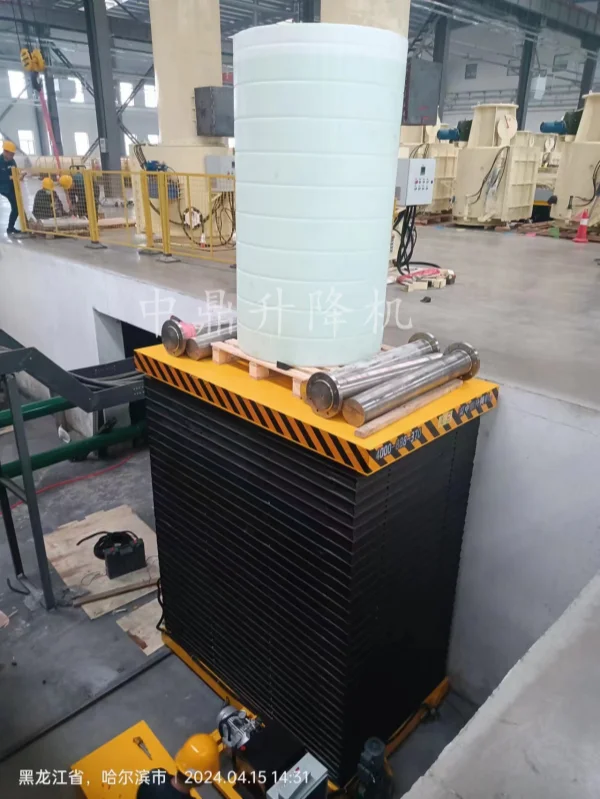
Aangepaste koffers
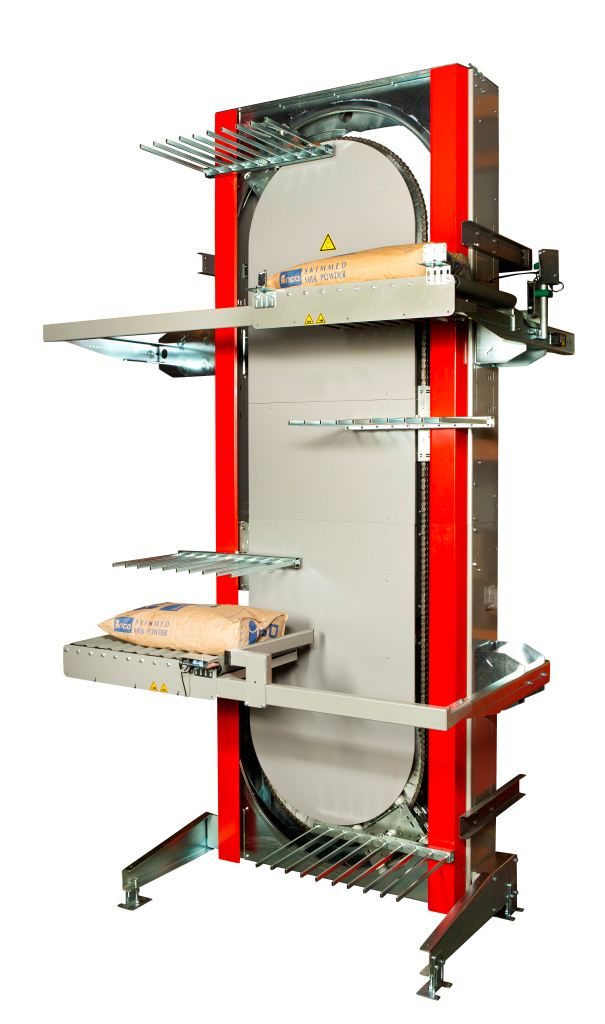
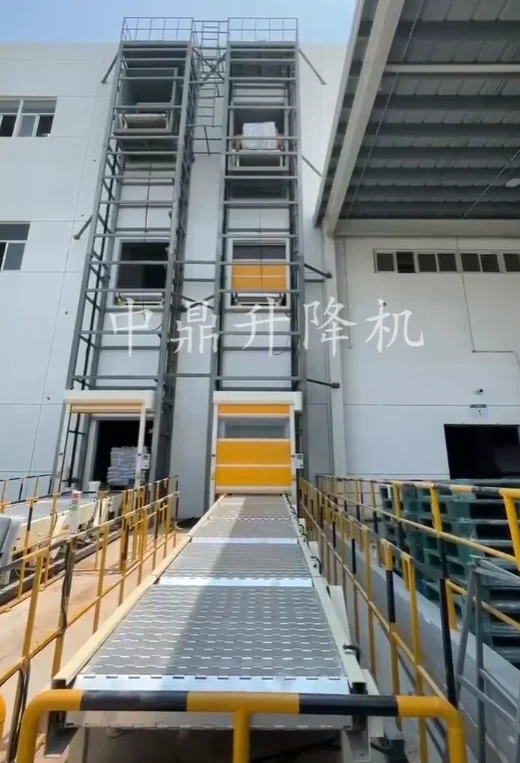
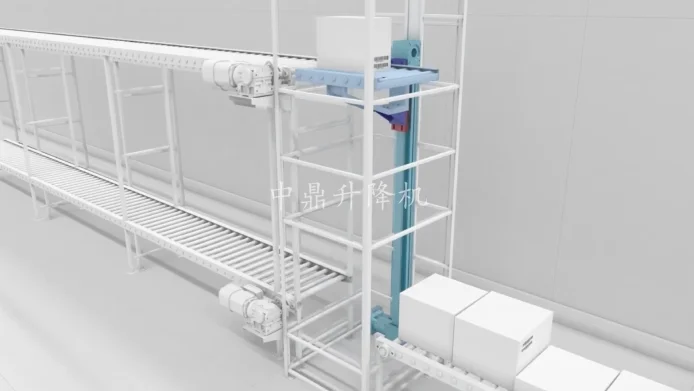
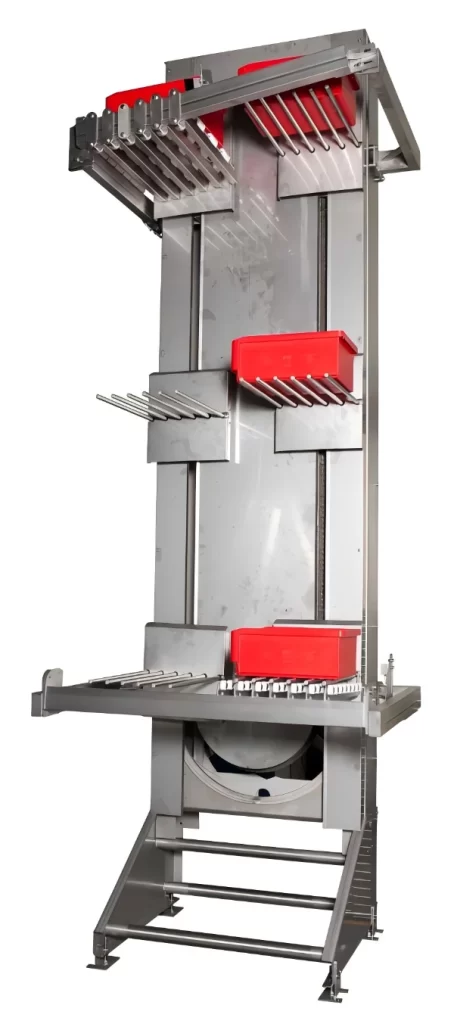
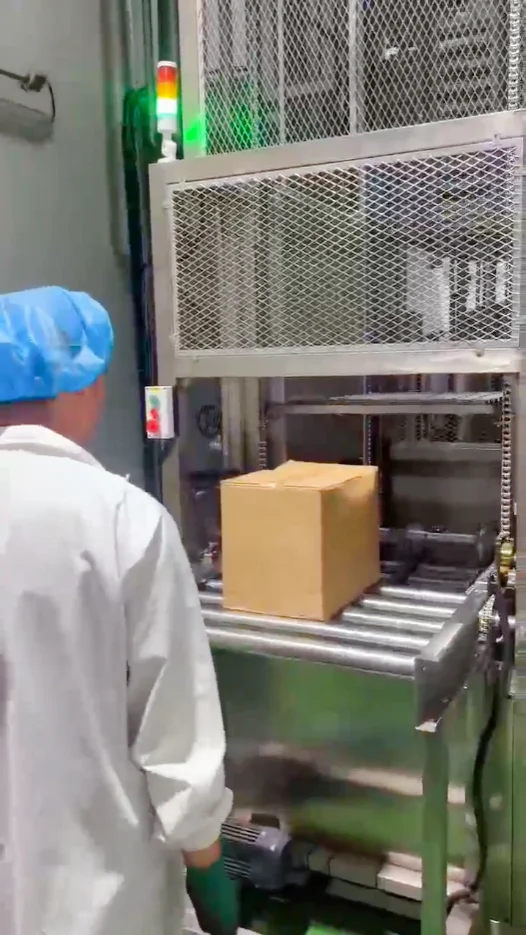
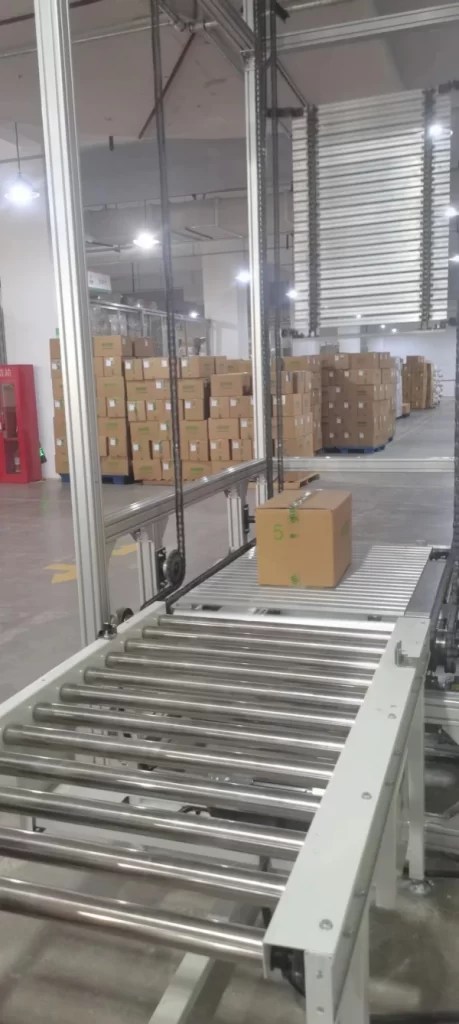
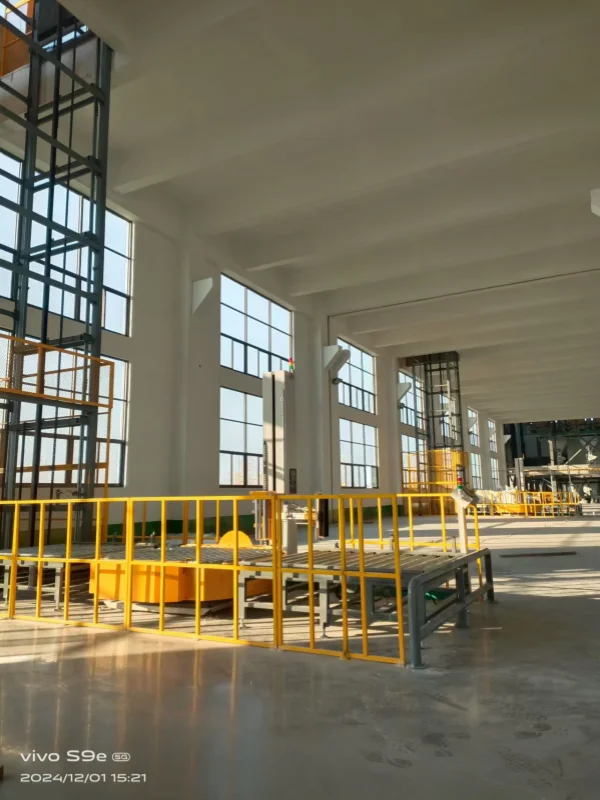
De SJD0.05-6 repeteerlift voor magazijnen in de voedingsindustrie
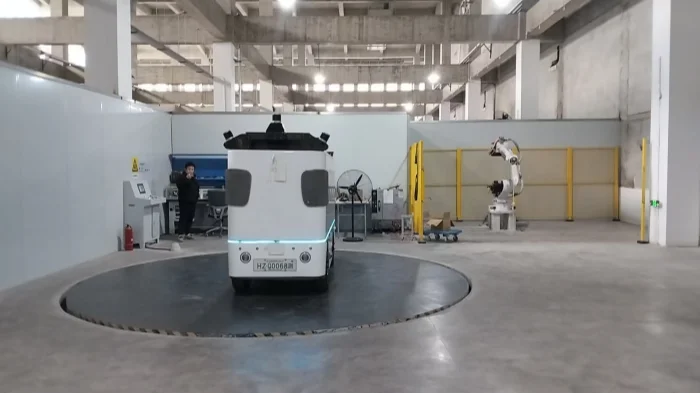
De SJD0.05-6 hefwagen is speciaal ontworpen voor magazijnomgevingen en is geschikt voor het transporteren en heffen van verschillende verpakte producten, zoals vers fruit, snacks, gezondheidsdrankjes, seizoensfruit en premium geschenkdozen. Deze apparatuur verbetert de operationele efficiëntie en optimaliseert de materiaalstroom in het magazijn en zorgt voor een veilige en georganiseerde behandeling van producten tijdens opslag en sorteren.

Autonoom voertuig testen Kalibratie Roterend Platform
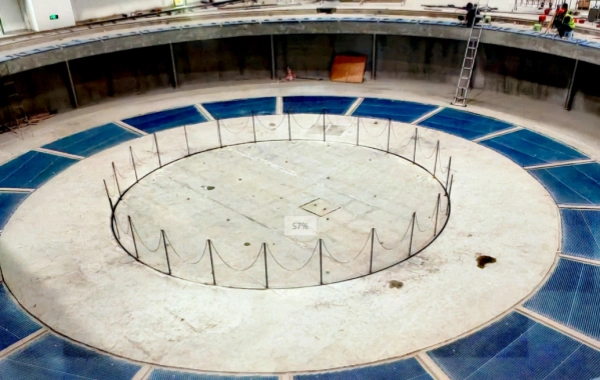
Dit systeem maakt gebruik van een servomotor voor zeer nauwkeurige rotatie, die voornamelijk wordt toegepast in twee fasen van de productie van onbemande voertuigen: ten eerste tijdens de testfase na de productie en ten tweede in de ontwerpfase voor het kalibreren van het eerste prototype van het voertuig.

Schaarvormig 316L roestvrij staal onderwater hefplatform
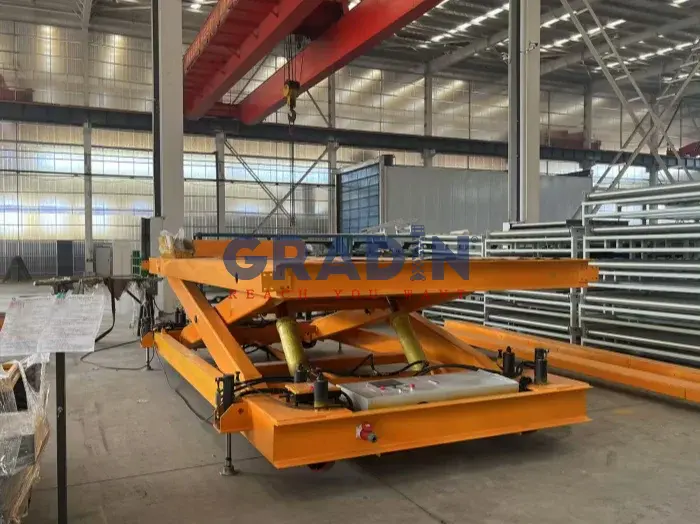
Dit hefplatform heeft een schaarontwerp van 316L roestvrij staal, speciaal gemaakt voor gebruik onder water. Het biedt een hoge stabiliteit en belastbaarheid dankzij de mechanische schaarstructuur. Bovendien is het platform uitgerust met een touchscreen besturingssysteem, waarmee gebruikers doelhoogtes kunnen instellen en de huidige hoogte in real-time kunnen weergeven.

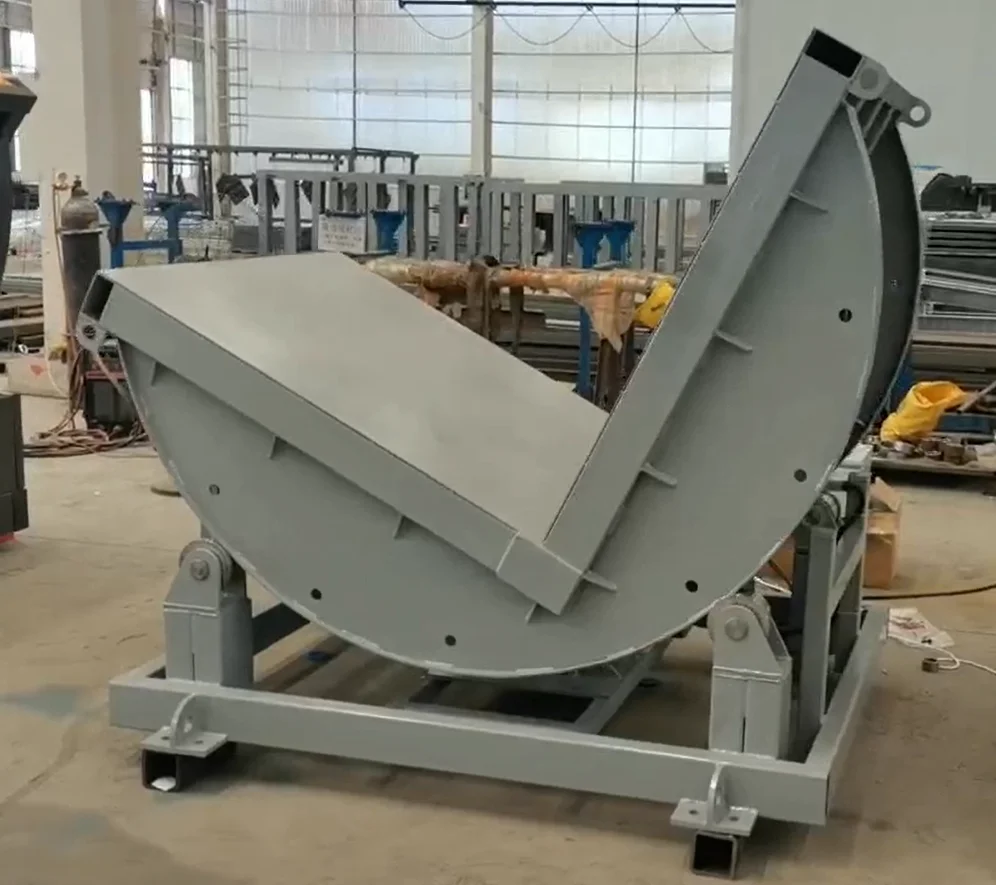
3-Ton Kettingklapmachine voor Dubbele Schroefpomp
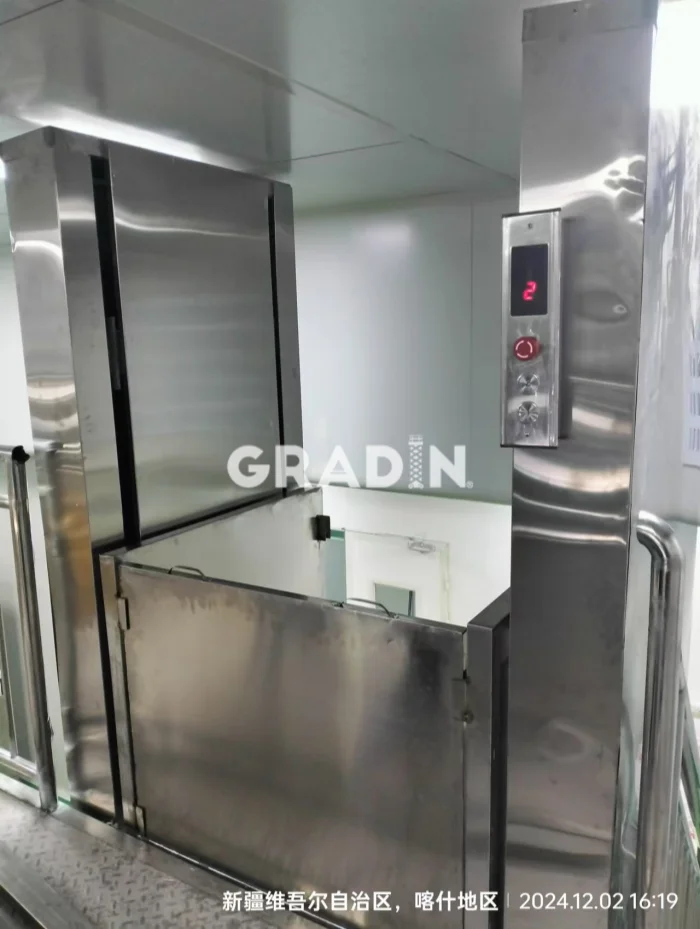
De kettingkantelmachine heeft een draagvermogen van 3 ton, met een kantelplatform van 1,5 meter x 1,5 meter + 1,5 meter x 1,5 meter, ontworpen voor het kantelen van de gegoten behuizingsonderdelen van schroefpompen.Share

Zuigerheftafel ontworpen voor het transporteren van kattenbakvulling
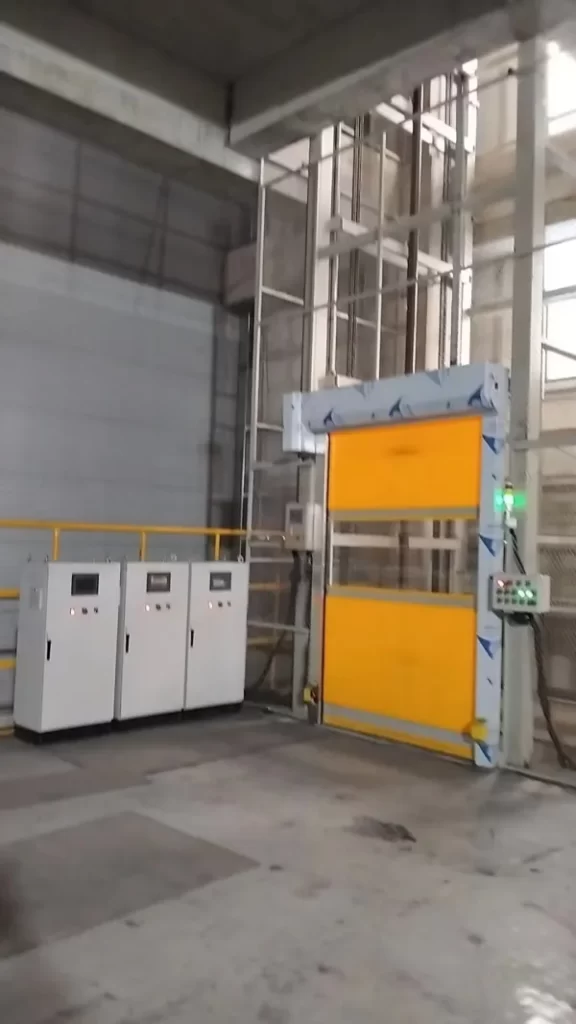
Deze heen en weer bewegende lift is speciaal ontworpen voor het transporteren van kattenbakvulling en combineert efficiënte handling met intelligente verpakking. Het apparaat heeft een maximale hefcapaciteit van 1500 kg en een hefhoogte van 16,5 meter. Hij ondersteunt meerpunts transport met drie lagen en drie stations en bereikt een rijsnelheid tot 40 meter per minuut.

316 roestvrij staal hefplatform: Geautomatiseerde transportoplossing voor brouwerijen

De brouwerij werkt in een unieke omgeving en maakt gebruik van een hefplatform dat volledig gemaakt is van 316 roestvrij staal voor het transporteren van hoppers. Dit roestvrij staal voldoet aan de normen voor corrosiebestendigheid en reinheid, waardoor een hoge gebruiksfrequentie gegarandeerd is, en is geïntegreerd met het centrale besturingssysteem voor een geautomatiseerde werking.
LIFE CAPACITEIT

PLATFORMLENGTE

1 - 3 m

PLATFORM BREEDTE

≤ 1 m

REISAFSTAND

> 11 m