
 ES
ES  EN
EN  PT
PT  FR
FR  RU
RU  KO
KO ¿Con qué frecuencia deben inspeccionarse las plataformas elevadoras de tijera?
Inicio > Elevador de tijera > ¿Con qué frecuencia deben inspeccionarse las plataformas elevadoras de tijera?
FAQ
Etiquetas
4 puestos (1) Escalera articulada (1) Automatizado (2) Automatización (1) Batería eléctrica (2) Elevador de pluma (4) Diseño compacto (1) Diesel (1) Doble cadena (1) Durabilidad (2) Fácil de usar (1) Actuación eficaz (1) A prueba de explosiones (1) Instalación rápida (1) Fijo (3) Carril guía (3) Carga pesada (3) Alta resistencia (4) Hidráulico (20) Apertura hidráulica del iris (1) Ascensores industriales (1) inspeccionar (2) Equipamiento logístico (1) Soluciones logísticas (1) Fácil mantenimiento (1) MEZZANINE (1) Móvil (1) Diseño modular (2) Ascensor exterior (1) Soluciones para líneas de producción (1) Cadena rígida (1) Cadenas de rodillos (2) Seguridad (5) elevadora de tijera (9) Autopropulsado (3) Semi-Auto (1) Pequeño (3) Inoxidable (1) Sobre orugas (1) Rastreado (1) Elevación vertical (1) Transporte vertical (1) VRC (1) Soluciones de almacén (2) Resistencia a la intemperie (1)
Con qué frecuencia deben inspeccionarse las plataformas elevadoras de tijera?
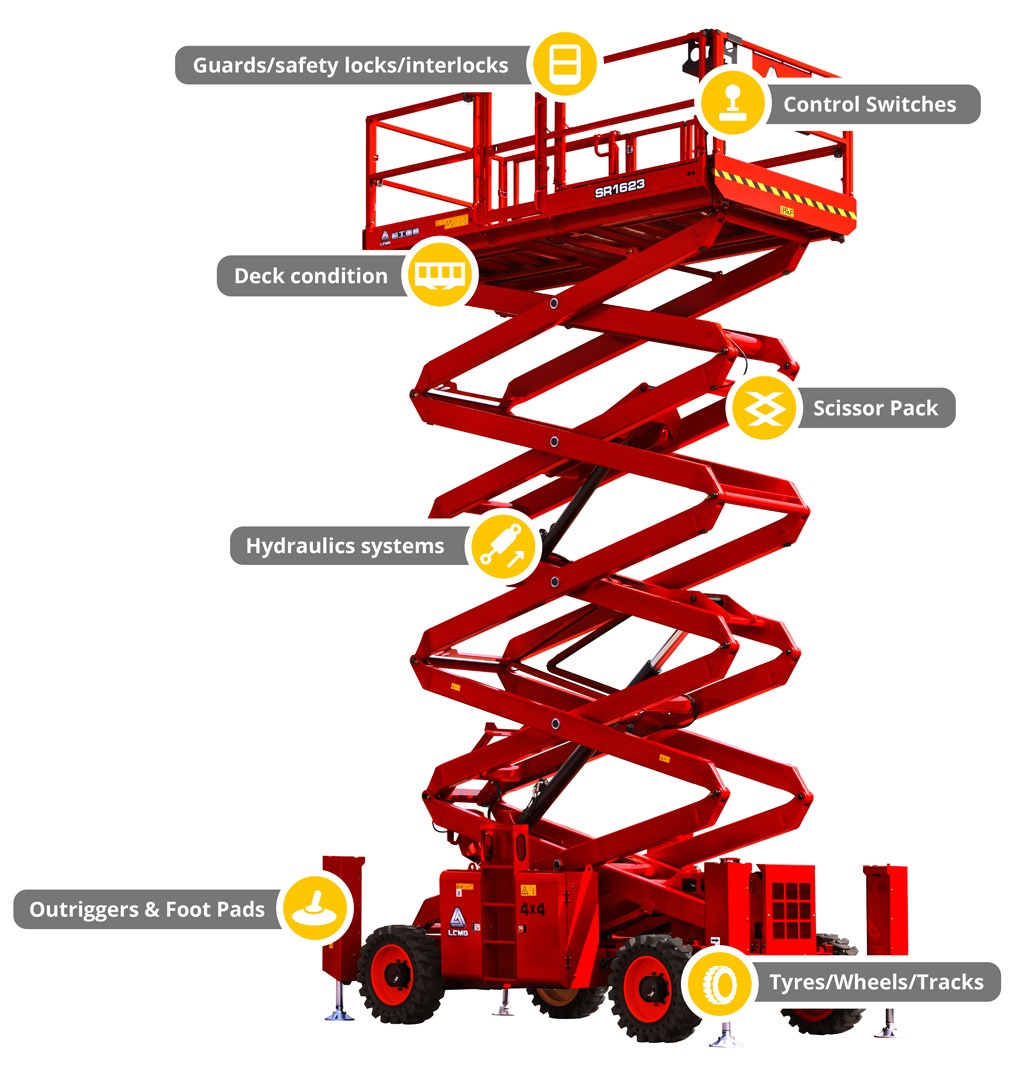
Las plataformas elevadoras de tijera son herramientas esenciales en diversos sectores, ya que permiten acceder de forma segura a zonas de trabajo en altura. Sin embargo, para garantizar su seguridad y funcionalidad continuas, es fundamental realizar inspecciones periódicas. Pero, ¿con qué frecuencia deben realizarse estas inspecciones?
Inspecciones diarias
La mayoría de los fabricantes recomiendan que las plataformas elevadoras de tijera se sometan a una inspección diaria antes de su uso. Esta revisión previa al uso suele consistir en examinar el estado general de la plataforma, lo que incluye:
- Sistemas hidráulicos: Comprueba que no haya fugas y que los niveles de líquido sean los adecuados.
- Características de seguridad: Asegúrese de que las barandillas, las paradas de emergencia y las alarmas de seguridad funcionen correctamente.
- Neumáticos y frenos: Comprueba si hay signos de desgaste y si la presión es la adecuada.
- Controla: Pruebe todos los controles para asegurarse de que funcionan correctamente.
Realizar estas revisiones diarias ayuda a detectar posibles problemas antes de que provoquen accidentes.
Inspecciones mensuales
Además de las revisiones diarias, se debe realizar una inspección más exhaustiva cada mes. Esta inspección podría incluir:
- Integridad estructural: Busque signos de desgaste, corrosión o daños.
- Sistemas eléctricos: Revise el cableado y las conexiones para detectar signos de desgaste o daños.
- Mantenimiento de la batería: Comprueba el nivel de carga de la batería y si hay corrosión en los terminales.
Las inspecciones mensuales ayudan a garantizar que el ascensor se mantenga en condiciones seguras de funcionamiento y pueden contribuir a prolongar la vida útil del equipo.
Inspecciones anuales
Además de las revisiones diarias y mensuales, es fundamental que un técnico cualificado realice inspecciones anuales exhaustivas. Estas inspecciones suelen incluir:
- Pruebas de carga: Comprobar que el ascensor pueda soportar su capacidad nominal.
- Revisiones de seguridad detalladas: Implica una revisión exhaustiva de todos los sistemas, componentes y dispositivos de seguridad.
- Verificación del cumplimiento: Asegurarse de que el ascensor cumpla con todas las normas y estándares de seguridad pertinentes.
Las inspecciones anuales son fundamentales para garantizar el cumplimiento de las normas de la OSHA y otras regulaciones de seguridad, lo que asegura tanto la seguridad de los operadores como el cumplimiento de la ley.
Conclusión
En resumen, las plataformas elevadoras de tijera deben someterse a inspecciones diarias antes de cada uso, a inspecciones mensuales para una revisión más exhaustiva y a inspecciones anuales realizadas por profesionales calificados. El mantenimiento y las inspecciones periódicas no solo garantizan la seguridad de los operadores, sino que también prolongan la vida útil del equipo. Al cumplir con estas directrices, las empresas pueden minimizar los riesgos y mantener un entorno de trabajo seguro.
Productos mejor valorados
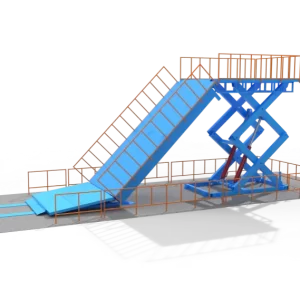
Rampa de carga con elevador de tijera
LEER MÁS 2 - 3 toneladas
 30˚ - 45˚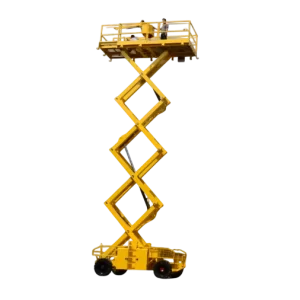
G-GTJZ16RT Elevador de tijera diesel de 16 metros
LEER MÁS ≤ 1 tonelada > 11 m-
G-GTJZ13RT Elevador de tijera diesel de 13 metros
LEER MÁS ≤ 1 tonelada > 11 m -
G-GTJZ10RT Elevador de tijera diesel de 10 metros
LEER MÁS ≤ 1 tonelada 9 - 11 m 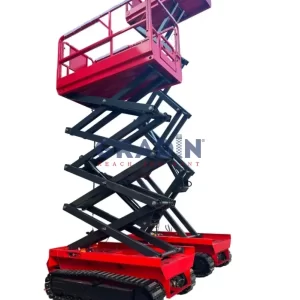
CFPT1214LD Elevador de tijera sobre orugas de 10 m
LEER MÁS ≤ 1 tonelada 9 - 11 m
Póngase en contacto con nuestros expertos o solicite un presupuesto ahora mismo.